
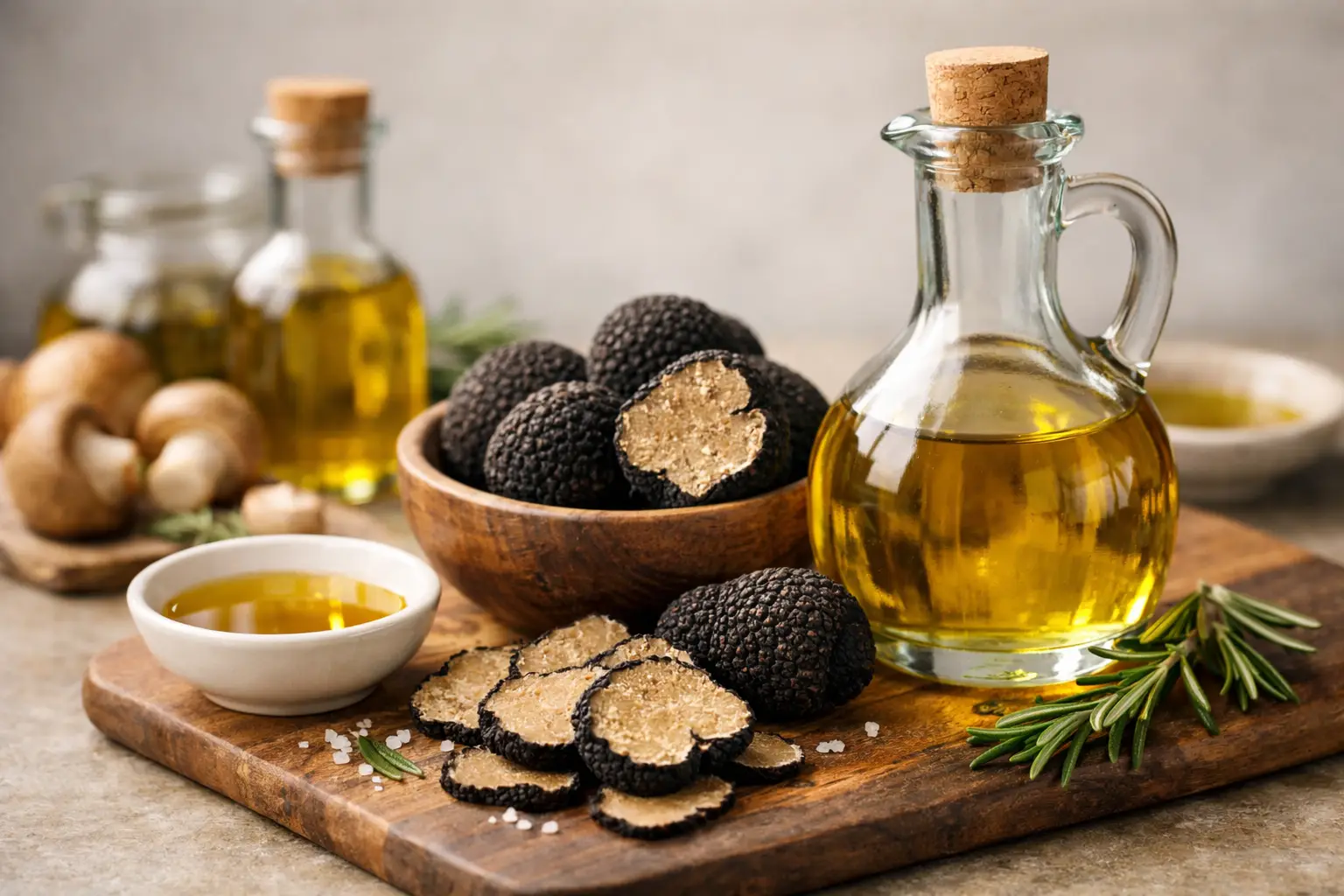
A Guide to Choosing Premium Truffle Oil Leave a comment
A plate of creamy pasta, a just-crisped pizza, or soft scrambled eggs can go from familiar to memorable with a few drops of the right finishing oil. This guide to choosing premium truffle oil focuses on what matters at the table: ingredient transparency, truffle character, aroma, balance, and the dishes you want to transform.
Truffle oil is not a cooking oil in the everyday sense. Its finest role is as a final flourish, applied after heat has done its work. Choose well, and it brings an earthy, savory perfume that makes simple ingredients feel worthy of a special occasion. Choose carelessly, and the aroma can overwhelm rather than enhance.
What Defines a Premium Truffle Oil?
Premium begins with a clear, credible ingredient story. Read the label closely. You should be able to identify the base oil, the truffle variety or truffle content when listed, and whether the flavor comes from truffle, natural flavoring, or a combination of both. A product that is transparent about what is in the bottle gives you a much better sense of what to expect.
Real truffle pieces, truffle extract, or truffle-infused oil can add authenticity and visual appeal. However, the presence of visible truffle does not automatically make one bottle superior. Fresh truffles are extraordinarily aromatic but delicate, and their most recognizable notes are difficult to preserve in oil. Many excellent truffle oils use carefully developed natural aromas alongside truffle ingredients to create a consistent, luxurious finish.
The question is not simply whether an oil contains truffle. It is whether the overall flavor feels refined. A premium oil should smell enticing rather than sharp, taste clean rather than greasy, and leave room for the food beneath it. It should evoke the forest-floor earthiness, toasted nuttiness, garlic-like savor, or musky elegance associated with truffles without tasting artificial or one-dimensional.
Start with the Base Oil
The carrier oil shapes every drop. Extra virgin olive oil provides a grassy, peppery structure that is especially beautiful on grilled vegetables, warm bread, beans, and steak. Its personality is present, so it works best when you want the truffle note to join a fuller savory composition.
A neutral oil, often sunflower or another mild vegetable oil, gives truffle aroma a clearer stage. This style is particularly effective over popcorn, French fries, creamy risotto, mashed potatoes, and eggs, where the goal is immediate truffle fragrance without olive oil bitterness or peppery finish.
Neither choice is universally better. A lush olive oil base can feel more complex and substantial, while a neutral base often feels more precise. Consider the foods you cook most often and the flavors already on the plate.
Guide to Choosing Premium Truffle Oil by Variety
Black and white truffle oils are not interchangeable. They can both be exquisite, but they create different moods in a dish.
Black Truffle Oil: Earthy and Savory
Black truffle oil generally offers deeper, warmer notes. Depending on the truffle variety and blend, it may suggest damp earth, roasted nuts, cocoa, mushrooms, or a gentle allium-like savor. It is the more versatile choice for hearty, autumnal, and deeply savory cooking.
Reach for black truffle oil over mushroom risotto, truffle mac and cheese, roasted potatoes, steak, burgers, polenta, pizza, and wild mushroom pasta. It also has enough presence to stand beside aged Parmesan, caramelized onions, and red meat. If you are buying one bottle for broad everyday use, black truffle oil is often the most accommodating place to begin.
When varietal information is available, it provides a useful clue. Tuber aestivum, often called summer truffle, tends to be gentler and nutty. Tuber melanosporum, the celebrated winter black truffle, is associated with greater depth and intensity. Still, the finished oil matters more than the Latin name alone. Taste, aroma, and balance are the final measure.
White Truffle Oil: Bright and Aromatic
White truffle oil is prized for a more lifted, expressive fragrance. Its character can feel garlicky, musky, slightly cheesy, and unmistakably luxurious. A small amount travels far, especially on foods with mild, creamy, or delicate flavors.
Use it to finish soft scrambled eggs, buttered noodles, potato purée, cauliflower soup, fresh pasta, mild cheeses, and simple crostini. White truffle oil is also exceptional over a warm bowl of popcorn when you want a glamorous snack with almost no preparation.
Because its aroma is so pronounced, restraint is essential. One teaspoon may be enough for a large bowl of pasta or a platter of potatoes. If your kitchen favors subtle seafood, clean spring vegetables, and delicate sauces, white truffle oil can be magnificent, but add it drop by drop.
Read the Bottle Like a Chef
A few details on the label can help you choose with confidence. Look first for a listed oil base and a clear description of the truffle profile. If the bottle names a truffle species, that can signal thoughtful sourcing. If it notes natural ingredients, vegan-friendly formulation, organic certification, or non-GMO status, those may also matter depending on your pantry standards.
Pay attention to package size. Truffle oil is potent and best enjoyed while its aroma is vivid. A smaller bottle is often the smarter purchase for occasional cooks, gift recipients, or anyone trying a new style. Frequent entertainers, chefs, and devoted truffle lovers may prefer a larger format, provided they will use it consistently.
The bottle itself should protect the oil from light. Dark glass is ideal, and a well-designed cap or pourer helps prevent accidental overuse. A premium product should feel considered from the label to the last drizzle.
Aroma Matters More Than Heat Tolerance
Do not judge truffle oil by the way you would judge a high-heat sautéing oil. Its aromatic compounds are sensitive, and prolonged heat can flatten the very quality you paid for. Rather than frying with it, cook with butter, olive oil, or your preferred neutral oil, then finish with truffle oil once the dish is off the heat.
This approach also makes portioning easier. Toss hot fries with salt first, then add a modest drizzle of black truffle oil. Fold white truffle oil into finished risotto just before serving. Add a few drops to a spoonful of soup, not the entire pot. The fragrance reaches the diner first, which is precisely the pleasure.
A good benchmark is that you should notice the truffle before tasting, then find it integrated rather than dominating once you take a bite. If an oil smells aggressively chemical, hits the palate with harshness, or leaves a cloying aftertaste, it is unlikely to give your food the polished finish you want.
Match the Oil to the Occasion
For an elegant dinner party, choose an oil with a nuanced, unmistakable aroma and use it on a dish with a simple flavor foundation. A truffled potato purée beside roast chicken or filet mignon feels generous without becoming complicated. For a weeknight upgrade, black truffle oil on a store-bought pizza or white truffle oil on eggs delivers restaurant-style pleasure in minutes.
Gift buyers should consider versatility. Black truffle oil makes an approachable introduction for someone building a gourmet pantry, while white truffle oil is a more dramatic choice for the person who already orders truffle pasta whenever it appears on a menu. A pair of black and white oils is especially thoughtful for a host, passionate home cook, or culinary professional who enjoys experimenting with contrast.
Truffle Guys has long treated truffle ingredients as practical luxuries: pantry essentials that make entertaining easier and everyday cooking more delicious. The right bottle should offer that same promise – a small, confident gesture that makes a meal feel considered.
Store It for Its Best Finish
Keep truffle oil tightly closed in a cool, dark cupboard, away from the stove, direct sunlight, and heat. Refrigeration is usually unnecessary unless the label directs it, and some oils may become cloudy when chilled. Always follow the producer’s storage guidance.
Once opened, use it regularly rather than saving it indefinitely for a single grand occasion. Truffle oil is made for finishing a meal while the potatoes are hot, the pasta is glossy, and guests are gathered around the table. Start with a few drops, taste, and let the aroma tell you when the dish is complete.
