
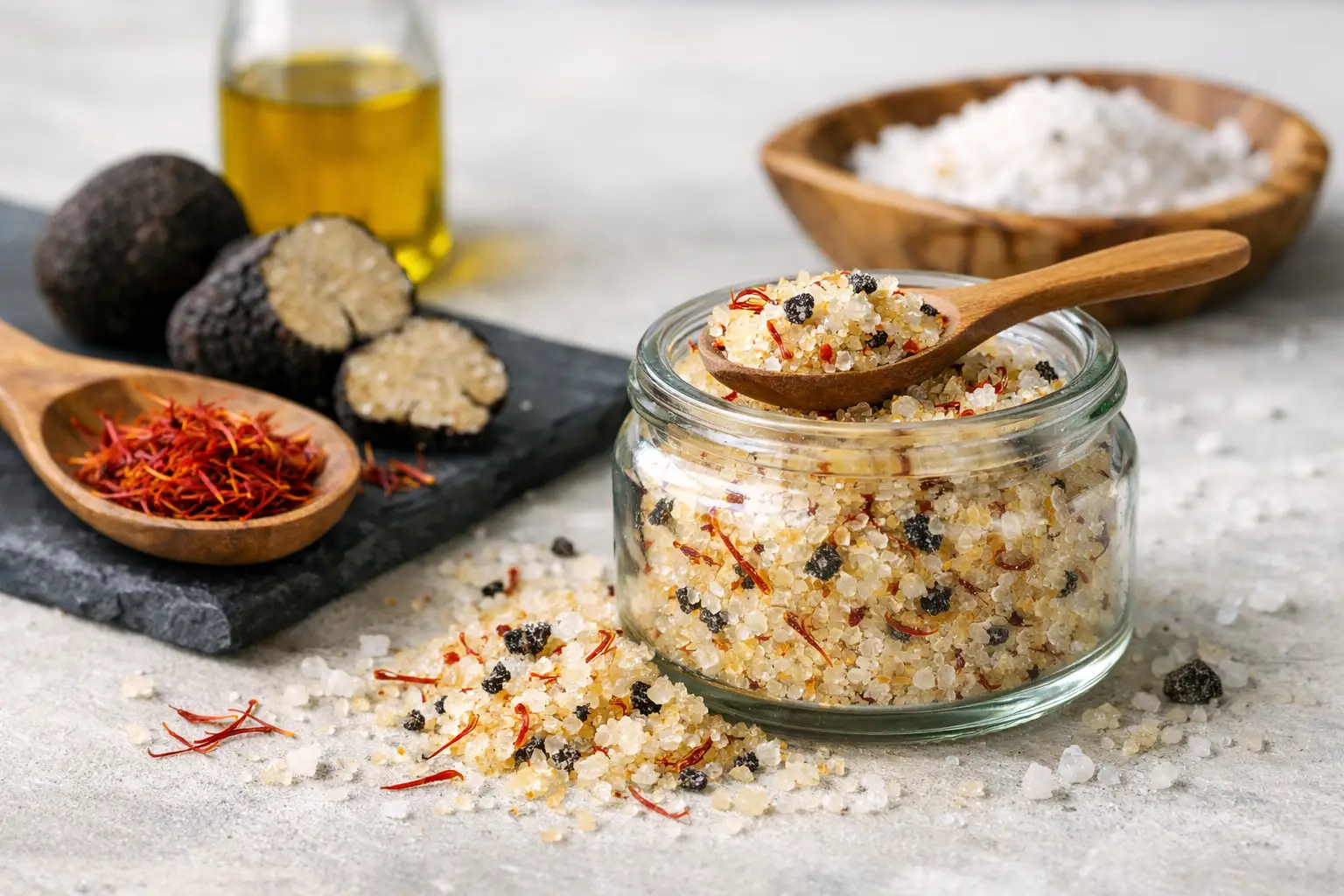
How to Use Saffron Truffle Sea Salt 1
A pinch too early, and you lose the point. A pinch at the end, and saffron truffle sea salt can turn a simple plate of eggs, pasta, or roasted vegetables into something that feels distinctly special occasion.
This is the kind of seasoning that does more than add salt. It brings fragrance first – warm, floral saffron, earthy truffle, and the clean mineral snap of sea salt – then lengthens the flavor of the dish underneath it. Used well, it creates the effect of a chef’s finishing move. Used carelessly, it can disappear into the background or overpower ingredients that deserved a lighter hand. That balance is what makes it such a compelling pantry staple for home cooks and professionals alike.
What makes saffron truffle sea salt different
Most finishing salts offer one dominant note. Some are purely mineral and crisp. Others lean smoky, spicy, or herbal. Saffron truffle sea salt stands apart because it layers two luxury ingredients with very different personalities.
Saffron brings an aromatic, almost honeyed floral quality with a subtle earthiness of its own. Truffle contributes depth, savoriness, and a lingering woodland character that feels rich even in small amounts. Sea salt acts as the structure, carrying both flavors across the palate while sharpening the natural taste of the food beneath it.
That combination gives the seasoning unusual range. It can flatter delicate foods like eggs, risotto, and scallops, but it also has enough presence for steak, potatoes, and creamy pasta. The key is understanding that this is not everyday table salt. It is a finishing ingredient, designed to be noticed.
When to use saffron truffle sea salt
The best time to use it is after cooking or in the last moments of preparation. Heat can mute truffle aroma, and saffron’s fragrance is most appealing when it stays vivid rather than cooked into the background. If you stir this salt into a long-simmered sauce, much of its distinction will get lost.
That does not mean it belongs only at the table. It works beautifully during plating, scattered over warm food so the residual heat blooms the aroma just enough. Think of it the way you would think of a finishing oil, shaved truffle, or a final spoonful of good butter – an accent that completes the dish rather than builds its foundation.
There are exceptions. If you are making a compound butter, whipped ricotta, aioli, or crème fraîche topping, a small amount can be folded in just before serving. In those cases, the fat protects and carries the aroma, allowing the seasoning to stay expressive.
The dishes that benefit most
Eggs are one of the easiest and most rewarding places to start. Soft scrambled eggs, omelets, fried eggs, and deviled eggs all welcome the richness of truffle and the delicate perfume of saffron. The mildness of eggs gives the salt room to show its full profile without competition.
Potatoes are another natural match. French fries, roasted fingerlings, potato purée, and crispy smashed potatoes all love a finishing salt with personality. The starch absorbs flavor, and the crisp edges or creamy interiors create contrast against the fragrant salt crystals.
Pasta and risotto also respond beautifully, especially dishes built around butter, cream, mushrooms, Parmesan, or simple olive oil. A restrained sprinkle over a bowl of tagliatelle, mushroom risotto, or cacio e pepe-style pasta can make the entire dish feel more luxurious without changing its identity.
Seafood works especially well when the preparation is clean and not overly sauced. Scallops, lobster, shrimp, halibut, and even a simple piece of seared salmon become more elegant with a modest finishing touch. The floral note of saffron is particularly flattering here, bringing brightness to the savory depth of truffle.
For meat, keep the seasoning focused and intentional. A sliced steak, roast chicken, veal chop, or even a well-made burger can benefit from a final pinch just before serving. The salt should lift the meat’s natural savoriness, not bury it.
Vegetables may be the most underrated pairing. Roasted cauliflower, asparagus, corn, wild mushrooms, and grilled zucchini become much more memorable with this kind of finishing detail. Even popcorn can carry it surprisingly well if you want something indulgent but easy.
How much to use
A little goes far. That is part of the appeal and part of the discipline.
With saffron truffle sea salt, the goal is not to season a dish from bland to salty. The dish should already be properly seasoned in the kitchen. This finishing salt sits on top of that seasoning, adding aroma, complexity, and a final point of contrast.
Start with a small pinch per serving. Taste, then decide if the dish wants more. Rich, creamy, or starchy foods can usually handle a slightly more generous hand. More delicate foods, especially mild seafood or lightly dressed vegetables, need less.
If you are serving guests, it is often better to undershoot than overshoot. You can always offer an extra pinch at the table. Once truffle takes over a plate, it is difficult to pull the dish back into balance.
Flavor pairings that work best
This salt is at its best with ingredients that support its richness while leaving room for aroma. Butter is an obvious partner, as are cream, Parmesan, pecorino, eggs, mushrooms, potatoes, and good olive oil. Those ingredients create a lush backdrop that makes the saffron and truffle feel integrated rather than isolated.
Lemon can work, but carefully. A small squeeze over seafood or vegetables may brighten the dish, yet too much acidity can push the fragrance off center. The same goes for vinegar-heavy dressings and aggressively sharp condiments.
Herbs should stay restrained. Chives, parsley, and a little thyme can complement the seasoning. Heavy rosemary, oregano, or strong basil can compete with it. Spices such as smoked paprika, cumin, or chili blends generally pull the dish in a different direction.
Cheese pairings depend on intensity. Soft, creamy cheeses and nutty hard cheeses are excellent. Very funky blue cheese or strongly washed-rind styles can dominate the more nuanced saffron note.
Common mistakes to avoid
The first mistake is treating it like regular cooking salt. If you dump it into boiling water for pasta or use it as the sole seasoning in a marinade, you are spending a premium ingredient where its character will barely register.
The second is pairing it with too many competing luxury flavors at once. Truffle, saffron, garlic, heavy herbs, multiple cheeses, and a rich sauce can sound impressive, but the result often feels muddled. This salt shines when the dish has a clear center.
The third is using it on food that is too hot for too long. A steak resting briefly before slicing is perfect. A pan of vegetables roasting for another 20 minutes after seasoning is not. Let the heat release the aroma, not erase it.
Storage matters too. Keep the salt sealed, dry, and away from direct light or heat. Like many aromatic pantry ingredients, it is best when its fragrance is protected.
Why it earns a place in a premium pantry
Not every luxury ingredient earns repeat use. Some are memorable once, then sit on the shelf waiting for an occasion grand enough to justify them. Saffron truffle sea salt is more practical than that. It has the elegance of a gift-worthy specialty item, but it also solves a very everyday question: how do you make a familiar dish feel more polished without adding complexity to the cooking itself?
That is where it becomes genuinely valuable. A weeknight omelet becomes brunch-worthy. Roasted potatoes feel fit for a dinner party. A simple bowl of pasta gets the kind of finish that suggests far more effort than the recipe required.
For shoppers building a thoughtful gourmet pantry, this is exactly the kind of ingredient that delivers. It feels indulgent, but it is also efficient. You do not need much. You do not need elaborate technique. You simply need the good judgment to use it where its aroma can be appreciated.
At Truffle Guys, that balance between luxury and usability is what makes specialty ingredients worth bringing home in the first place. The best ones do not ask you to cook like a restaurant. They help your food taste like it came from one.
Keep a jar within reach, use it with intention, and let it finish the dishes you already love with a little more depth, fragrance, and pleasure.

One Comment
Trackbacks and Pingbacks
[…] point is worth emphasizing. Truffle salt is most effective as a finishing touch. High heat dulls the fragrance that makes it special, so if you add all of it to raw eggs at the […]