
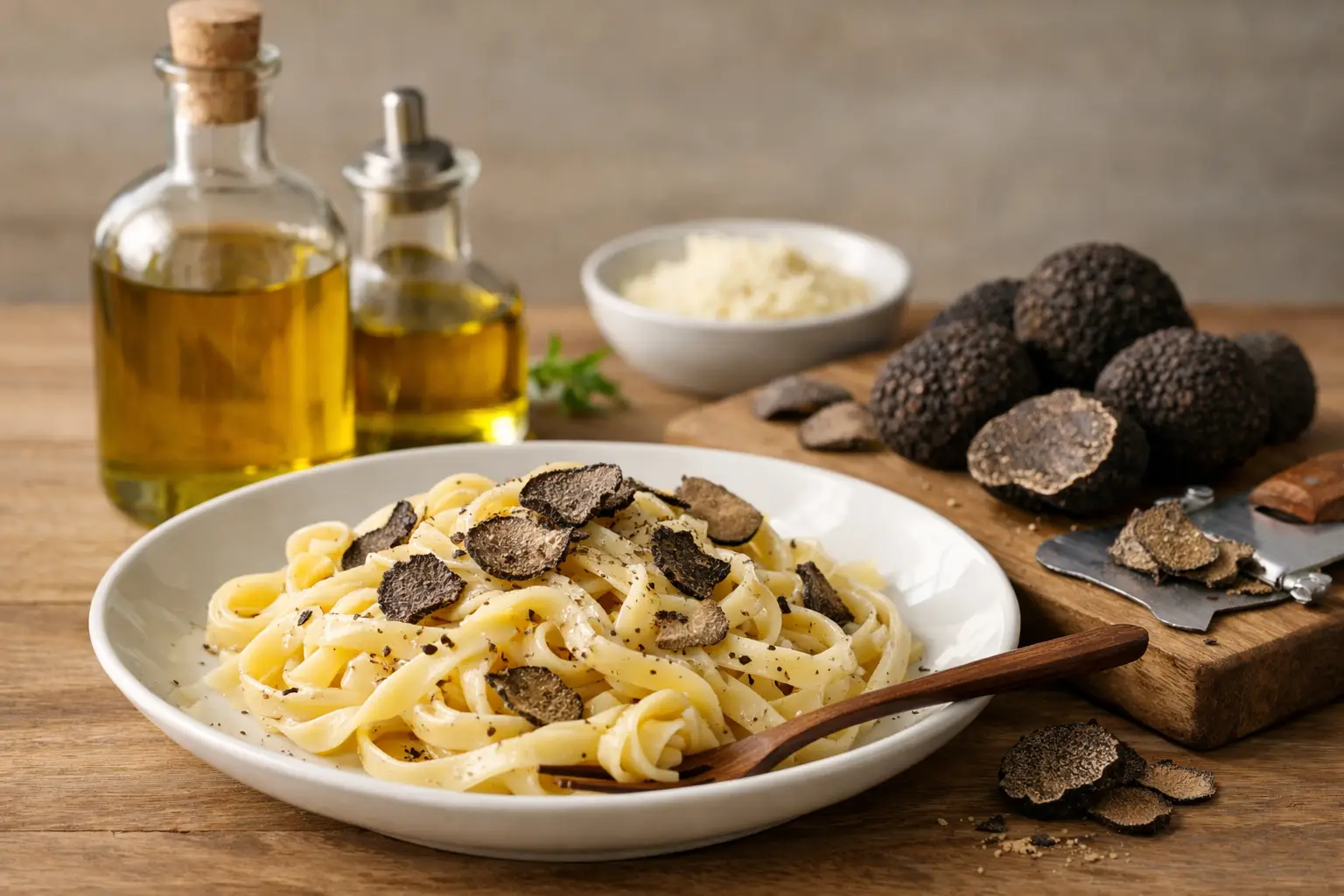
Best Truffle Oil for Pasta: What to Choose 1
A bowl of pasta can go from comforting to unmistakably luxurious with a few careful drops of truffle oil. Choosing the best truffle oil for pasta is less about buying the most expensive bottle and more about understanding how truffle aroma behaves with heat, starch, butter, cream, and cheese. The right oil makes pasta taste polished and restaurant-worthy. The wrong one can flatten the dish with a heavy, one-note perfume.
That difference usually comes down to style, strength, and how you plan to use it. Pasta is one of the best canvases for truffle because its neutral richness lets the aroma linger, but it also exposes flaws quickly. If the oil tastes harsh, synthetic, or oily without depth, you will notice it immediately.
What makes the best truffle oil for pasta
For pasta, the best truffle oil is a finishing ingredient first. It should deliver a clean, savory truffle aroma that lifts the dish rather than dominate it. A good bottle smells enticing as soon as it is opened, with an earthy, garlicky depth that feels elegant rather than aggressive.
Base oil matters more than many shoppers expect. Mild oils tend to work best because they allow the truffle character to stay in focus. If the base is too grassy, bitter, or heavy, it can compete with delicate sauces. Ingredient quality matters too. A premium truffle oil should feel purposeful, not gimmicky. Whether it contains natural truffle aroma, actual truffle pieces, or both, the experience in the pan and on the plate is what counts.
There is also a practical side. Pasta needs an oil that disperses well over hot noodles and integrates easily into butter, cream, mascarpone, or olive oil-based sauces. You want silky coverage, not greasy patches or a scent that disappears the second it hits the food.
Black or white truffle oil for pasta?
This is where preference and pairing matter.
White truffle oil
White truffle oil is typically more aromatic and high-toned. It brings a sharper, more volatile perfume that feels especially beautiful on simple pasta preparations. Think tagliatelle with butter and Parmigiano Reggiano, fresh linguine with a touch of cream, or delicate ravioli where the filling should still remain the star. White truffle oil excels when the dish is restrained and the finish needs elegance.
Black truffle oil
Black truffle oil is usually deeper, warmer, and more grounded. It pairs naturally with heartier pasta dishes, especially those built around mushrooms, roasted garlic, brown butter, or richer dairy. If you are serving pappardelle with wild mushrooms or a creamy baked pasta finished at the table, black truffle oil often feels more cohesive.
Neither is automatically better. The best truffle oil for pasta depends on the style of pasta in front of you. White truffle oil tends to flatter minimalist dishes. Black truffle oil often stands up better to robust flavors.
The best pasta dishes for truffle oil
Truffle oil is at its best when it has space to be noticed. That usually means sauces with a gentle structure and ingredients that support umami.
Butter sauces are the classic choice because butter rounds out the aroma and carries it evenly over the pasta. A little pasta water, a knob of butter, finely grated cheese, and a few drops of truffle oil can create a dish that tastes far more extravagant than its ingredient list suggests.
Cream sauces are another natural match, but restraint matters. A heavy cream sauce with too much garlic, too much cheese, or too much truffle oil can become dense and muddy. The goal is luscious, not overwhelming. Truffle should read as a finishing note, not a fog.
Mushroom pasta is one of the safest and most rewarding pairings. Mushrooms echo truffle’s earthy depth, so the flavors feel connected rather than forced. The same logic applies to pasta with roasted shallots, taleggio, fontina, pecorino, or a soft egg yolk folded into the sauce.
Tomato-based sauces are more divisive. Bright, acidic tomato can compete with truffle aroma, especially in a sharper marinara. If you want truffle with tomato, choose a softer, slower-cooked sauce with plenty of richness and use the oil sparingly.
How to use truffle oil on pasta without wasting it
The biggest mistake is cooking truffle oil too aggressively. High heat can mute the aroma and leave you wondering why the finished dish tastes less special than expected. Truffle oil should usually be added at the end, once the pasta is dressed and off direct heat.
Start with less than you think you need. A few drops tossed through a single serving may be enough, especially with white truffle oil. You can always add more at the table, but once the dish is overscented there is no easy fix.
It also helps to build the sauce with truffle oil in mind. Keep competing flavors in check. If you are using pancetta, chili flakes, lemon zest, and fresh herbs all at once, the truffle note can get lost. One or two supporting ingredients are usually enough.
For the most polished result, finish with texture. Freshly grated Parmesan, a few sautéed mushrooms, crisp breadcrumbs, or a soft-cooked egg can make truffle pasta taste composed instead of one-dimensional.
How to spot quality when shopping
When evaluating truffle oil, think like a cook rather than a collector. The bottle should promise a specific experience on food, not just luxury by association.
Look for clarity around flavor profile and intended use. A refined truffle oil brand should tell you whether the oil leans earthy, bold, delicate, or all-purpose. That guidance matters because a pasta finisher is different from an oil meant for fries or popcorn.
Packaging matters as well. Dark glass is preferable because it helps protect flavor from light exposure. Smaller bottles can be the smarter choice for home cooks, since truffle oil is most enjoyable when fresh and aromatic rather than forgotten in the back of the pantry.
You should also consider your own habits. If you make pasta often and prefer subtle finishing touches, a more nuanced oil is ideal. If you entertain and want unmistakable truffle character that guests notice immediately, you may prefer a bolder expression. Neither choice is wrong. It depends on whether your goal is finesse or impact.
A specialist producer with a strong reputation in truffles, rather than a generic gourmet label, is often the better bet. Category expertise tends to show up in the balance of aroma, ingredient selection, and real kitchen usability. That is where dedicated truffle companies such as Truffle Guys tend to stand apart.
Best truffle oil for pasta by pasta style
If you want an easy rule, match intensity to the dish.
For delicate fresh pasta, choose a lighter hand and a more elegant white truffle oil. For mushroom pasta, creamy tagliatelle, or stuffed pasta with browned butter, either white or black can work depending on how pronounced you want the finish. For richer, darker, more savory dishes, black truffle oil often feels more grounded.
Cheese matters too. Parmesan, Grana Padano, and pecorino all interact differently with truffle aroma. Nutty aged cheeses support truffle beautifully, while very sharp or salty cheese can amplify the oil and make it seem stronger than it is. That is another reason to season in stages.
If you are serving truffle pasta as a dinner-party course, it is worth tasting the finished dish before bringing it to the table. Heat, cheese, and starch can all shift how the aroma presents. What smelled subtle in the bottle may bloom dramatically once tossed through hot pasta.
Common mistakes that ruin truffle pasta
The first is simply using too much. Truffle oil is a finishing accent, not the foundation of the sauce. More is not more luxurious. It is often just louder.
The second is pairing it with too many strong flavors. Excess garlic, spicy sausage, sharp herbs, or heavy truffle additions all at once can make the dish feel cluttered. Truffle shines when the rest of the plate is edited.
The third is buying truffle oil without considering what you actually cook. A stunning white truffle oil may be perfect for silky pasta and disappointing in a robust mushroom ragù. The best purchase is the one that fits your kitchen.
Choosing the best truffle oil for pasta at home
If your ideal pasta is simple, creamy, and refined, reach for white truffle oil. If you prefer earthy, savory, and slightly deeper flavors, black truffle oil is often the better companion. In both cases, prioritize a bottle with balanced aroma, a clean finish, and a style that complements the way you cook.
A truly good truffle oil does not need much help. Tossed with hot pasta, butter, cheese, and confidence, it creates the kind of dish people remember after the plates are cleared. That is the real test – not how dramatic it sounds on the label, but how effortlessly it turns a familiar bowl of pasta into something worth lingering over.

One Comment
Trackbacks and Pingbacks
[…] is an easy favorite for home cooks. A bowl of fettuccine with butter, Parmesan, and black pepper needs very little else […]