
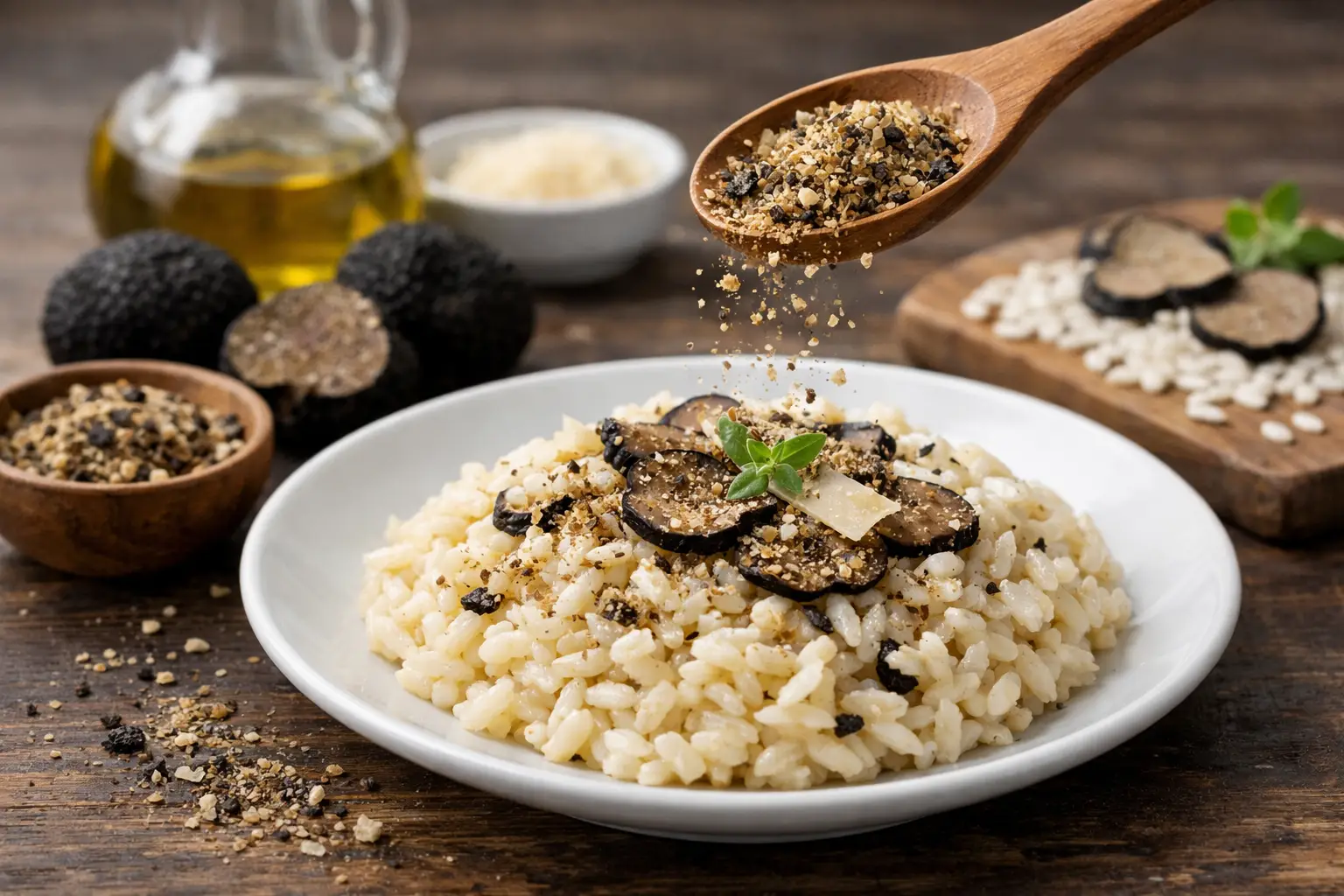
How to Use Truffle Risotto Seasoning Leave a comment
The difference between a flat risotto and one that feels truly special usually comes down to finishing. Butter brings gloss, stock brings depth, cheese brings body, but truffle risotto seasoning adds that unmistakable final note – earthy, aromatic, and quietly luxurious. Used well, it gives risotto the kind of restaurant-style finish that lingers on the palate without overwhelming the dish.
That balance matters. Truffle is not a background flavor, but it should never bulldoze everything else on the plate. The best truffle risotto seasoning is designed to do more than make a dish smell expensive. It should contribute savory depth, salinity, and a layered truffle character that integrates into the rice while still feeling elegant.
What truffle risotto seasoning actually does
Risotto is a natural home for truffle because of its texture. Arborio and Carnaroli rice develop a creamy, almost luscious consistency that carries aroma beautifully, and that is exactly where truffle performs best. A seasoning blend made for risotto usually combines truffle with salt and complementary savory elements so the flavor disperses evenly instead of landing in one sharp, heavy note.
This is one reason seasoning can be more practical than relying on one ingredient alone. Truffle oil gives fragrance but not much seasoning. Truffle salt adds salinity and aroma, but sometimes needs support from other flavors. A risotto-specific blend can streamline the process, especially for home cooks who want a polished result without managing several separate finishing products.
For professionals and serious home entertainers, it also offers consistency. When you are serving guests, consistency matters as much as indulgence. A measured seasoning blend helps you repeat the same flavor profile from batch to batch, whether you are making a weeknight mushroom risotto or a more formal first course.
How to use truffle risotto seasoning without overdoing it
The smartest approach is restraint. Truffle flavor expands as it warms, and risotto is served hot, which means a seasoning that seems subtle in the pan can become much more assertive at the table. Start light, stir, taste, and build gradually.
In most cases, truffle risotto seasoning works best near the end of cooking. By that point, the rice has absorbed its stock, the starch has emulsified, and you can judge the final richness of the dish. Adding it too early can mute some of the aroma, particularly if the seasoning contains delicate truffle notes meant for finishing.
A good method is to stir a modest amount into the risotto during the final few minutes, then adjust once the butter and cheese are incorporated. That sequence matters because fat carries truffle aroma. After the risotto is fully mounted and glossy, one last taste tells you whether it needs another pinch.
There is also a trade-off with cheese. Parmigiano Reggiano adds nutty depth, but too much can crowd out truffle. If truffle is meant to be the star, keep the cheese measured and choose a clean, well-made stock that supports rather than dominates. Chicken stock gives a rounder, fuller result. Vegetable stock keeps the profile lighter and lets the truffle read more clearly.
Building a better risotto around truffle
The best truffle risotto is not necessarily the richest one. It is the one with enough structure to frame the seasoning. Rice variety, stock, fat, and the main ingredient all affect how the truffle comes across.
Mushrooms are the classic pairing because their woodland character naturally echoes truffle. This can be exquisite, but it can also become too earthy if every element leans dark and heavy. If you are using a generous amount of cremini, porcini, or mixed wild mushrooms, keep the truffle seasoning precise so the dish stays refined rather than muddy.
For a brighter expression, try using the seasoning in a risotto with leeks, shallots, or asparagus. Those ingredients create contrast and allow the truffle aroma to feel more lifted. A white wine deglaze is especially useful here because acidity sharpens the finish and keeps the dish from feeling overly dense.
Seafood can work too, but it depends on the style. Delicate shellfish such as scallops or lobster pair well with a restrained hand. Briny or strongly flavored seafood can compete with truffle and leave the dish confused. This is one of those places where luxury ingredients need editing, not stacking.
Truffle risotto seasoning beyond risotto
A well-made truffle risotto seasoning earns space in the pantry because it does more than one job. The same savory, aromatic profile that flatters rice can elevate a range of dishes with very little effort.
Stirred into cream sauce, it gives pasta a deeper, more polished finish. Folded into scrambled eggs or soft omelets, it turns a quick breakfast into something unmistakably indulgent. Sprinkled over roasted potatoes, fries, or warm buttered popcorn, it adds that craveable truffle note in a way that feels generous but still easy.
It is also excellent on vegetables that have enough sweetness or caramelization to carry it. Roasted cauliflower, grilled corn, blistered green beans, and crisp Brussels sprouts all respond well. The key is heat and fat. A touch of butter, olive oil, or cream helps the aroma bloom.
This versatility is part of the appeal for shoppers who want one premium ingredient to work across multiple occasions. A specialty seasoning should not sit in the cabinet waiting for a single recipe. It should make entertaining easier, weeknight cooking better, and last-minute dishes more memorable.
What to look for in a premium truffle seasoning
Not all truffle seasonings deliver the same experience, and the differences are easy to taste. Ingredient quality comes first. You want a blend that feels intentional, not one that relies on salt alone to create impact. The truffle character should be present, rounded, and savory, rather than harsh or one-dimensional.
Texture matters too. A fine, even blend disperses more cleanly through risotto than a coarse or uneven seasoning. That is especially important in a creamy dish where every spoonful should taste balanced. If the seasoning clumps or distributes poorly, the effect becomes patchy.
The best products also feel chef-friendly. They should be easy to dose, easy to finish with, and versatile enough to use beyond a single dish. At Truffle Guys, that philosophy is central to pantry products that bring premium truffle flavor into real home cooking – not just special occasion recipes, but the kind of meals people actually make and serve.
There is also the question of profile. Some truffle seasonings lean darker and more woodsy, which suits mushroom risotto, steak, and roasted potatoes. Others feel brighter or more aromatic, which can pair better with eggs, pasta, and lighter vegetable dishes. Neither is automatically better. It depends on what you cook most often and how prominent you want the truffle to be.
A simple way to serve it well
If your goal is a classic truffle risotto, keep the format clean. Start with shallots softened in butter or olive oil, toast the rice lightly, deglaze with white wine, and add warm stock gradually until the grains are tender with a slight bite. Finish with butter, a measured amount of grated cheese, and truffle risotto seasoning added in small increments until the aroma opens up.
For garnish, less is usually more. A few shaved mushrooms, a spoonful of mascarpone, or a light dusting of extra seasoning is enough. Overloading the bowl with too many rich elements can dull the elegance that makes truffle appealing in the first place.
Serve immediately. Risotto waits for no one, and truffle is best when its aroma rises straight from the bowl. That first spoonful should feel creamy, savory, and unmistakably luxurious without trying too hard.
The beauty of truffle risotto seasoning is that it brings a fine-dining note into reach with almost no friction. Use it thoughtfully, and even a simple pan of rice can feel like the best seat in the house.
