
How to Use Truffle Oil the Right Way Leave a comment
A few drops can turn buttered pasta into something dinner-party worthy. That is the appeal of truffle oil when it is used well. If you have ever wondered how to use truffle oil without overwhelming a dish or wasting an expensive ingredient, the answer is surprisingly simple: treat it as a finishing touch, not a cooking fat.
Truffle oil delivers aroma first. Its value is not in browning, frying, or building a sauce from scratch. It is in that final moment, when a warm dish releases steam and the truffle fragrance rises with it. Used with restraint, it adds a luxurious, earthy note that makes familiar foods feel instantly more polished.
How to use truffle oil without overpowering your food
The biggest mistake people make is using too much. Truffle oil is concentrated, and its flavor can dominate a plate fast. In most cases, you need only a light drizzle or a few drops per serving. Start small, taste, and add more only if the dish still has room for it.
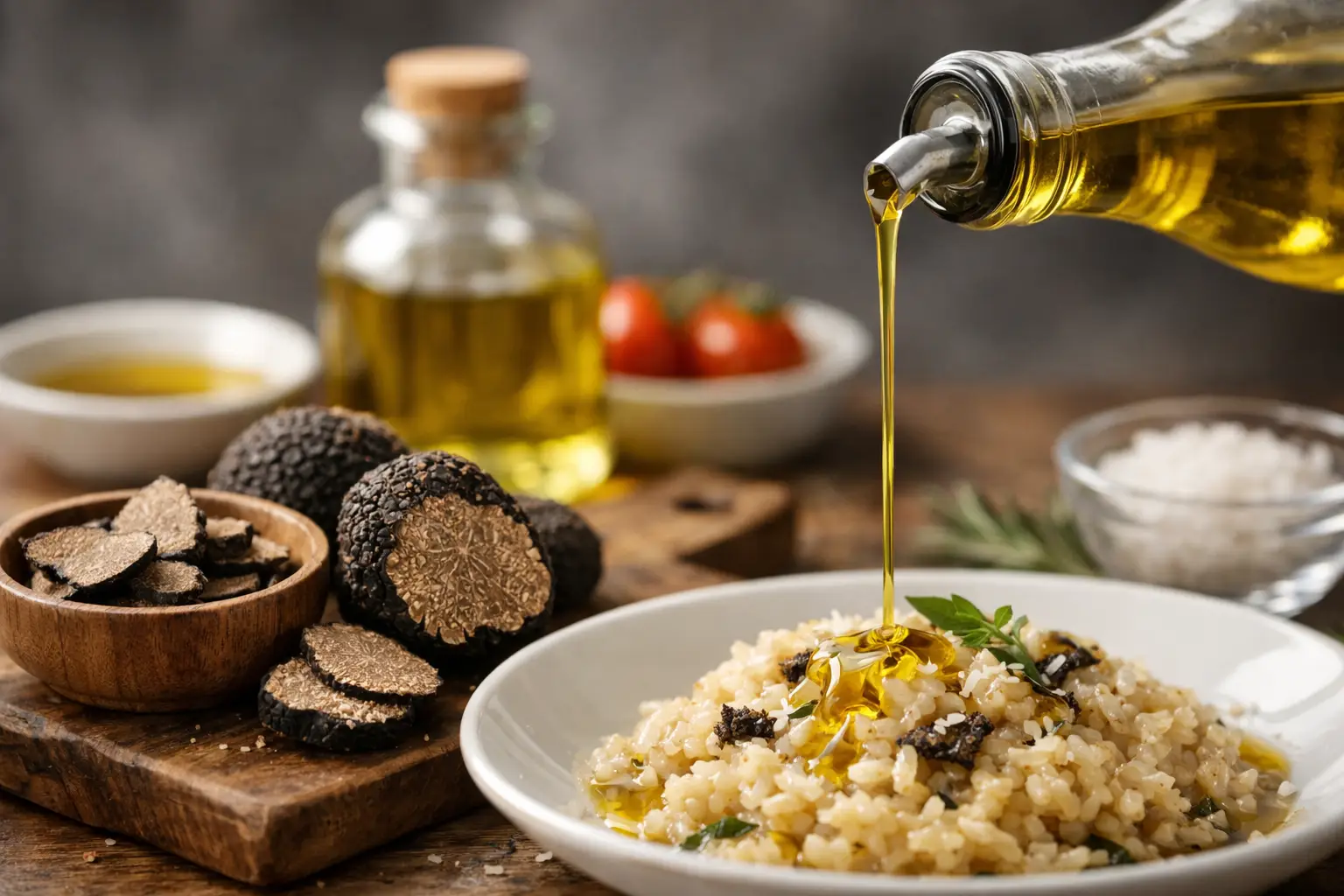
Heat matters too. High temperatures dull truffle aroma, which is why truffle oil is best added after cooking or just before serving. Think of it the way a chef uses finishing salt or a last spoonful of excellent olive oil. It should sit on top of the dish and perfume each bite, not disappear into the pan.
This is also why simple foods tend to be the best match. Truffle oil shines when the base is rich but not overly busy. Cream, butter, eggs, potatoes, and mild cheeses all give it something soft and savory to settle into.
The best foods for truffle oil
Some ingredients naturally flatter truffle flavor. Potatoes are one of the best examples. French fries, roasted fingerlings, mashed potatoes, and even crispy potato chips become far more memorable with a light drizzle of truffle oil and a touch of sea salt. The starch absorbs the aroma beautifully without competing for attention.
Eggs are another classic partner. Soft scrambled eggs, omelets, fried eggs, and deviled eggs all benefit from a tiny amount added at the end. Truffle and eggs share an almost effortless compatibility – creamy, rich, and savory in a way that feels refined but never fussy.
Pasta is an easy favorite for home cooks. A bowl of fettuccine with butter, Parmesan, and black pepper needs very little else if you finish it with truffle oil. The same goes for risotto, mac and cheese, or a simple mushroom cream sauce. With dishes like these, truffle oil brings depth and aroma without requiring complicated technique.
Pizza works especially well, provided you wait until it comes out of the oven. A white pizza with mozzarella, fontina, mushrooms, or ricotta is an ideal canvas. Red-sauce pizzas can work too, though strong tomato acidity can make the truffle note feel less pronounced.
Steak, roasted chicken, and even burgers can carry truffle oil if you use it sparingly. Rich proteins welcome that extra layer of earthy fragrance, especially when paired with mushrooms, caramelized onions, or a creamy side. But it depends on the cut and the preparation. A heavily charred or aggressively seasoned piece of meat can bury the more delicate side of truffle oil.
When to use white truffle oil vs black truffle oil
If you want a more precise answer to how to use truffle oil, start by knowing which type is in your kitchen. White truffle oil is usually more aromatic, sharp, and garlicky in character. It tends to make a quick impression and works especially well with delicate dishes such as pasta, eggs, popcorn, fries, and creamy sauces.
Black truffle oil is typically deeper and more grounded, with a woodsy profile that feels slightly warmer and more savory. It suits heartier dishes like mushroom risotto, roasted potatoes, steak, pizza, and rich soups.
Neither is universally better. It depends on the mood of the dish. If you want elegance and lift, white truffle oil often gets you there. If you want something darker and more substantial, black truffle oil may be the better choice.
Dishes that benefit most from a finishing drizzle
Warm, neutral, and savory dishes are usually where truffle oil performs best. A creamy cauliflower soup becomes far more luxurious with a few drops on top. A grilled cheese sandwich feels more polished when truffle oil is brushed lightly onto the inside just before serving. Even warm, buttered popcorn can take on a special-occasion quality with truffle oil and finely grated Parmesan.
This finishing approach is what makes truffle oil so practical. You do not need a restaurant kitchen to use it well. You need a dish with enough richness to support it and enough restraint to let it speak.
How much truffle oil should you use?
Less than you think. For an individual plate of pasta, eggs, fries, or risotto, start with 1/4 to 1/2 teaspoon. For a larger serving bowl meant for four people, 1 to 2 teaspoons is often enough. You can always add more, but once the dish is over-scented, there is no easy way back.
A good rule is to taste the food first, then add truffle oil where the dish feels finished but slightly incomplete. That is the sweet spot. Truffle oil should feel like the final polish, not the entire idea.
This is especially true when other truffle ingredients are involved. If you are already using truffle salt, truffle butter, truffle powder, or shaved truffle products, the oil should play a supporting role. Layering can be exquisite, but only when each element has space.
Common mistakes to avoid
Cooking with truffle oil over direct heat is the most common misstep. If you pour it into a hot skillet as your main oil, much of the aroma fades, and what remains can feel flat. Use a neutral or extra virgin olive oil for cooking, then finish with truffle oil off the heat.
Another issue is pairing it with flavors that are too loud. Very spicy foods, highly acidic sauces, and aggressively smoked ingredients can compete with the truffle note rather than complement it. Truffle oil prefers company like butter, cream, potatoes, mild cheeses, mushrooms, and eggs.
Storage also matters. Keep the bottle tightly sealed in a cool, dark place and use it while the aroma is vibrant. Like any aromatic finishing product, truffle oil is at its best when fresh and fragrant.
Creative ways to use truffle oil at home
Once you understand the basic rules, truffle oil becomes one of the easiest luxury ingredients to work into everyday cooking. Drizzle it over roasted vegetables just before serving. Add a few drops to aioli for sandwiches or fries. Stir a touch into mashed potatoes, cauliflower puree, or a warm bean dish. Finish a flatbread with truffle oil, arugula, and shaved Parmesan. Even a simple bowl of ramen or a plate of dumplings can take on a more indulgent edge with the right amount.
For entertaining, truffle oil is especially effective because it creates a restaurant-style finish with minimal effort. Fries for cocktails, mini grilled cheese bites, mushroom crostini, and deviled eggs all become more memorable with a restrained touch. That balance of ease and luxury is exactly why it remains such a staple in gourmet home kitchens.
If you are building a pantry around versatile finishing ingredients, truffle oil earns its place. Brands like Truffle Guys have helped make this kind of ingredient more approachable for home cooks who want premium flavor without needing fresh truffles on hand.
How to use truffle oil with confidence
The best way to use truffle oil is to think like a finisher. Build the dish first. Let the potatoes roast, the pasta cook, the eggs set, the pizza bake. Then add truffle oil at the end, in small amounts, where its aroma can stay vivid and intact.
That one adjustment changes everything. Instead of making food taste heavy or one-note, truffle oil becomes what it is meant to be – a polished, aromatic accent that adds pleasure, depth, and a little occasion to the plate. The next time dinner feels almost there, a measured drizzle may be all it needs.
