
A Guide to Storing Fresh Truffles Leave a comment
Fresh truffles have a short, glorious window. The moment they arrive, whether tucked into a special dinner plan or waiting for a weekend risotto, the clock is already ticking. This guide to storing fresh truffles is designed to help you protect what matters most – aroma, texture, and that unmistakable earthy depth that turns a simple plate of eggs or pasta into something exquisite.
Unlike pantry truffle products, fresh truffles are alive in a culinary sense. They breathe, they release moisture, and they lose perfume faster than most luxury ingredients. That is why storage is less about putting them away and more about preserving a fleeting ingredient at its peak. Done well, you get a few precious days of exceptional flavor. Done poorly, even a beautiful truffle can turn soft, damp, and muted before it ever reaches the table.
Why proper storage matters
Fresh truffles are prized for volatile aromatic compounds, not just flavor in the usual sense. Their fragrance is what lifts warm butter, folds into scrambled eggs, and blooms over freshly shaved Parmesan. Improper storage causes those aromas to dissipate quickly, while excess moisture invites spoilage.
Temperature and humidity are the balancing act. Too much moisture, and the truffle can become slimy or moldy. Too little, and it dries out, losing both weight and intensity. Refrigeration is necessary, but refrigeration alone is not enough. The way the truffle is wrapped, the type of container used, and how often you check it all make a visible difference.
Guide to storing fresh truffles at home
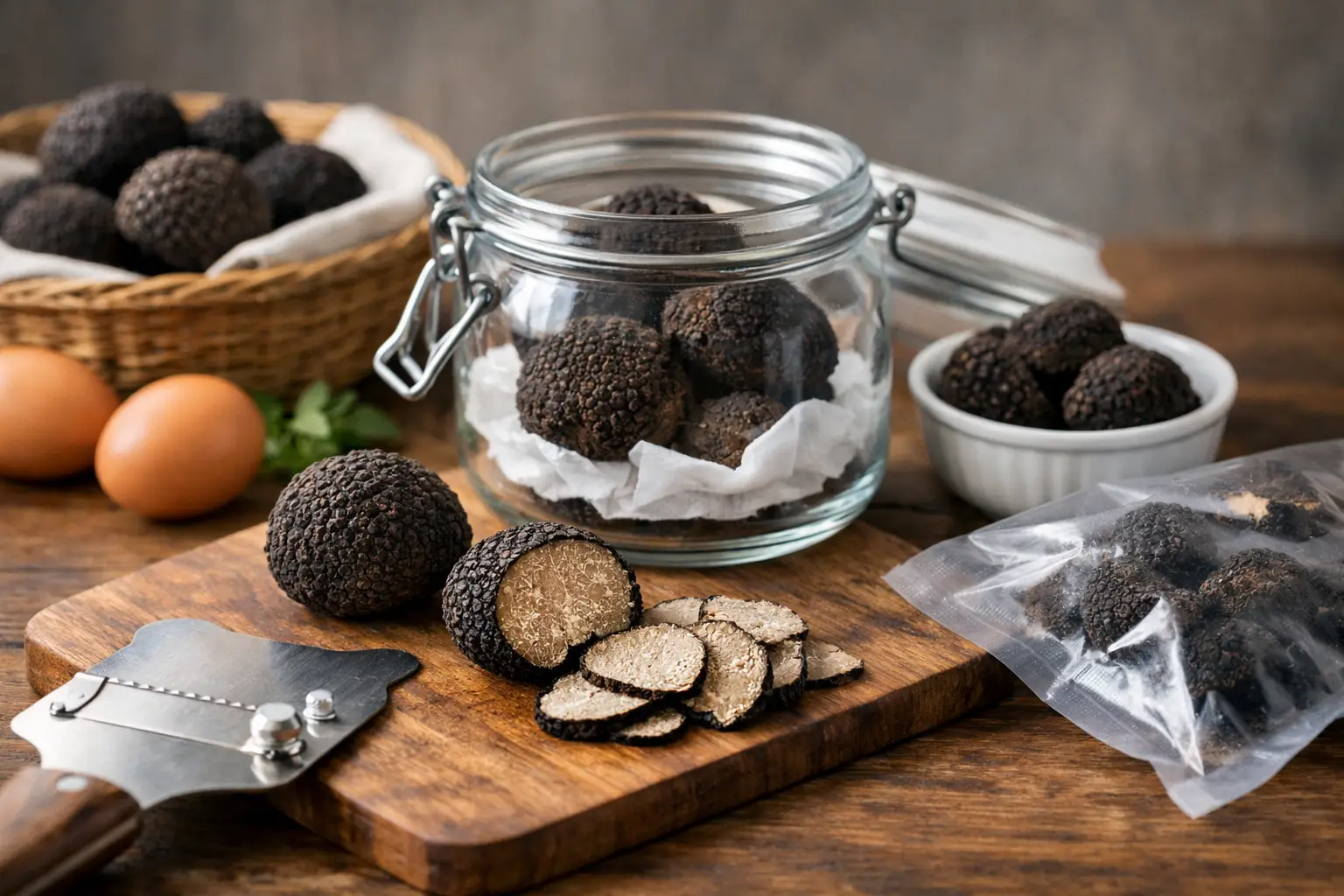
The best approach is simple and disciplined. Start by placing each truffle in a dry paper towel or unbleached absorbent paper. Then set it inside an airtight container and store it in the refrigerator, ideally in the vegetable drawer or another area with a stable chill. The paper towel should be changed every day, or sooner if it becomes damp.
That daily paper change is the detail many people skip, and it is often the difference between a truffle that remains beautifully firm and fragrant and one that softens too quickly. Truffles naturally release moisture as they rest. If that moisture stays trapped against the surface, quality drops fast.
Keep the container tightly closed, but not crowded with other foods. Truffles are aromatic and absorbent at the same time. They can perfume nearby ingredients, which can be charming if intentional, but they can also pick up stray refrigerator odors that dull their clean, luxurious scent.
Should you clean truffles before storing them?
Usually, no. If your truffles arrive with a bit of soil still attached, that is not a flaw. It is often better to leave them mostly as they are until right before use. Washing introduces extra moisture, and moisture is the enemy of longevity.
If there is loose dirt, gently brush it away with a soft brush or dry cloth. Save any more thorough cleaning for the moment you plan to shave or grate the truffle. At that point, a quick rinse and immediate drying can be appropriate, but storing a freshly washed truffle is rarely ideal.
Paper towel, rice, or eggs?
You may have heard several traditional methods for storing truffles, and each comes with trade-offs. The paper towel and airtight container method is the most reliable for preserving the truffle itself. It controls moisture without pulling too much from the flesh.
Storing truffles in rice is more controversial. Rice can absorb excess humidity, but it can also dry the truffle out faster than you want. If your goal is maximum aroma and texture from the truffle, rice is not usually the best first choice. It may help in a pinch, but it tends to benefit the rice less than it protects the truffle.
Eggs are a different story. A fresh truffle stored near eggs in a sealed container will scent the shells and enrich the eggs with a lovely perfume. This is a classic move for indulgent scrambled eggs or an omelet. Still, it is best treated as a short-term culinary trick rather than your main storage plan. The truffle should still be wrapped to manage moisture, and you should use both eggs and truffle promptly.
How long do fresh truffles last?
It depends on the variety, condition at arrival, and how cold and dry your refrigerator runs. In general, fresh truffles are best enjoyed as soon as possible, ideally within a few days. Black truffles often hold slightly longer than white truffles, which are especially delicate and celebrated for their heady aroma.
A black winter truffle may remain in very good condition for up to a week with careful storage, though peak fragrance is often strongest early on. White truffles are better treated as an immediate luxury, often at their best within three to five days. If you have purchased a premium fresh truffle for a special meal, it makes sense to plan the menu around it rather than expecting it to wait patiently in the refrigerator.
Signs your truffle is still in good shape
A well-kept truffle should feel firm, not squishy. Its aroma should be distinct and appetizing, earthy and complex rather than sour or musty. Slight natural variation is normal, especially because truffles are wild ingredients, but the surface should not feel wet or sticky.
If the truffle becomes overly soft, develops a strong ammonia-like smell, or shows visible mold, it has passed its prime. Some minor softening can happen with age, and a truffle might still be usable in a cooked dish if the aroma is good, but once fragrance declines significantly, the magic goes with it.
Can you freeze fresh truffles?
You can, but freezing is a compromise. If you cannot use the truffle in time, freezing is better than waste, especially for cooked applications such as sauces, compound butter, or folded into a warm cream preparation. What freezing does not preserve perfectly is the original fresh texture and full aromatic nuance.
If you decide to freeze, wrap the truffle very well and seal it tightly to protect it from freezer air. Some cooks prefer to grate or shave the truffle before freezing so it is ready to use straight from frozen. That works especially well when the truffle is destined for pasta, potatoes, or eggs. For raw shaving over a finished dish, fresh is still the standard worth chasing.
The best way to use truffles before quality fades
The smartest storage strategy is a cooking strategy. Fresh truffles reward simple dishes that let their aroma lead. Warm ingredients carry fragrance beautifully, especially those with fat and a gentle, creamy texture. Eggs, buttered pasta, risotto, mashed potatoes, and silky sauces are all excellent choices.
If you know you have only a narrow window, use the truffle across more than one meal. A few shavings over scrambled eggs in the morning, then over tagliatelle with butter and Parmesan at dinner, can make the most of every precious gram. This is where a specialist approach matters – luxury is not only about the ingredient itself, but about using it at the exact moment it delivers the most pleasure.
A practical rhythm for storing and serving
When your truffle arrives, refrigerate it immediately in paper towel inside a sealed container. Check it the next day, replace the paper, and decide when you will serve it. By day two or three, plan your most truffle-forward meal. If any remains after that, use it in a cooked preparation while the aroma is still expressive.
That rhythm keeps storage from becoming passive. Fresh truffles are not the kind of ingredient you buy and forget. They are meant to be enjoyed with intention, at their peak, over dishes worthy of their fragrance.
At Truffle Guys, that is the real pleasure of fresh truffles – not saving them indefinitely, but storing them carefully enough to serve them when they are still lush, aromatic, and unforgettable.
