
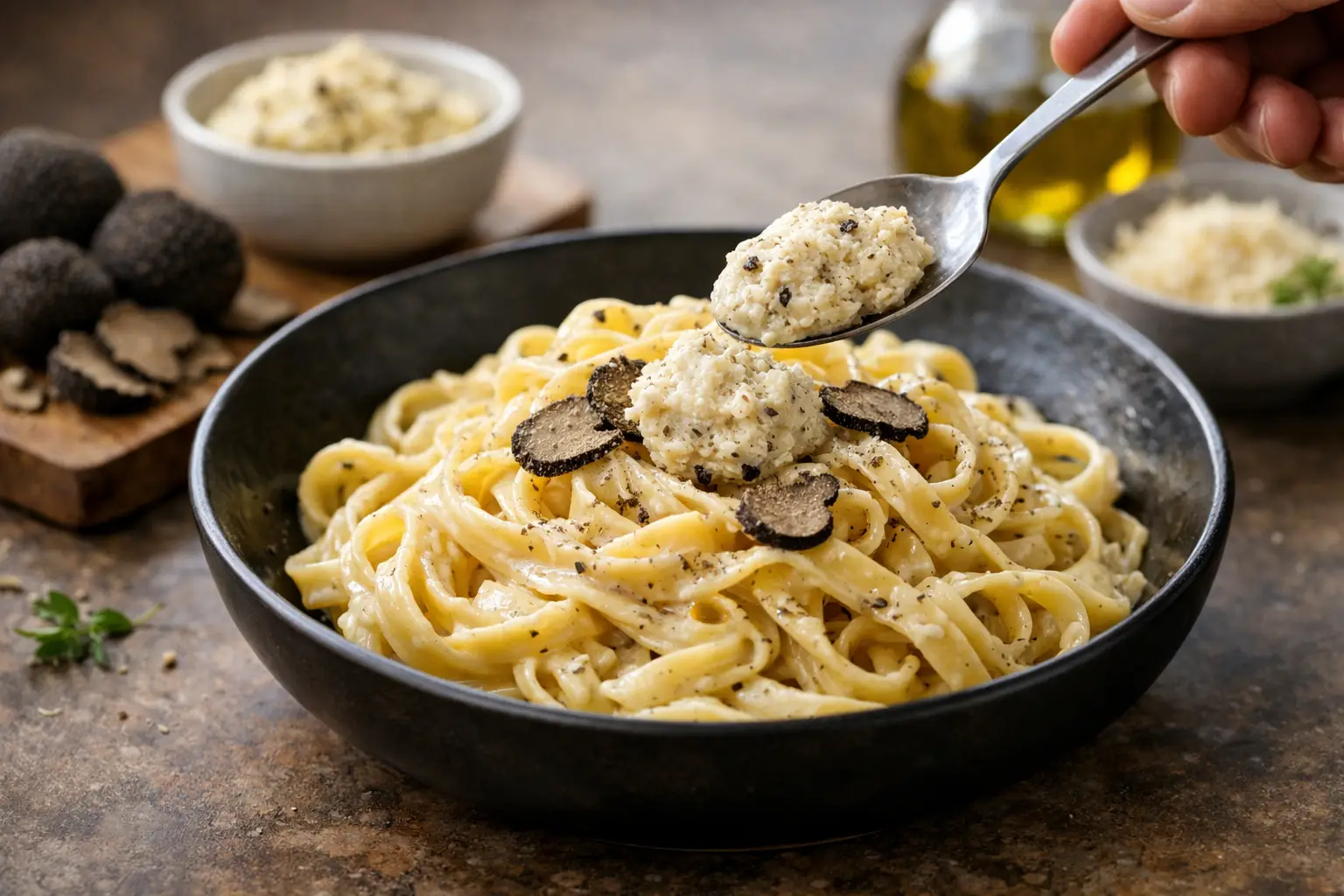
How to Finish Pasta With Truffle Butter 2
A bowl of pasta can go from comforting to quietly spectacular in the last 60 seconds. That is exactly why learning how to finish pasta with truffle butter matters. Used at the right moment, truffle butter gives pasta a silky gloss, a fuller mouthfeel, and that unmistakable earthy aroma without burying the dish under heavy sauce.
Truffle butter is a finishing ingredient first, not a cooking fat you treat like ordinary butter. High heat dulls its aroma, and too much of it can make a plate feel flat rather than luxurious. The goal is restraint with intention – enough warmth to melt, enough starch to emulsify, and enough balance to let the truffle read clearly.
How to finish pasta with truffle butter the right way
The best truffle butter pasta is built on three elements working together: hot pasta, a small amount of reserved pasta water, and gentle heat. Rather than dropping a cold knob of butter onto a finished plate and hoping for the best, you want to create a light emulsion that clings to each strand or shape.
Start by cooking your pasta in well-salted water until just shy of al dente. Before draining, reserve at least a cup of the pasta water. That starchy liquid is what helps the butter turn glossy instead of greasy. Drain the pasta, then return it to a warm pan or wide skillet over very low heat. Add a modest amount of truffle butter and a splash of pasta water, then toss continuously until the butter melts and coats the pasta.
This is the key distinction: you are not frying the pasta in truffle butter. You are finishing it off the boil, using residual heat to carry the aroma. If the pan is too hot, the butter can separate and the truffle notes will become muted. If it is too cool, the sauce will sit heavily and never quite come together.
For most one-pound pasta batches, start with 2 to 4 tablespoons of truffle butter. That range depends on the rest of the dish. If you are adding cream, cheese, mushrooms, or egg yolk, use less. If the pasta is otherwise very simple, you can be slightly more generous. Either way, add it gradually. You can always enrich the pasta at the end, but you cannot pull excess truffle butter back out.
What kind of pasta works best
Long noodles like tagliatelle, fettuccine, and linguine are especially elegant with truffle butter because they catch a thin, glossy coating beautifully. They create the kind of twirl that makes the aroma feel even more pronounced as the plate comes to the table. Short shapes such as rigatoni or paccheri can work too, particularly when you want a slightly heartier presentation with mushrooms or pancetta.
If you want the purest expression, choose a pasta shape with enough surface area to hold the emulsion but not so much texture that it overwhelms the finish. Fresh pasta can be exquisite here, though dried pasta often gives you more control because it releases starch steadily and keeps a cleaner bite. It depends on the result you want. Fresh pasta feels softer and more special occasion, while dried pasta can make the truffle butter finish more defined.
Stuffed pastas are trickier. Ravioli with rich fillings can compete with the truffle butter instead of supporting it. If you go that route, keep the filling restrained – ricotta, potato, or a mild cheese filling is more successful than something aggressively savory.
Build the dish around the butter, not against it
The most refined truffle butter pasta dishes have a short supporting cast. Truffle is aromatic, not loud in the way garlic, chile, or acid can be. It performs best with ingredients that broaden its depth rather than challenge it for attention.
Good companions include sautéed mushrooms, Parmesan or Pecorino in measured amounts, mascarpone, sweet butter, shallots cooked until tender, and a little black pepper. A soft egg yolk can also be beautiful, adding richness that echoes the butter without masking the truffle.
What tends to get in the way? Too much garlic, a sharp tomato sauce, heavy herbs, and aggressive heat. Lemon can work, but only in a very light touch. Even parsley should be used carefully. Truffle butter is at its best when the rest of the plate feels edited.
That does not mean the dish has to be plain. A few slices of sautéed wild mushrooms, a spoonful of pasta water, and a snowfall of finely grated cheese can create a pasta that tastes deeply layered. The luxury comes from precision, not crowding.
Heat control is everything
If there is one mistake that keeps truffle butter pasta from tasting restaurant-worthy, it is excessive heat. Truffle aroma is delicate. Once you push it too far in a bubbling pan, the result is less vivid and more one-dimensional.
A practical way to think about it is this: the pasta should be hot enough to melt the butter, but the butter should never sizzle. If you see rapid bubbling, take the pan off the heat before adding the truffle butter. Toss, add a tablespoon or two of pasta water, and only return it to the burner briefly if needed.
This is also why finishing at the table with a final small touch can be effective. Build the emulsion in the pan, plate the pasta, then add just a little more truffle butter while the pasta is still steaming. That layered approach gives you richness in the sauce and fresh truffle aroma on the finish.
Seasoning and texture matter more than people expect
Because truffle butter tastes indulgent, people often under-season the pasta itself. That is a mistake. Salt is what sharpens the butter and helps the truffle taste more distinct. If the pasta water was not well salted, the finished dish can taste rich but oddly vague.
Texture matters just as much. Pasta should keep some bite. Overcooked noodles turn soft under butter and lose the contrast that makes a luxurious sauce feel polished instead of heavy. The ideal result is silky, not slumped.
Cheese deserves moderation too. A little finely grated Parmesan adds savory depth and helps the emulsion feel complete. Too much turns the dish into Alfredo territory, which can smother the truffle. If truffle is the reason the pasta is on the table, let it remain the star.
A simple method for an elegant bowl
For a classic preparation, cook 12 ounces of tagliatelle until just under al dente. While it cooks, gently sauté a handful of sliced mushrooms in a little unsalted butter until tender and lightly golden. Season with salt and black pepper, then reduce the heat to low.
Add the drained pasta to the pan with 3 tablespoons of truffle butter and 2 to 4 tablespoons of reserved pasta water. Toss until glossy and fluid, adding a touch more water as needed. Finish with a small amount of grated Parmesan and plate immediately. If you want a more pronounced aroma, add another teaspoon of truffle butter right before serving.
That formula works because it respects proportion. The mushrooms echo the earthy notes, the cheese brings savory structure, and the sauce stays light enough to coat rather than blanket. It feels indulgent, but still composed.
When to add extras, and when not to
If you are serving truffle butter pasta as a first course, keep it minimalist. The aroma should arrive cleanly and disappear elegantly, leaving room for the rest of the meal. In that setting, pasta, butter, and perhaps mushrooms are enough.
If it is the main course, you can give it more substance. Roasted chicken, crisp pancetta, or a poached egg can all work. Even then, less is usually more. Rich additions should support the truffle rather than compete with it.
White truffle style butter tends to feel more aromatic and lifted, while black truffle butter often reads deeper and more savory. Neither is automatically better. White truffle profiles are compelling in very simple pasta dishes, while black truffle butter is often easier to pair with mushrooms, cheese, and other hearty elements. It depends on your pantry and the mood of the meal.
For home cooks who want a polished result without overcomplicating dinner, this is exactly where a high-quality truffle butter earns its place. A product-led pantry, of the kind Truffle Guys is known for, makes it easier to create a restaurant-style finish with very little effort.
Common mistakes that flatten the flavor
The most common error is using too much. Truffle butter should feel sumptuous, not overwhelming. More is not always more, especially with aromatic ingredients.
The second is pairing it with an already dominant sauce. A cream-heavy base, lots of garlic, and a shower of strong herbs can turn the dish muddy. The third is waiting too long to serve. Truffle butter pasta is best eaten immediately, while the aroma is vivid and the sauce is still loose and glossy.
A final detail many people miss is temperature at the plate. Warm bowls help preserve the finish. On a cold plate, butter tightens quickly and the pasta can lose its silky quality before it reaches the table.
When you know how to finish pasta with truffle butter, you do not need many ingredients to make dinner feel memorable. A little restraint, careful heat, and a well-timed spoonful are often all it takes to turn a simple bowl into something exquisite.

2 Comments
Trackbacks and Pingbacks
[…] Pasta and risotto benefit for a different reason. Their warm, silky textures carry aroma exceptionally well. A restrained finish of truffle oil over mushroom pasta or Parmesan risotto can make the dish feel fuller and more layered without adding heaviness. […]
[…] most aromatic truffle first. Shave it over dishes that offer warmth and a gentle backdrop: buttered tagliatelle, potato puree, soft eggs, roast chicken, or a creamy risotto. Heat releases the perfume, but direct […]