
Best Truffle Seasonings for Weeknight Dinners Leave a comment
A plain bowl of pasta can become something genuinely luxurious in the minute between draining it and bringing it to the table. That is the appeal of the best truffle seasonings for weeknight dinners: they offer the unmistakable, earthy perfume of truffles without requiring a special occasion, a restaurant reservation, or an elaborate recipe. A thoughtful finishing touch can make eggs feel indulgent, turn roasted vegetables into a proper side dish, or give delivery pizza a more polished finish.
The key is choosing a truffle product that suits both the dish and the pace of the evening. Truffles have a distinctive aroma, so they work best when used with intention rather than piled on. Start with a simple, well-seasoned meal, then add a truffle seasoning at the end, when its fragrance can do its most memorable work.
What Makes a Truffle Seasoning Weeknight-Worthy?
For a busy home cook, the right truffle seasoning needs to do more than taste exquisite. It should be shelf-stable, easy to measure, and versatile enough to use across several dinners in a week. Finishing oils, flavored salts, powders, and preserved truffle slices each deliver truffle character differently, which is why a small collection is often more useful than one all-purpose jar.
Truffle flavor also has an ideal moment. Heat can soften its aromatic complexity, particularly in delicate white truffle products. For that reason, most truffle seasonings are best added after cooking or just before serving. A warm dish carries the aroma beautifully, while the seasoning remains vivid and expressive.
The Best Truffle Seasonings for Weeknight Dinners
Truffle Salt for Effortless Finishing
Truffle salt is the most practical place to begin. It seasons and perfumes at the same time, allowing you to replace a final pinch of ordinary salt with something far more distinctive. Its savory, mineral quality is especially appealing on foods with crisp edges, creamy centers, or a little natural sweetness.
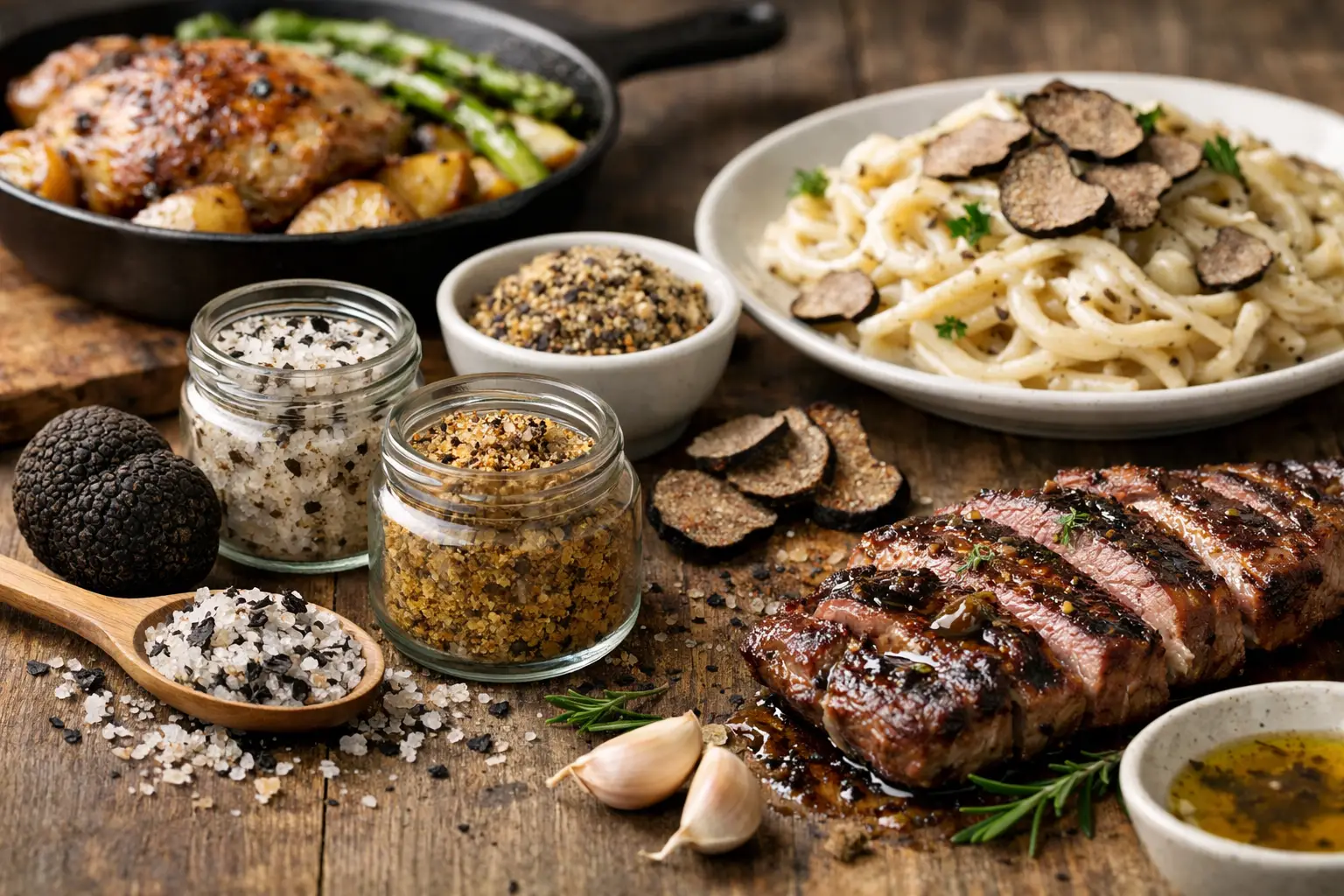
Use black truffle sea salt over scrambled eggs, buttered noodles, roasted potatoes, popcorn, or a skillet of sautéed green beans. It is also excellent on steak after it has rested. A saffron-infused sea salt with black truffle brings a more golden, aromatic character to risotto, chicken, and roasted cauliflower. The trade-off is simple: because salt is concentrated, add it sparingly and taste before adding more.
Truffle Oil for Pasta, Pizza, and Vegetables
A good truffle oil is made for the final flourish. A light drizzle over a hot dish releases its fragrance immediately, creating the sensation of a restaurant plate with almost no additional cooking. Black truffle oil tends to feel deeper and more earthy, making it a natural match for mushrooms, beef, pizza, and hearty pasta. White truffle oil is often more aromatic and elegant, particularly with eggs, potatoes, delicate cheeses, and creamy sauces.
For a quick dinner, toss hot pasta with butter, Parmesan, black pepper, and a modest drizzle of truffle oil. Or roast broccolini with olive oil and garlic, then finish it with white truffle oil and lemon zest. Avoid using truffle oil as a high-heat cooking oil. Its value is in its aroma, and that aroma is far more compelling when added at the table.
Truffle Powder for Savory Depth Without Extra Richness
Truffle powder offers a useful alternative when you want truffle flavor without adding oil or additional salt. It can bring a dry, concentrated savory note to seasonings, breading, sauces, and snackable sides. This makes it particularly handy for meals where texture matters, such as crispy chicken cutlets, oven fries, or roasted chickpeas.
Blend truffle powder into panko before coating chicken or fish, stir it into mashed potatoes, or whisk a small amount into a cream sauce for gnocchi. It also gives weeknight mac and cheese a more composed flavor than a simple extra handful of cheese. Since powders vary in intensity, begin with a restrained amount. You can always add another light dusting just before serving.
Truffle Carpaccio for a More Special Plate
Truffle carpaccio, typically thin slices of truffle preserved in oil, offers visual appeal as well as flavor. It is the choice for evenings when dinner is still simple but you want it to look intentional: a bowl of polenta, a mushroom flatbread, soft scrambled eggs, or a seared filet becomes instantly more celebratory with a few slices on top.
The oil in the jar is useful, too. Spoon a little over risotto or warm crusty bread, then add the slices at the last moment. Carpaccio is more of a premium finishing ingredient than a pantry seasoning you use by the teaspoon, so reserve it for dishes with a clean, uncomplicated base. Too many competing spices can obscure the truffle rather than support it.
Pesto Nero for Fast, Full-Flavored Sauces
For the nights when you need dinner to come together in one pan, black truffle pesto is a particularly rewarding shortcut. Its savory, earthy profile brings depth to pasta, sandwiches, grilled chicken, and roasted vegetables without requiring a long simmer. Stir it into warm pasta with a splash of pasta water, fold it into a white bean dish, or spread it beneath mozzarella on a flatbread before baking.
Pesto nero is richer and more complete than a finishing salt or oil, so it can carry more of the flavor work in a meal. Pair it with ingredients that welcome its intensity: mushrooms, fontina, Parmesan, potatoes, eggs, or mild chicken. If the dish already has a forceful sauce, such as a spicy tomato arrabbiata, use pesto nero in a smaller supporting role.
Pair Truffle Seasonings With the Right Weeknight Staples
The easiest way to make truffle seasonings feel natural in your cooking is to keep a few friendly ingredients on hand. Eggs, pasta, potatoes, mushrooms, pizza dough, Parmesan, butter, cream, and roasted vegetables all provide a rich but neutral canvas. Their flavors do not compete with truffle, and their warmth helps carry its fragrance.
Creamy dishes are especially forgiving. A simple mushroom risotto can take black truffle salt and a few slices of carpaccio, while a weeknight white pizza benefits from mozzarella, mushrooms, and a final drizzle of truffle oil. For brighter dishes, balance the richness with lemon, herbs, or peppery arugula. A truffle finish should make a plate feel more dimensional, not heavy.
Protein deserves a lighter hand. Chicken, steak, and fish are all excellent with truffle, but the seasoning should complement a well-browned crust or a simple pan sauce rather than cover the main ingredient. With fish, white truffle oil or a delicate truffle salt is usually the more graceful choice. With steak or burgers, black truffle salt has the confidence to stand up to the char.
How Much Truffle Seasoning Should You Use?
Restraint is part of the luxury. Start with a few drops of oil, a small pinch of salt, or a light dusting of powder for each serving. Toss, taste, and add only if the dish needs more. Truffle should arrive as an aroma first, then a lingering savory note, not a blunt flavor that overwhelms everything else on the plate.
It also helps to choose one primary truffle element per dish. Pasta with truffle oil and Parmesan needs little else beyond pepper and perhaps fresh parsley. Eggs finished with truffle salt do not need truffle powder as well. Combining products can work beautifully for entertaining, but on a Tuesday night, one exceptional finishing touch is often the entire point.
Store Your Seasonings for Their Best Flavor
Keep truffle oils, salts, and powders tightly sealed in a cool, dark cabinet away from the stove. Frequent exposure to heat and light can dull the aroma that makes them so compelling. Check individual labels for storage guidance, especially for products containing preserved truffle slices or pesto.
Make truffle seasonings part of your regular rotation rather than saving them indefinitely. Their pleasure is in the immediate transformation: the fragrance rising from a bowl of pasta, the first bite of a crisp potato, the small surprise of a familiar meal made more exquisite.
Tonight, choose the dinner you already know how to make well, then finish it with a measured touch of truffle. That small gesture is often all it takes to turn a rushed weeknight meal into one worth lingering over.
