
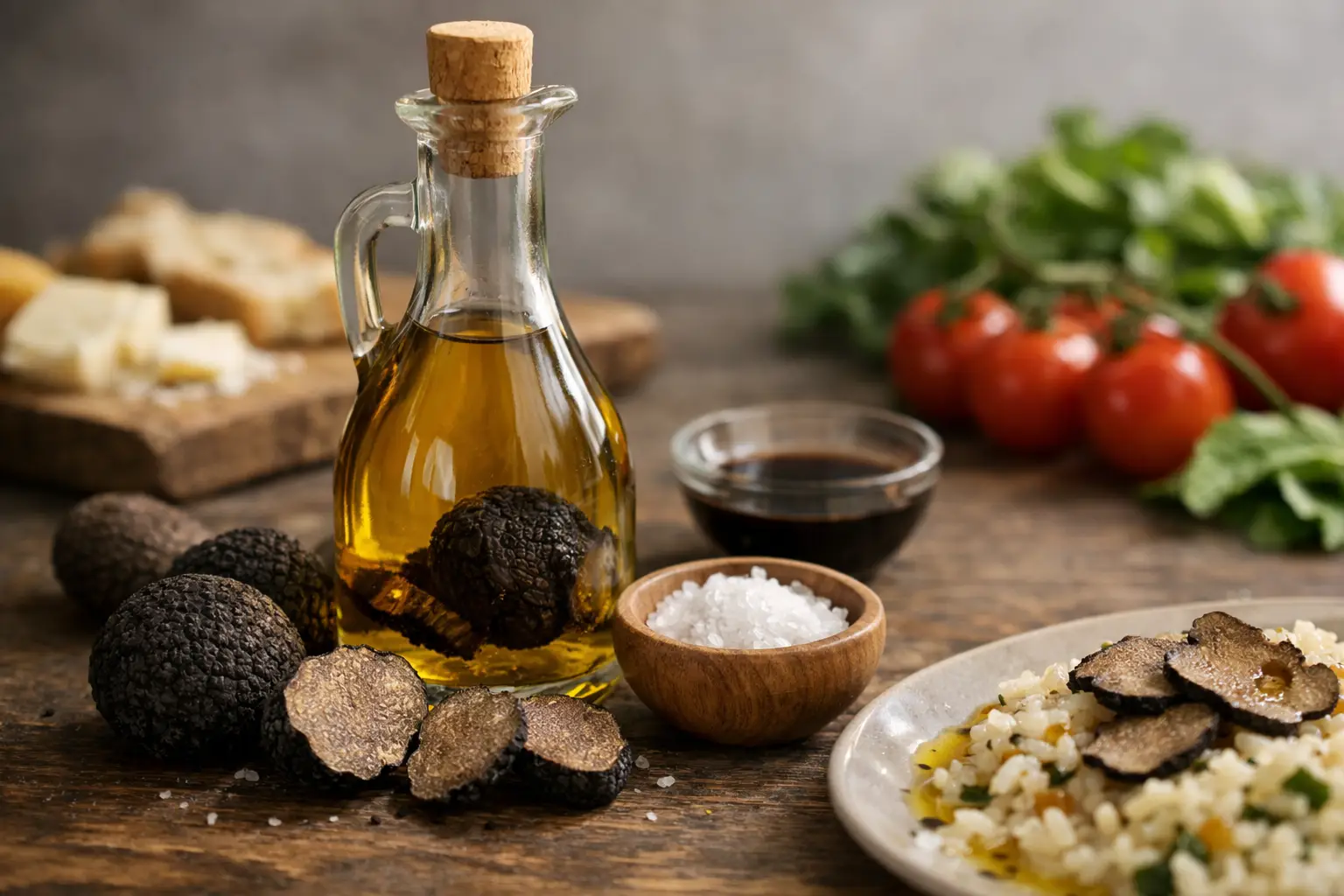
A Guide to Truffle Vinegar Pairing for Better Meals Leave a comment
A spoonful of truffle vinegar can make a plain vinaigrette taste like it belongs beside a crisp-skinned roast chicken or a composed restaurant salad. The secret is restraint. This guide to truffle vinegar pairing is built around that balance: enough acidity to brighten a dish, enough truffle character to feel luxurious, and never so much that the aroma overwhelms the ingredients on the plate.
Truffle vinegar is an elegant finishing ingredient rather than a blunt source of acid. Its earthy, savory perfume brings depth to foods that welcome lift – rich eggs, buttery potatoes, tender seafood, creamy cheese, and vegetables with caramelized edges. Use it where a final flourish can change the entire impression of a meal.
Start With the Character of the Vinegar
Not every truffle vinegar has the same personality. The base vinegar matters as much as the truffle infusion. A white wine vinegar base is generally bright, clean, and especially suited to delicate produce, poultry, and seafood. Red wine vinegar brings deeper fruit and structure, making it a natural match for mushrooms, beef, lentils, and roasted root vegetables. Balsamic-style preparations are sweeter and rounder, best reserved for dishes that can carry their richness.
The truffle itself also shapes the pairing. Black truffle tends to read as earthy, cocoa-like, and savory, with enough weight for warm, rustic flavors. White truffle is often more aromatic, garlicky, and heady. It can be extraordinary with simple foods, but it asks for a lighter hand. If the label specifies the truffle variety, let that guide your menu. If it does not, taste a few drops before deciding where it belongs.
A useful rule is to pair intensity with intensity. Delicate lettuce, raw scallops, and mild fresh cheese need a restrained drizzle of a light truffle vinegar. Charred steak, roasted squash, and aged cheese can welcome a bolder base and a more generous dressing.
Guide to Truffle Vinegar Pairing by Dish
Salads That Need More Than Ordinary Dressing
Truffle vinegar is at its most effortless in vinaigrettes, especially when the salad has creamy, sweet, bitter, or roasted components. Whisk it with a mild extra virgin olive oil, a touch of Dijon, and a small amount of honey or maple syrup if the vinegar is particularly sharp. The goal is not to make the salad taste overtly truffled. It is to give every leaf a savory, lingering finish.
For peppery arugula, pair black truffle vinegar with shaved Parmesan, toasted walnuts, and thin slices of pear. The fruit softens the acidity while the cheese echoes the vinegar’s umami character. With butter lettuce, use a lighter hand and add avocado, spring peas, and tender herbs. A white truffle vinegar can be exquisite here, but too much will dominate the fresh green flavors.
Warm salads are even more accommodating. Dress roasted beets, crispy potatoes, grilled radicchio, or warm farro while they are still hot, so they absorb the flavor rather than merely wearing it on the surface. Add truffle vinegar at the end, after any cooking oil or butter has done its work.
Eggs, Potatoes, and Other Rich Foundations
Eggs and potatoes are classic truffle companions because they are mild, rich, and absorbent. They give truffle aroma room to bloom. A few drops of truffle vinegar over a poached egg with sautéed spinach cuts through the yolk and gives brunch a distinctly special-occasion finish. Fold a teaspoon into a potato salad dressing with crème fraîche, chives, and coarse mustard for a polished alternative to a standard picnic side.
With mashed potatoes, avoid stirring truffle vinegar directly into the entire batch unless you are working in very small amounts. The acidity can make the flavor feel disjointed and may compete with the butter. Instead, finish individual portions with a light drizzle, then add truffle salt or freshly cracked black pepper. The result is luscious but still composed.
For crispy roasted potatoes, toss with olive oil and salt before cooking, then finish with truffle vinegar after they leave the oven. The hot, craggy surfaces catch the acidity beautifully, while the vinegar’s aroma remains intact.
Seafood and Poultry With a Delicate Touch
Seafood pairing depends on both richness and preparation. Rich fish such as salmon, halibut, and sea bass can handle truffle vinegar particularly well, especially when accompanied by mushrooms, leeks, cauliflower, or a silky puree. Whisk a small amount into a warm beurre blanc-style sauce just before serving, or use it to sharpen a vinaigrette for a salad of flaked fish and tender greens.
With raw or very delicate seafood, the trade-off is more pronounced. Truffle can be compelling with scallops, crab, and lobster, but it can also cover their natural sweetness. Use a lighter vinegar base, and keep the application to a few drops in a dressing or finishing sauce. Let citrus, herbs, and the seafood itself lead the first bite.
Chicken is one of the most reliable partners. A pan-roasted chicken breast with mushroom jus, roasted shallots, and a final touch of black truffle vinegar has the comfort of a classic French-inspired dish without unnecessary complexity. Turkey, duck, and quail also benefit, particularly when the plate includes a fruit component such as apple, cherry, fig, or pear.
Beef, Mushrooms, and Slow-Cooked Depth
Truffle vinegar is not a replacement for a steak sauce. It is more refined than that, delivering brightness where browned meat and rendered fat need contrast. Brush a little onto sliced steak after resting, or stir it into a shallot pan sauce just before serving. The acid keeps the dish from becoming heavy while the truffle reinforces the savoriness of the crust.
Mushrooms are an obvious but deeply satisfying match. Use truffle vinegar in a warm dressing for roasted wild mushrooms, lentils, and herbs, or add a few drops to a creamy mushroom risotto immediately before it reaches the table. Since both ingredients are earthy, the plate needs a fresh counterpoint. Parsley, lemon zest, bitter greens, or a crisp white wine will keep the flavors vivid.
For braises and stews, do not cook truffle vinegar for long periods. Prolonged heat dulls the aroma and leaves only acidity behind. Finish the dish with it instead, tasting after each small addition. A slow-cooked beef short rib, mushroom ragù, or white bean cassoulet becomes more lifted and luxurious with this final adjustment.
Pair Truffle Vinegar With Cheese and Charcuterie
Cheese boards are an underused opportunity for truffle vinegar. Think of it as a condiment with more poise than a heavy jam and more complexity than a plain mustard. A small dish of truffle vinegar can be served for dipping crusty bread, or whisked with olive oil for a simple accompaniment to cheese and cured meats.
It pairs especially well with nutty Alpine-style cheeses, aged cheddar, Parmesan, pecorino, and triple-cream cheeses. With soft, bloomy-rind cheese, add something sweet alongside it, such as ripe figs or a spoonful of truffle honey. The sweet-salty-earthy contrast feels generous without becoming cluttered.
Avoid pairing a highly aromatic white truffle vinegar with aggressively blue cheeses unless you enjoy bold, funky flavors. Both ingredients demand attention, and the result can feel crowded. A mellow goat cheese, fresh ricotta, or a young sheep’s milk cheese is often a more graceful match.
The Finishing Rules That Protect the Aroma
Truffle vinegar performs best as a finishing ingredient. Add it to a vinaigrette, sauce, warm vegetables, or plated protein shortly before serving. High heat and extended simmering diminish the aroma that makes it distinctive.
Taste in drops, not splashes. This is particularly true with white truffle styles, which can move from exquisite to overpowering quickly. If a dish already contains truffle oil, truffle salt, truffle carpaccio, or fresh truffle, choose one element to lead. Layering can be beautiful, but piling on every truffle ingredient at once often blurs their individual qualities.
Fat is truffle vinegar’s best companion. Olive oil, butter, egg yolk, cheese, cream, and rendered meat fat carry its aroma across the palate and soften its acidity. Sweetness can help, too, but use it sparingly. A little honey, roasted fruit, caramelized onion, or balsamic reduction can round out the profile; too much makes the truffle taste oddly perfumed.
For a quick test before serving guests, place a bite of the finished dish on a spoon and add one drop of truffle vinegar. If the bite becomes brighter, longer, and more savory, you have found the right direction. If the vinegar is the only thing you notice, pull back and let the food speak first.
A well-chosen truffle vinegar does not need a complicated recipe to prove its value. Keep it within reach for the meals that deserve one memorable final touch: golden potatoes, a bowl of pasta, a steak cooked just right, or a salad built for a dinner worth lingering over.
