
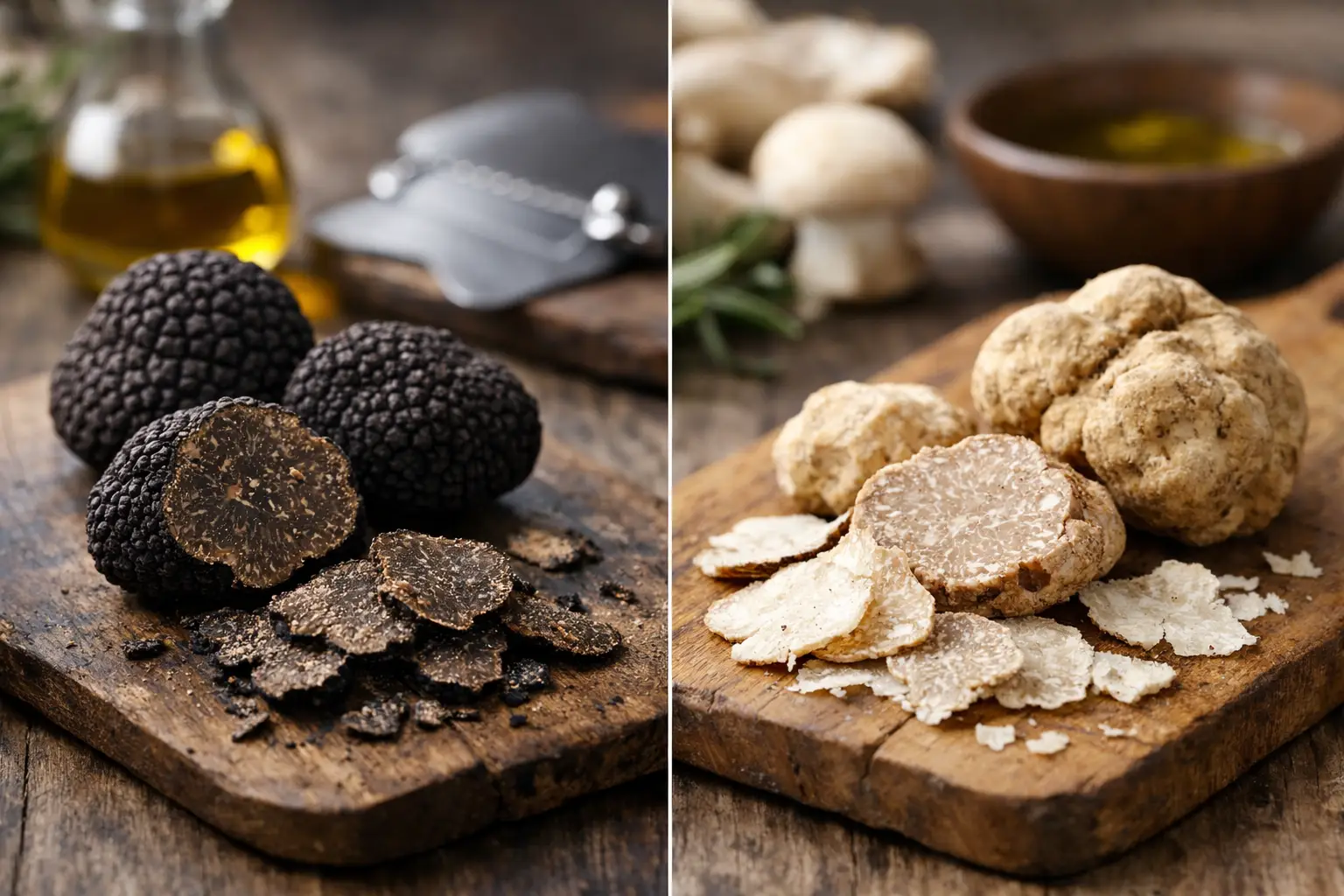
Black Truffle vs White Truffle 5
If you have ever stood over a bowl of buttered pasta wondering whether to finish it with black truffle or white truffle, you are asking exactly the right question. Black truffle vs white truffle is not simply a matter of one being better than the other. They offer distinctly different aromas, textures, cooking applications, and overall experiences at the table.
For home cooks and chefs alike, the difference matters because truffles are finishing ingredients with real personality. Choose well, and a simple dish becomes unforgettable. Choose the wrong style for the wrong preparation, and even an exquisite truffle can feel muted or out of place.
Black truffle vs white truffle: the flavor difference
The clearest distinction starts with aroma. White truffles are intensely fragrant, with a sharp, heady perfume that often suggests garlic, shallot, aged cheese, and wild earth. Their presence is immediate. When shaved over warm food, they announce themselves before the plate reaches the table.
Black truffles are more grounded and savory. Their aroma leans toward cocoa, forest floor, roasted nuts, and deep mushroom notes. They are still luxurious, still unmistakably truffle-forward, but they tend to feel warmer and more understated than white truffles.
That difference shapes the entire dining experience. White truffles are dramatic and fleeting, prized for a bright aromatic lift that works best when nothing competes with them. Black truffles feel more versatile and composed. They can add depth to a dish rather than completely taking it over.
Neither profile is universally superior. It depends on whether you want the truffle to dominate the moment or integrate into the dish with more subtle elegance.
Why white truffles feel rarer and more intense
White truffles are famously elusive, and part of their appeal comes from that scarcity. They are most closely associated with Italy, especially Piedmont, and they are typically used raw or nearly raw because heat can quickly diminish the very aroma that makes them so prized.
That raw application is key. White truffle is usually shaved paper-thin over warm risotto, eggs, mashed potatoes, creamy pasta, or delicate buttered toast. The heat from the food releases the perfume, but the truffle itself is not really cooked. This is why white truffle dishes often appear deceptively simple. The supporting ingredients are intentionally restrained so the truffle can stay at the center.
Because their aroma is so penetrating, white truffles can feel almost electric on the palate. For some people, that intensity is the pinnacle of indulgence. For others, especially if they are newer to truffles, black truffles offer a gentler and more approachable introduction.
Why black truffles are so versatile in the kitchen
Black truffles are often associated with France, though excellent black truffles are found in several European regions. They are beloved not only for their flavor, but for how many ways they can be used.
Unlike white truffles, black truffles can tolerate gentle heat more gracefully. That makes them especially useful in sauces, compound butters, creamy potato dishes, and other warm preparations where the truffle can meld with fat and release its aroma slowly. They can also be shaved fresh over finished dishes, but they are often just as compelling folded into the recipe itself.
This is one reason black truffle products are so popular for everyday luxury. Black truffle oils, salts, powders, honey, carpaccio, and spreads bring that earthy, savory character into dishes with very little effort. A spoonful in mac and cheese, a sprinkle over fries, or a touch on scrambled eggs can instantly make a familiar meal feel restaurant-worthy.
Best dishes for black truffle vs white truffle
When deciding between black truffle vs white truffle, the dish should guide you.
White truffle shines on simple, warm, creamy foods that act like a canvas. Fresh pasta with butter and Parmigiano-Reggiano, soft scrambled eggs, risotto, potato puree, and even warm brie can all work beautifully. The goal is to preserve the truffle’s aromatic complexity, not bury it under acid, spice, or aggressive seasoning.
Black truffle has a broader range. It works beautifully with beef, roasted chicken, mushrooms, pizza, potato gratin, pasta, and rich sauces. It also pairs naturally with pantry staples and finishing products that make elevated cooking more accessible, like truffle salt on popcorn or truffle oil over flatbread.
If you are hosting a special occasion dinner and want a moment of theater, white truffle has unmatched impact. If you want a truffle that can move through more courses and more everyday dishes, black truffle is usually the more practical choice.
Price, seasonality, and what you are really paying for
Truffle pricing can vary sharply by season, harvest conditions, origin, and quality. In general, white truffles command a higher price because they are rarer, more aromatic, and more delicate. Their season is short, and their quality can fluctuate quickly.
Black truffles are still a premium ingredient, but they are often more attainable and easier to use with confidence. For many buyers, especially those building truffle into regular entertaining or home cooking, that balance of luxury and flexibility makes black truffle an excellent value.
What you are really paying for is not only rarity. You are paying for freshness, provenance, handling, and aromatic integrity. A superb truffle used at the right moment can transform a plate in a way very few ingredients can. A mediocre truffle, or one used too late or too aggressively, will not justify its cost.
That is why quality sourcing matters. Whether you are buying fresh truffles or shelf-stable truffle pantry items, the details behind the product matter – species, origin, preservation method, and how the flavor is meant to be used in real cooking.
Fresh truffles vs truffle products
Fresh truffles deliver the purest expression of both black and white varieties, but they are not always the most practical option. They are perishable, seasonal, and best enjoyed quickly. For many households, truffle condiments and pantry ingredients provide a more approachable path to the same flavor family.
Black truffle, in particular, adapts beautifully to oils, salts, honey, pesto, and carpaccio. These products extend the pleasure of truffle beyond a narrow season and make it easier to finish dishes with confidence. They are also ideal for gifting, entertaining, and weeknight cooking when you want something indulgent without planning a whole menu around fresh truffle.
White truffle products can be exquisite as well, though they are best chosen carefully. Because white truffle’s identity is so tied to its volatile aroma, not every preserved format captures its character equally well. The best options are those designed to complement warm foods with restraint rather than mimic the effect of a fresh white truffle shave.
How to choose the right one for your table
If your priority is elegance with broad versatility, black truffle is usually the answer. It suits more ingredients, handles heat better, and fits naturally into both celebratory meals and refined everyday cooking.
If your priority is pure luxury and aromatic drama, white truffle is in a category of its own. It is ideal when the menu is built around the ingredient and the moment itself matters as much as the meal.
There is also a skill factor. White truffle rewards restraint. Black truffle forgives a little more experimentation. If you are new to truffles, starting with black truffle products or fresh black truffles can help you understand how truffle behaves with eggs, pasta, potatoes, and cream. From there, white truffle becomes easier to appreciate and use well.
At Truffle Guys, that practical side of luxury is part of the appeal. Truffles should feel special, but they should also feel usable. The best truffle experience is not about intimidation. It is about knowing which style belongs on which plate.
A final word on preference
Black truffle vs white truffle is not a contest with a single winner. It is more like choosing between two exceptional wines for different meals. One offers deep, savory richness and remarkable range. The other offers unmistakable perfume and a sense of occasion that can stop a conversation mid-bite.
If you love cooking for guests, black truffle may earn its place as the more reliable staple. If you live for the thrill of a once-a-season indulgence, white truffle is hard to match. The real pleasure comes when you stop asking which is best and start asking which one will make tonight’s dish taste extraordinary.

5 Comments
Trackbacks and Pingbacks
[…] you are cooking with fresh truffles, knowing the difference between white and black truffles will shape every choice you […]
[…] earthy, garlicky, nutty, musky, and deeply savory all at once. That perfume is what makes fresh black and white truffles so luxurious at the […]
[…] Black and white truffle oils are not interchangeable. They can both be exquisite, but they create different moods in a dish. […]
[…] Fresh black or white truffle is the most dramatic finishing touch. Shave it over hot, finished mashed potatoes just before serving, then fold in only a few delicate slices. The remaining shavings should rest on top, where their aroma reaches the table first. […]
[…] truffle itself also shapes the pairing. Black truffle tends to read as earthy, cocoa-like, and savory, with enough weight for warm, rustic flavors. White […]