
How to Cook With Fresh Truffles 4
The first time you shave a fresh truffle over hot buttered pasta, the lesson is immediate – truffles do not behave like ordinary ingredients. They are not built for heavy sauces, aggressive seasoning, or long cooking. If you want to know how to cook with fresh truffles, the real skill is restraint. A great truffle dish is less about adding more and more flavor, and more about creating the right stage for that unmistakable earthy, savory perfume to come forward.
Fresh truffles reward simplicity. Their aroma is exquisite but fleeting, which means the most successful dishes tend to be warm, creamy, buttery, and relatively neutral. Eggs, potatoes, risotto, fresh pasta, soft cheeses, and tender poultry all give truffles room to speak. Highly acidic ingredients, excessive garlic, strong smoke, or fiery heat can flatten the experience.
How to cook with fresh truffles without wasting them
The biggest mistake home cooks make is treating fresh truffles like mushrooms. They are not something to sauté hard in a hot pan until browned. Prolonged heat dulls their fragrance, especially with delicate white truffles. In most cases, fresh truffles should be shaved or grated over a finished dish just before serving, or folded in at the last moment when the food is warm rather than piping hot.
That does not mean truffles can never touch heat. Black truffles are more forgiving than white truffles and can be gently infused into butter, cream, or a warm sauce. White truffles are at their best raw and used as a finishing touch. If you are spending on a beautiful fresh truffle, that distinction matters.
Portioning also depends on the variety and the moment. A little goes a long way, but too little can disappear completely. For a dinner for two, a modest amount can transform eggs or pasta if the dish is kept simple. For a special occasion risotto or tableside shaving, a more generous hand creates the kind of aroma guests remember.
Start with the right dishes
Fresh truffles shine brightest in dishes with fat and warmth. Butter, cream, egg yolks, and mild cheeses help carry their aroma across the palate. This is why classic truffle pairings have endured for decades – not because they are predictable, but because they work.
Eggs are one of the best entry points. Soft scrambled eggs, an omelet, or even a gently fried egg on toast gives truffle flavor a luscious backdrop. Truffles and eggs also have a natural affinity because their aromas play well together. For an especially elegant result, shave truffle over eggs just before serving and finish with flaky salt.
Fresh pasta is another natural fit. Tagliatelle, pappardelle, or delicate ravioli dressed with butter and Parmigiano-Reggiano creates a rich but understated base. Keep the sauce light. A heavy tomato sauce or too much herb will compete, while brown butter or a touch of cream can be beautiful if used sparingly.
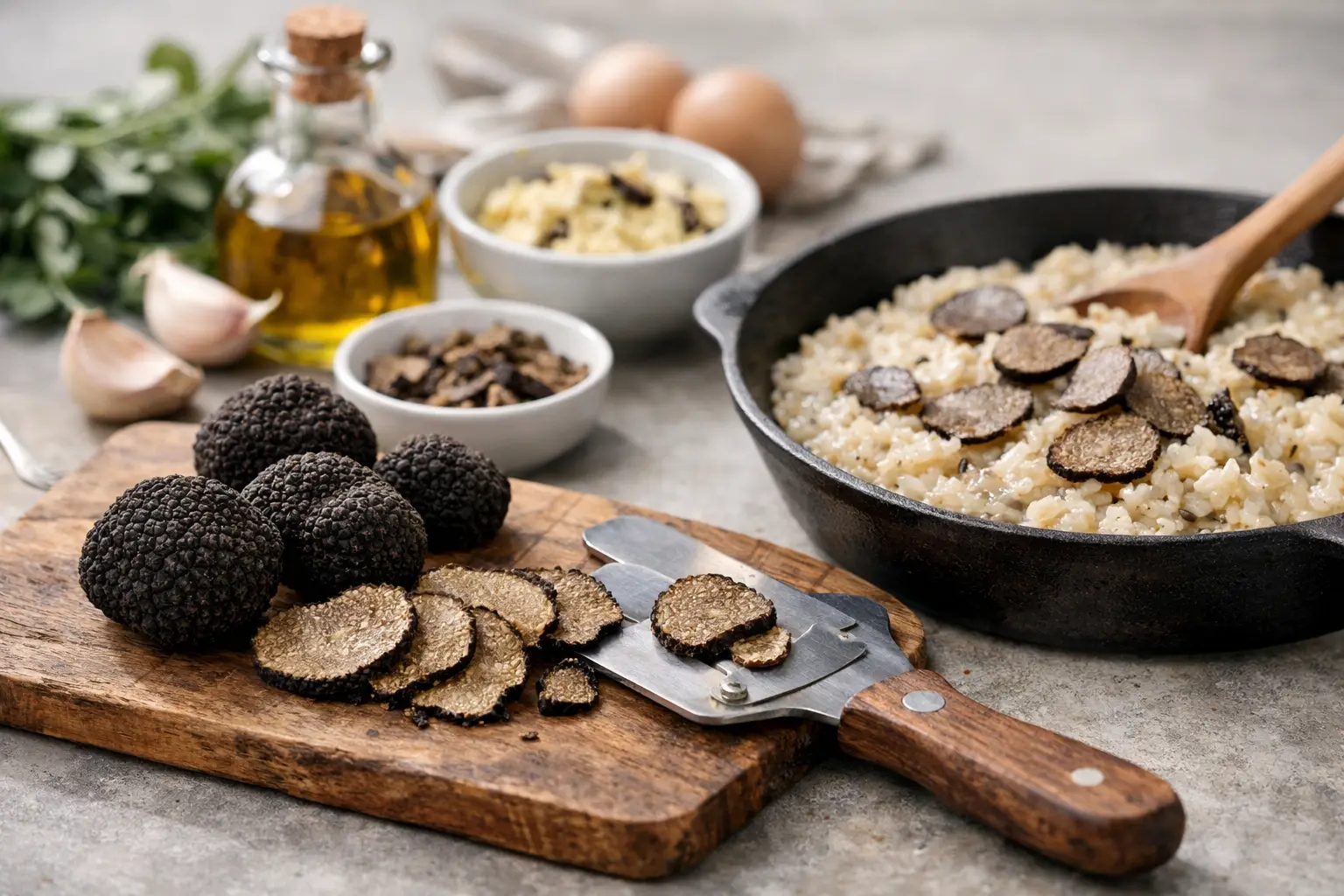
Risotto offers a similar canvas. The rice should be creamy and fluid, not stiff, with enough butter and cheese to feel indulgent but not so much that the truffle disappears. Fold in a bit of truffle at the end if using black truffle, then shave more on top for a fuller aromatic finish.
Potatoes deserve more attention in truffle cooking. A silky potato purée, crisp roasted fingerlings, or even a perfectly baked potato with cultured butter can feel luxurious with fresh truffle. Potatoes are mild, comforting, and excellent at carrying aroma.
White truffles vs. black truffles in the kitchen
If you are cooking with fresh truffles, knowing the difference between white and black truffles will shape every choice you make.
White truffles are intensely aromatic, garlicky, musky, and almost electric in their perfume. They should be used raw, shaved thinly over warm dishes just before eating. Think buttered pasta, risotto, eggs, or a simple fontina fonduta. White truffles are less about cooking and more about finishing.
Black truffles are earthier, deeper, and slightly more subtle. They can handle gentle warming and work well in compound butter, cream sauces, potato dishes, or tucked under the skin of poultry before roasting. They still benefit from being added toward the end, but they offer a little more flexibility.
The trade-off is straightforward. White truffles deliver dramatic aroma but demand a lighter hand and minimal heat. Black truffles integrate more easily into a dish, though they usually ask for a bit more quantity to create the same immediate aromatic impact.
Handling fresh truffles the right way
Fresh truffles need careful handling from the moment they arrive. Do not soak them. If there is any soil attached, brush it off gently or wipe the truffle with a barely damp paper towel right before use. Too much moisture shortens shelf life and can affect texture.
A truffle slicer is ideal because paper-thin slices release aroma beautifully and look striking on the plate. A fine microplane can also work, especially for black truffles mixed into butter, cream, or eggs. The goal is surface area. Thin shavings distribute the flavor more evenly than chunky pieces.
Storage matters because fresh truffles are perishable. Keep them refrigerated, wrapped individually in a dry paper towel and sealed in an airtight container. Change the paper towel daily. Use them quickly – freshness is part of the luxury. Some cooks store truffles with eggs or rice so the aroma subtly perfumes them, which can be lovely, though the truffle itself still needs proper wrapping and close attention.
Simple ways to cook with fresh truffles at home
The best home truffle dishes are often the least complicated. A plate of tagliolini with butter and shaved truffle feels restaurant-worthy because the ingredient is allowed to lead. The same is true of scrambled eggs finished with truffle, or warm potato purée enriched with butter and cream.
For black truffles, truffle butter is one of the most useful preparations. Finely grate or mince the truffle into softened high-quality butter, add a pinch of salt, and let it rest briefly so the aroma infuses. Spoon it over steak, toss it with pasta, melt it onto roasted chicken, or use it to finish grilled bread. It gives you more control than shaving at the table and helps stretch a precious ingredient across several servings.
Cream-based dishes can also be effective, but balance is everything. A splash of cream in a sauce can support truffle flavor; too much can make the dish feel flat and overly rich. The same goes for cheese. Mild, nutty cheeses tend to flatter truffles, while sharp cheddar or blue cheese usually overpower them.
Pizza can be excellent with fresh truffle if you approach it carefully. A white pizza with mozzarella, mascarpone, or fontina, finished with shaved truffle after baking, is far more elegant than baking the truffle into a heavily topped pie. Heat the crust, melt the cheese, then add the truffle at the end.
What to avoid when cooking with fresh truffles
Too much garlic is a common issue. Although some truffles have garlicky notes, adding actual garlic aggressively can blur the flavor rather than enhance it. Use it lightly, if at all.
Strong acid is another problem. Lemon can brighten many dishes, but with fresh truffles it often distracts from the aroma. Vinegar-heavy dressings, sharp pickles, and acidic tomato sauces tend to push truffles into the background.
Overseasoning also gets in the way. Truffles pair well with salt, butter, cream, eggs, and subtle cheeses because these ingredients support rather than compete. If every component of the dish is loud, the truffle becomes an afterthought.
Finally, avoid waiting too long once the truffle is shaved. Aroma dissipates quickly. Fresh truffles should hit the plate close to the moment of serving, ideally over food that is warm enough to release their perfume without cooking it away.
Serving fresh truffles for maximum impact
There is a reason tableside shaving feels so luxurious. Aroma is central to the experience, and serving truffles at the last second preserves that effect. If you are entertaining, bring the truffle and slicer to the table and finish each plate there. It adds theater, yes, but it also happens to be the best way to serve them.
This is especially true for white truffles, where fragrance is the event. A simple dish can feel extraordinary when that scent rises off the plate at the exact moment it reaches the guest. For black truffles, combining a small amount in the dish with a final shaving on top often creates a more layered result.
At Truffle Guys, that philosophy is what makes fresh truffles so compelling in home cooking. You do not need elaborate technique to create a special occasion meal. You need a beautiful truffle, a restrained hand, and food that knows how to support it.
Fresh truffles ask you to cook with confidence, but not ego. Let the butter be warm, the eggs soft, the pasta silky, and the slices generous enough to perfume the plate. When everything else steps back, the truffle finally gets to do what it does best.

4 Comments
Trackbacks and Pingbacks
[…] Some preserved truffles are softer and better sliced gently with a knife or added in pieces. Fresh truffles are where the classic paper-thin shave really […]
[…] can freeze them whole, halved, or sliced. Whole truffles retain their character slightly better, while sliced or […]
[…] also helps to build around ingredients that naturally flatter truffle. Potatoes, eggs, mushrooms, lentils, steak, Parmesan, bitter greens, and root vegetables all respond especially well. Very […]
[…] Fresh truffles shine on dishes with gentle flavors and enough warmth or fat to release their aroma. Think silky risotto finished with butter and Parmigiano-Reggiano, fresh pasta with cream, a classic omelet, potato purée, or a simply prepared filet topped with a glossy pan sauce. […]