
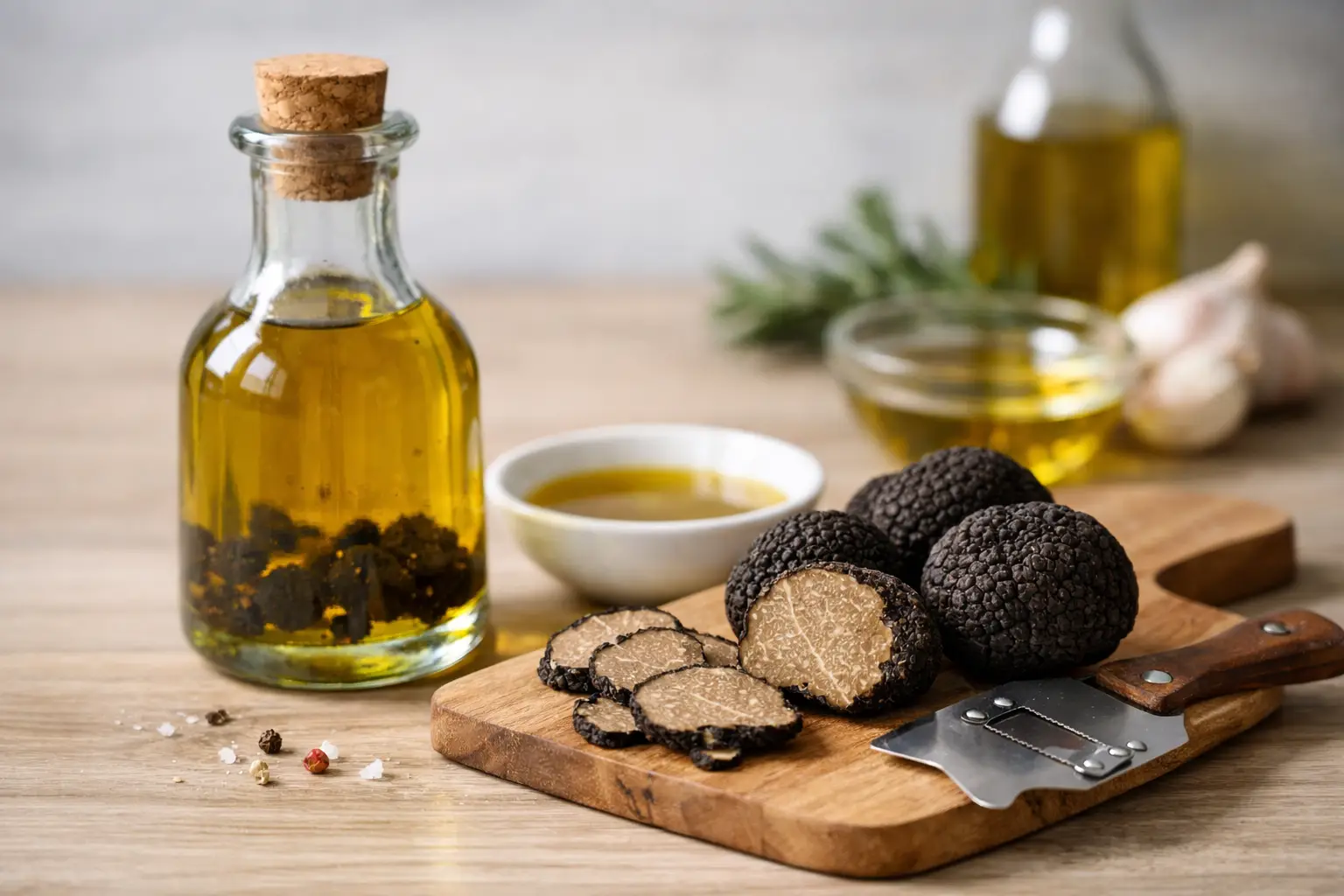
Is Truffle Oil Good for Cooking? 4
A few drops of truffle oil can turn plain fries into something that feels dinner-party worthy. But if you have ever wondered, is truffle oil good for cooking, the honest answer is yes – with a very specific caveat. Truffle oil is at its best when used with intention, because its aroma is delicate, concentrated, and far more suited to finishing than aggressive high-heat cooking.
That distinction matters. Truffle oil is not like olive oil you reach for to saute onions or sear steak. It is a luxury ingredient designed to add a final layer of earthy, savory depth to dishes that are already cooked or nearly finished. Used well, it brings a lush, unmistakable truffle character to the table. Used carelessly, it can flatten a dish or disappear entirely.
Is truffle oil good for cooking or better as a finishing oil?
For most dishes, truffle oil is better as a finishing oil. The reason is simple: truffle aroma is volatile. Extended exposure to heat softens the very notes that make truffle oil special – those deep, woodsy, garlicky, slightly musky nuances that give a dish its restaurant-quality edge.
That does not mean heat and truffle oil can never meet. It means the timing matters. Stirring a small amount into warm risotto just before serving works beautifully. Drizzling it over hot roasted potatoes does too. Baking it into a casserole for an hour, on the other hand, is rarely the best use of a premium ingredient.
Think of truffle oil as you would a finishing salt or a fragrant extra virgin olive oil reserved for the plate. It is there to complete the dish, not carry the full burden of the cooking process.
What truffle oil actually does in a dish
Truffle oil adds aroma first and flavor second. That may sound subtle, but aroma is a huge part of how we experience taste. A well-made truffle oil gives mashed potatoes more depth, eggs more richness, and simple pasta a more luxurious character without requiring a complicated recipe.
It also works because truffle flavor loves foods with fat, starch, and gentle savory backgrounds. Buttered noodles, creamy polenta, French fries, popcorn, pizza, roasted mushrooms, and scrambled eggs all give truffle oil a soft landing place. The oil does not need to compete with sharp acidity, heavy smoke, or aggressive spice. It needs room to bloom.
This is why truffle oil is so appealing in modern home cooking. You can create a special occasion effect with almost no extra effort. A restrained drizzle over a familiar dish can make it feel polished, indulgent, and far more memorable.
When truffle oil works beautifully
The best applications are dishes that are warm, rich, and relatively simple. Freshly fried potatoes are a classic for a reason. Their crisp exterior and fluffy center absorb flavor beautifully, and a little truffle oil with sea salt and Parmesan feels instantly elevated.
Eggs are another natural match. Whether folded into soft scrambled eggs, finished over an omelet, or drizzled onto a fried egg over toast, truffle oil adds an exquisite savory finish. Pasta, especially with butter, cream, or a mild cheese base, also welcomes truffle oil exceptionally well.
It is equally effective on pizza after baking, over risotto just before serving, or whisked lightly into mashed potatoes. Even simple snacks benefit. Warm popcorn tossed with a touch of truffle oil and salt feels both playful and refined.
These dishes succeed because they let the truffle note lead without overwhelming the palate. You taste comfort first, then that unmistakable aromatic lift.
Best foods to pair with truffle oil
Truffle oil is especially flattering with potatoes, eggs, pasta, rice, mushrooms, mild cheeses, cauliflower, and steak. It can also add dimension to flatbreads, crostini, mac and cheese, and creamy soups.
The common thread is richness and restraint. Truffle oil tends to shine brightest on foods that are mellow enough to frame it, rather than challenge it.
When truffle oil is not the best choice
There are times when truffle oil is simply the wrong tool. High-heat searing is one of them. If you are cooking in a ripping hot skillet or on a grill, the truffle aroma will not give you its full value. Save it for after the heat.
It also struggles in dishes with powerful competing flavors. Strong barbecue sauce, heavy chili heat, sharp vinegar, or very sweet glazes can bury truffle character. In those cases, the oil may taste muddled rather than elegant.
Portion matters too. More is not better. Truffle oil is concentrated, and overuse can make a dish feel heavy or one-dimensional. The most successful truffle dishes usually rely on a light hand – enough to perfume the food, not saturate it.
How to cook with truffle oil without wasting it
If you want the best result, use truffle oil late in the process. Finish a dish after plating, or fold in a small amount right before serving while the food is still hot. Residual warmth helps release the aroma without cooking it away.
Start with less than you think you need. A teaspoon can go a surprisingly long way, especially in a dish for two to four people. Taste, then add more only if the dish needs it. This is one of those ingredients that rewards precision.
Balance also matters. Truffle oil works best with supporting flavors like butter, Parmesan, cream, chives, parsley, or flaky salt. Those ingredients amplify its luxurious character without crowding it. If everything on the plate is loud, truffle oil has nowhere to sit.
A practical rule for heat
Low or residual heat is fine. High heat is usually a miss. If the dish would benefit from being finished with olive oil, butter, or cheese at the end, it will probably welcome truffle oil in the same moment.
Quality makes a visible difference
Not all truffle oils perform the same way in the kitchen. Some are harsh, flat, or overly aggressive. Others are balanced, nuanced, and much closer to the elegant truffle experience cooks are actually after.
That difference shows up immediately in how the oil behaves on food. A quality truffle oil should smell appetizing, not overpowering. It should enhance a dish rather than dominate it. And it should feel like an intentional finishing ingredient, not a novelty flavor.
For shoppers building a gourmet pantry, this is where a specialist perspective matters. Brands like Truffle Guys have helped make truffle ingredients more approachable by offering premium, giftable, kitchen-ready formats that fit real home cooking, from weeknight pasta to celebratory entertaining.
Is truffle oil good for cooking every day?
It can be, depending on how you cook. If your style leans toward simple dishes with strong ingredients – eggs in the morning, roasted vegetables at dinner, pasta on a weeknight, fries for a casual gathering – truffle oil earns its place quickly. You do not need a special recipe every time you open the bottle.
What you do need is selectivity. Truffle oil is not an all-purpose oil. It is an accent ingredient. Think of it as a finishing move for the dishes you already love, especially when you want them to feel a little more polished and a little more indulgent.
For entertaining, it is particularly effective. A platter of hot fries, truffle oil, grated cheese, and herbs can disappear as fast as any elaborate appetizer. The same goes for truffled deviled eggs, mushroom flatbread, or a bowl of creamy risotto passed around the table. It delivers luxury in a form that still feels effortless.
The real answer
So, is truffle oil good for cooking? Yes – when cooking means enhancing a finished dish rather than exposing the oil to prolonged heat. It is excellent for adding depth, aroma, and a refined savory finish to foods that are already warm, rich, and ready to receive it.
If you treat truffle oil as a finishing ingredient instead of a frying oil, it becomes one of the easiest ways to create a more memorable plate. A little restraint, the right pairing, and good timing are usually all it takes to make something simple taste unmistakably special.
The smartest way to use truffle oil is to let it do less, not more – because that final drizzle is often where the luxury lives.

4 Comments
Trackbacks and Pingbacks
[…] best as a finishing touch. Heat can mute its more delicate aromatic notes, so it is usually better added just before serving or at the table. That is not a limitation. It is part of its […]
[…] oil can taste overpowering if it is poured too heavily, paired with very assertive ingredients, or cooked directly into a hot pan. More is not […]
[…] said, truffle oil is not usually the best choice for long cooking. Extended heat can flatten its aromatic top notes. If the goal is a dramatic final flourish, add it […]
[…] key is to use them as finishing ingredients, not as a heavy-handed sauce. A few drops of black truffle oil can bring an elegant aroma to mashed potatoes or popcorn. Black truffle salt adds instant depth to […]