
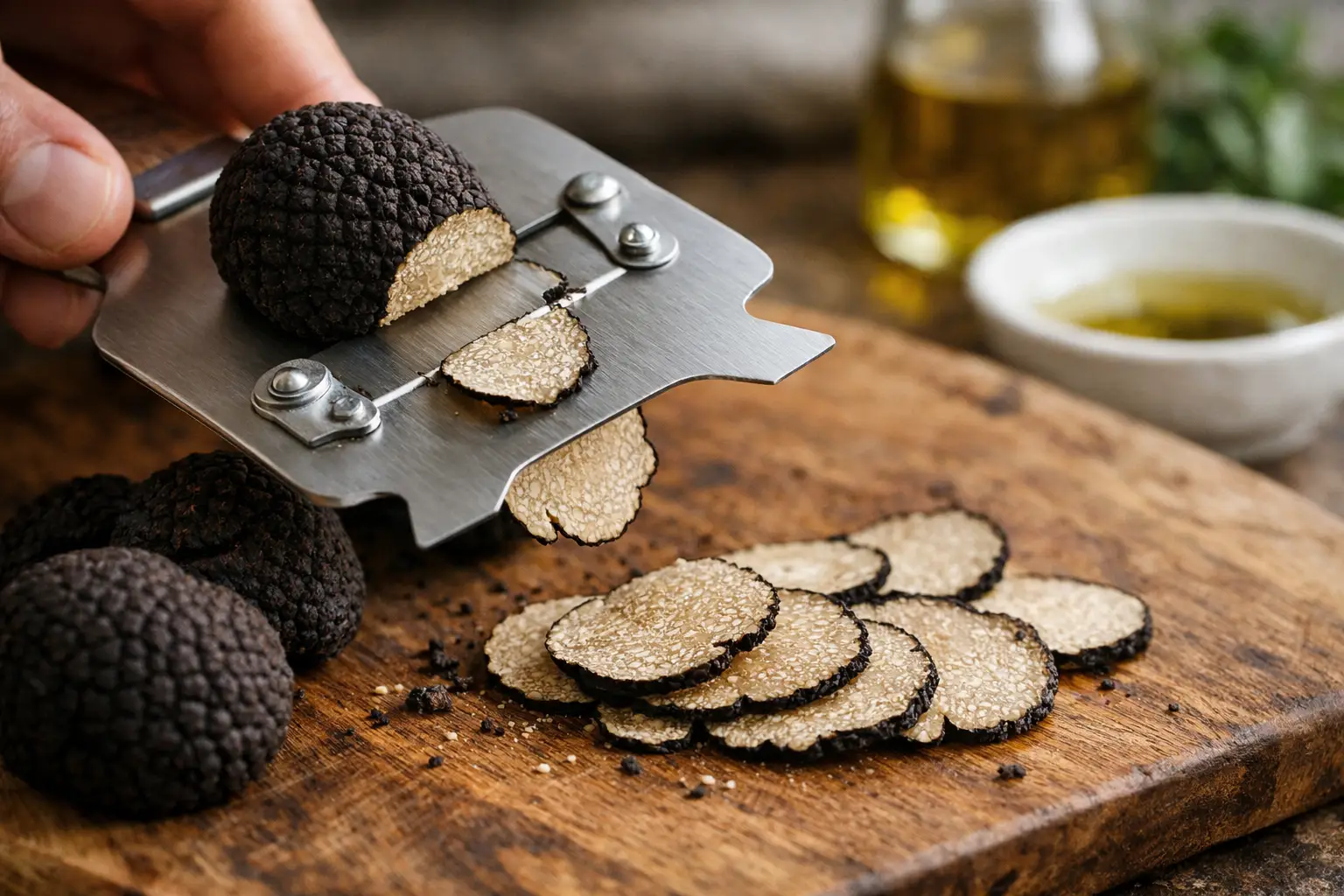
How to Shave Black Truffles Properly Leave a comment
A black truffle can turn a simple plate of pasta or softly scrambled eggs into something unmistakably special – but only if you shave it well. Knowing how to shave black truffles is less about ceremony and more about control: the right thickness, the right moment, and the right dish underneath.
Black truffles are prized for their deep, earthy aroma and savory complexity. They are not handled like a garnish you toss on at the end without thought. A poor shave can leave you with thick, chewy slices that sit heavily on the plate, while overly fine shavings can disappear before their flavor has a chance to register. The goal is a delicate slice that warms gently over the food and releases its fragrance as you serve.
How to shave black truffles for the best flavor
The best way to shave black truffles starts with temperature and texture. A truffle that is too soft can catch on the blade and crumble. One that is very cold from refrigeration is often easier to shave cleanly, especially if it is fresh and firm. Let it sit just long enough that the aroma begins to open, but not so long that it becomes difficult to slice evenly.
Use a truffle shaver if you have one. This is the ideal tool because it gives you precise, paper-thin slices with very little pressure. A mandoline-style truffle slicer with an adjustable blade is especially useful if you want consistency across the plate. If you do not have a dedicated truffle shaver, a very sharp vegetable peeler can work in a pinch, though the slices will usually be less uniform.
Hold the truffle firmly but gently, keeping your fingertips clear of the blade. Then glide it across the slicer in smooth, controlled passes. Do not force it. If the truffle resists, adjust the blade thinner or check whether the truffle is too warm. Thin slices are usually best because they sit lightly over warm food and release aroma quickly. Thick slices can be appealing in some restaurant presentations, but at home they often overwhelm texture before they deliver more flavor.
The right thickness matters
When people ask how to shave black truffles, what they often mean is how thin should the slices be. The answer depends on the dish, but in most cases thinner is better. You want a slice delicate enough to soften almost immediately from the heat of the food.
For eggs, risotto, mashed potatoes, and buttered pasta, go very thin. These dishes have soft textures and warm fat, so the truffle fragrance blooms beautifully without needing a heavy hand. On steak or roasted chicken, you can shave slightly thicker if you want more visual presence, but still keep the slices refined rather than chunky.
There is a trade-off here. Ultra-thin shavings stretch a truffle further and create an elegant finish, but if the dish is heavily seasoned or served too cool, the truffle may feel subtle. Slightly thicker slices give more bite and a stronger impression on robust foods, yet they can feel less luxurious if they are too dense. The dish should guide the cut.
When to shave black truffles
Timing is as important as technique. Black truffles should be shaved at the last possible moment, directly over warm food. If you shave them too early, you lose precious aroma into the air rather than onto the plate.
That final contact with heat matters. The warmth from fresh pasta, creamy polenta, risotto, or eggs coaxes out the truffle’s fragrance without cooking it aggressively. High heat can flatten some of the nuance, so this is not an ingredient you want to fry hard or boil. Think of shaved black truffle as a finishing touch, not a base note.
If you are serving guests, have the dishes plated and ready before you begin shaving. This keeps the experience immediate and expressive. A fresh black truffle has an unmistakable perfume, and shaving it tableside or just before serving captures that moment at its peak.
Best dishes for shaved black truffle
Black truffles are most compelling when paired with foods that carry flavor without competing for attention. Rich, warm, gently seasoned dishes let the truffle do what it does best.
Eggs are a classic for good reason. Their soft texture and fat content frame the truffle beautifully. Fresh pasta with butter or a light cream sauce is equally suited, especially when finished with Parmesan. Risotto, potato puree, and polenta offer the same kind of warm, silky backdrop.
For a more substantial plate, shaved black truffle works beautifully over steak, roast chicken, or even a crisp flatbread finished with mild cheese. Just keep the rest of the flavors disciplined. Too much garlic, acid, chili, or smoke can crowd the truffle and mute the very thing you paid for.
This is where restraint becomes part of the luxury. A simple dish with excellent butter, eggs, pasta, or potatoes often delivers more truffle pleasure than a complicated recipe with ten competing ingredients.
How to prepare the truffle before shaving
Before you shave, inspect the truffle carefully. Fresh black truffles can carry traces of soil in their natural crevices, so they should be cleaned gently but thoroughly. Use a soft brush or a slightly damp paper towel to remove any remaining dirt. Avoid soaking them. Excess moisture is not your friend here.
Once clean, dry the truffle completely. A damp surface can slip on the blade and make shaving messy. If the truffle is irregular in shape, rotate it as you shave so you get the widest possible slices from each side.
If you are working with a preserved truffle product rather than a fresh whole truffle, the method may change slightly depending on texture. Some preserved truffles are softer and better sliced gently with a knife or added in pieces. Fresh truffles are where the classic paper-thin shave really shines.
Common mistakes when shaving black truffles
The most common mistake is shaving too much onto the wrong dish. More is not always better if the food underneath is too salty, too acidic, or too hot. Truffles perform best in balance.
Another mistake is using a dull tool. A poor blade bruises the truffle instead of slicing it neatly, which wastes product and affects presentation. If you invest in fresh black truffle, the proper slicer is worth it.
Storage mistakes also matter. If a truffle has dried out or become overly soft from poor storage, even perfect shaving technique will not rescue the experience. Keep fresh truffles refrigerated, wrapped properly, and use them promptly for the best aroma and texture.
Then there is the temptation to shave in advance for convenience. It seems practical when entertaining, but it costs you the very fragrance that makes black truffle so memorable. Last-minute shaving is always the better choice.
How much shaved black truffle to use
Portion depends on the occasion, the dish, and the quality of the truffle. For a single serving of pasta, eggs, or risotto, a light but visible layer of shavings is usually enough. You want the aroma to rise as the plate lands, not to blanket the dish so heavily that every bite feels one-dimensional.
If the meal is built around truffle as the star, you can be more generous. For a dinner party or special occasion, this is one of those finishing touches that feels both indulgent and effortless. At Truffle Guys, that balance between luxury and usability is part of what makes truffles so appealing for home cooks – the effect is dramatic, but the technique is simple once you understand it.
A good rule is to let the first few shaves guide you. Smell the dish. Look at the coverage. If the aroma is expressive and the slices are distributed evenly, you are there.
Learning how to shave black truffles well comes down to one principle: respect the ingredient. Keep the dish warm and understated, keep the slices thin, and shave just before serving. Done properly, even a modest amount can transform dinner into something exquisite – the kind of meal people remember long after the plate is cleared.
