
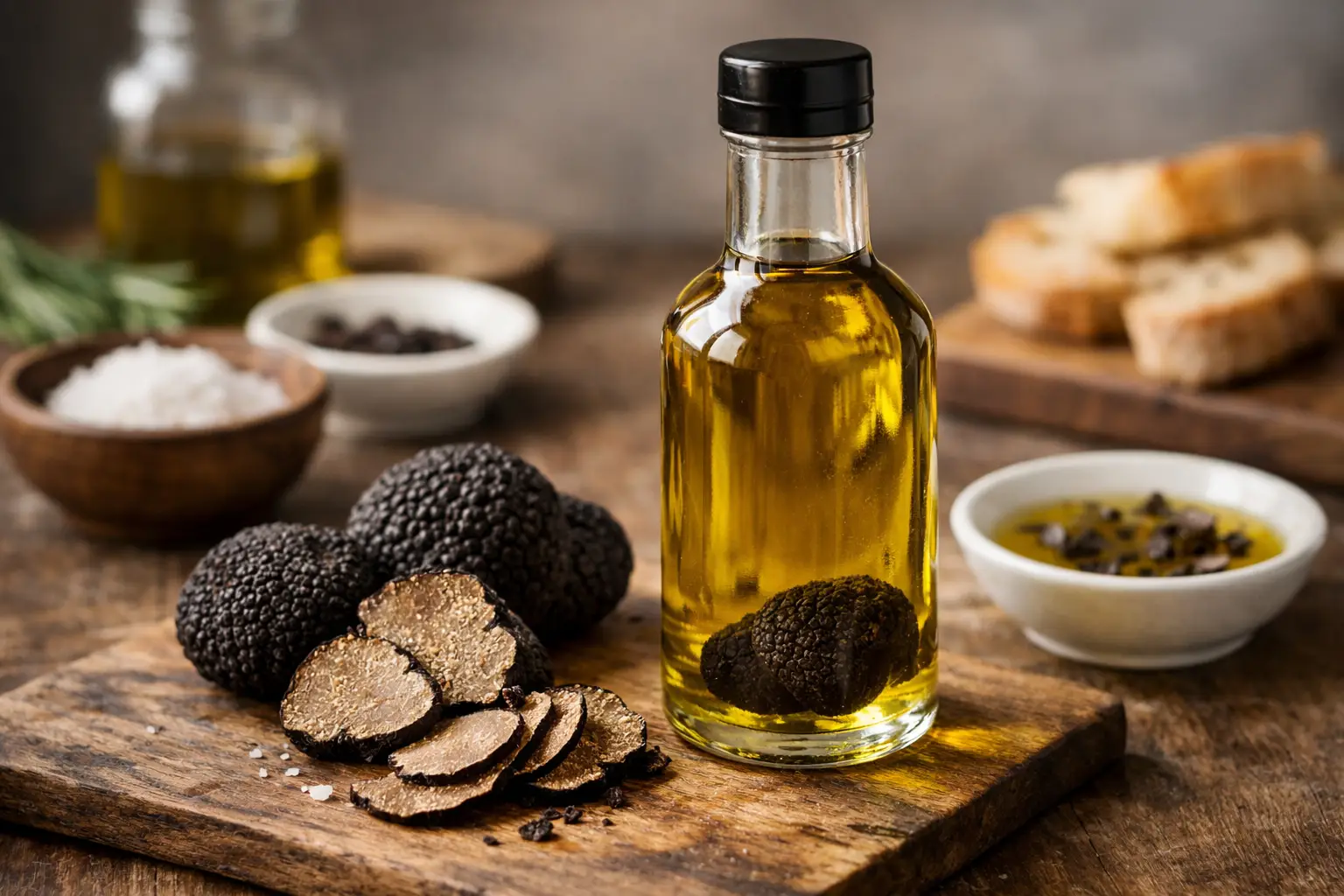
Black Truffle Oil Review: Worth Buying? 1
A disappointing bottle of truffle oil usually reveals itself in seconds. The aroma is loud but flat, the flavor sits on top of food instead of melting into it, and what should feel luxurious ends up tasting artificial. A proper black truffle oil review has to go beyond whether it smells strong. The real question is whether it delivers depth, balance, and the kind of finishing power that makes a simple plate of pasta, eggs, fries, or risotto taste unmistakably special.
For home cooks and professionals alike, black truffle oil earns its place not as a cooking shortcut, but as a finishing ingredient. When it is well made, it brings earthy, savory fragrance and a polished restaurant-style finish with only a few drops. When it is poorly made, it can dominate a dish in the worst way. That difference is why ingredient quality matters so much.
What matters in a black truffle oil review
The first thing to understand is that black truffle oil is not meant to behave like fresh truffles. Fresh truffles are nuanced, fleeting, and seasonal. Truffle oil is shelf-stable, convenient, and built for consistency. It offers a different kind of value – less about rarity at the table, more about effortless indulgence on demand.
That means a fair review should judge black truffle oil on its own terms. The best bottles are aromatic without being harsh, rich without tasting greasy, and versatile enough to elevate a range of dishes. You want an oil that feels refined in application, not gimmicky.
Ingredient composition is the clearest place to start. A high-quality base oil matters because it carries the aroma and shapes the finish on the palate. Olive oil is common, though some brands use neutral oils to let the truffle notes stand forward. Neither choice is automatically right or wrong. It depends on the intended flavor profile. Olive oil can add body and a savory backbone, while a lighter base can make the truffle character feel more direct.
Then there is the truffle element itself. Some oils include real black truffle, often in small pieces or as an infusion, while others rely primarily on aroma compounds to create a consistent truffle profile. This is where shoppers tend to get overly rigid. Presence of visible truffle does not always guarantee a better bottle, and absence of truffle pieces does not always mean poor flavor. What matters is whether the final result tastes elegant, layered, and appetizing.
Flavor profile: what a good bottle should taste like
In any honest black truffle oil review, flavor has to be described with some precision. Good black truffle oil should have an earthy aroma, yes, but also warmth, umami, and a gentle garlic-like savoriness. It should expand a dish rather than bury it. A drizzle over mashed potatoes should make them taste richer and more luxurious. Over eggs, it should amplify creaminess and depth. On pizza, it should add perfume and intrigue after baking, not coat the palate with a synthetic aftertaste.
The finish tells you almost everything. Better black truffle oil lingers in a graceful way. The aroma stays present, but the mouthfeel remains clean enough that you want another bite. Inferior versions often hit hard at first, then turn one-dimensional. Instead of a composed earthy note, you get something sharp, overly perfumed, or strangely chemical.
This is why restraint in use is part of quality assessment. A strong oil is not necessarily a better oil. In fact, the most versatile bottles tend to be those that can be used with a light hand and still feel integrated. If a truffle oil only works when flooding a plate, it is probably not especially refined.
Best uses and where black truffle oil shines
Black truffle oil performs best as a finishing touch. Heat can mute its more delicate aromatic notes, so it is usually better added just before serving or at the table. That is not a limitation. It is part of its appeal.
Used properly, it is one of the easiest ways to turn familiar food into something occasion-worthy. Eggs are a natural match because their richness gives the aroma a soft place to land. Pasta with butter or cream responds beautifully to a few drops. Risotto, mushroom dishes, potato gratin, steak, and even a well-made burger can benefit from that earthy, savory lift. Popcorn and fries may be more casual, but they also show how effective truffle oil can be when paired with salt and warmth.
There are, however, dishes where black truffle oil feels less convincing. Delicate seafood can be overpowered quickly. Bright acidic salads often clash with it unless the dressing is carefully balanced. Very spicy food tends to flatten the nuance. As with any premium pantry ingredient, the point is not to add it everywhere. The point is to know where it creates the most pleasure.
A balanced black truffle oil review on value
Value in this category is not just about bottle size or price per ounce. It is about how much culinary return you get from a small pour. A thoughtfully made black truffle oil can stretch across many meals because you only need a modest drizzle to create impact.
That makes it particularly attractive for people who want the experience of truffle in a more accessible format. Fresh truffles are exquisite, but they are seasonal, perishable, and more demanding in both storage and timing. Truffle oil offers immediacy. It sits in the pantry ready to transform a weeknight dinner, a holiday appetizer, or a special brunch without requiring advance planning.
Still, there is a trade-off. If what you want is the full complexity and romance of shaved fresh truffle, no oil will replace that. A bottle of black truffle oil is better understood as its own luxury ingredient – practical, giftable, and highly effective when used with intention.
How to shop for quality
Reading a label carefully can save you from disappointment. Look at the base oil first, then the ingredient list, and then the positioning of the product. A premium bottle should be designed for culinary use, not novelty appeal. Packaging also matters more than many shoppers assume. Dark glass helps protect flavor and aroma from light exposure, and a controlled pour makes it easier to use the oil precisely.
Brand specialization is another useful clue. Producers focused on truffles and gourmet pantry ingredients tend to understand how these products are actually used in kitchens. That often shows up in better flavor balance and more thoughtful product development. A company such as Truffle Guys, with a long-standing focus on truffle-based products, signals a level of category knowledge that general gift-food brands do not always bring.
Price can indicate quality, but only up to a point. The cheapest bottles often taste the most aggressive and least polished. At the same time, the highest price does not automatically mean the most satisfying flavor. The sweet spot is usually a bottle that treats truffle oil as a serious finishing ingredient rather than a novelty item.
Who should buy it and who should skip it
Black truffle oil is especially worthwhile for the cook who wants immediate impact with minimal effort. If you love finishing touches, build menus around texture and aroma, or entertain often, it is a remarkably useful bottle to have on hand. It also makes sense for gift buyers because it feels indulgent while remaining approachable. A recipient does not need advanced culinary training to enjoy it.
For chefs and more experienced home cooks, its appeal lies in consistency and control. You can add a measured layer of truffle character exactly where needed, whether that is on crostini, a composed potato dish, or a final pass over grilled meat.
If you dislike pronounced earthy aromas or expect truffle oil to duplicate fresh truffle perfectly, you may be underwhelmed. The experience is different. It is more direct, more pantry-friendly, and more about finishing than shaving or layering fresh truffle at the peak of season.
Final verdict
A strong black truffle oil review should come down to this: does the bottle make food more memorable, or does it merely make it smell like truffle from across the room? The best black truffle oils earn their place by delivering elegance, not excess. They add depth to eggs, pasta, potatoes, pizza, and steak with very little effort, and they make luxury feel practical enough for a Tuesday night.
Choose one with a quality base oil, a balanced aroma, and a clean finish. Use it sparingly, pair it with rich and savory foods, and let it do what it does best – turn simple dishes into something a little more luscious, a little more polished, and much more worth serving.

One Comment
Trackbacks and Pingbacks
[…] or brushed lightly onto the cut side of a toasted bun, gives the burger an exquisite aromatic lift. Black truffle oil is particularly well suited to mushroom Swiss burgers, burgers with roasted garlic, or a patty […]