
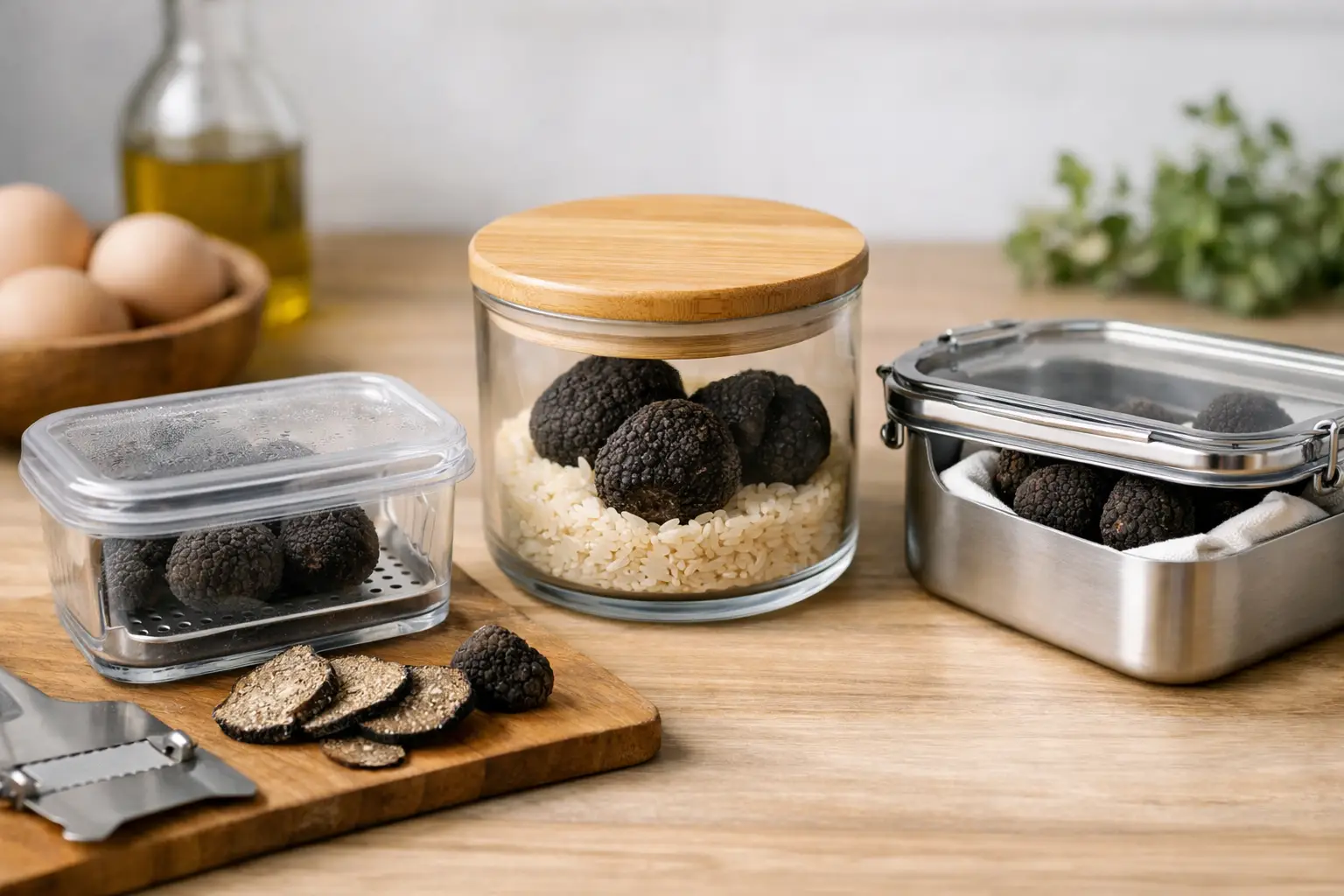
Fresh Truffle Storage Containers That Work Leave a comment
A fresh truffle arrives with a brief, glorious window: earthy perfume, firm flesh, and enough aromatic power to transform warm eggs, handmade pasta, or a simple risotto. Fresh truffle storage containers help protect that window, but the container alone is not the answer. The real goal is to manage three things at once: cold temperature, excess moisture, and exposure to competing refrigerator odors.
Treat fresh truffles less like pantry ingredients and more like a prized piece of produce from a chef’s walk-in. They need attention each day, and that small ritual pays you back at the table.
What Fresh Truffles Need After Delivery
Fresh black and white truffles are living fungi, not shelf-stable preserves. Their aroma is volatile, their surface can hold moisture, and their flavor changes quickly after harvest. Refrigeration slows that process, but a damp container can encourage spoilage while a dry one can leave the truffle shrunken and less fragrant.
For most fresh truffles, the ideal refrigerator temperature is about 37 to 39°F. A crisper drawer is not always the best choice because humidity can be higher there. A stable, cool area of the refrigerator is preferable, away from raw meat, pungent cheeses, cut onions, and leftovers with assertive aromas.
Do not wash a truffle when it arrives. Water left in its crevices is the enemy of good storage. Brush away any loose soil only if necessary, then wait to clean it carefully just before shaving or grating.
The Best Fresh Truffle Storage Containers
A small glass container with a secure, well-fitting lid is the preferred choice for most home cooks. Glass is odor-neutral, easy to clean, and lets you inspect the truffle without constantly handling it. A straight-sided glass food container or a wide-mouth glass jar works beautifully, provided it is large enough to hold the truffle without crowding it.
The truffle should be wrapped individually in a clean, dry paper towel before it goes into the container. The paper towel is not a decorative step. It absorbs surface moisture that could otherwise collect against the truffle and accelerate deterioration. Place the wrapped truffle inside, close the lid, and refrigerate promptly.
If you are storing more than one truffle, wrap each one separately. This prevents moisture transfer and makes it easier to check each truffle’s condition. It also helps preserve the distinct character of different varieties. A delicate white truffle should not be pressed against a robust black winter truffle any more than you would store a fine Burgundy beside an open container of chopped garlic.
A food-safe plastic container can work when glass is not practical, particularly in a busy professional kitchen. Choose a rigid container with a tight lid and use fresh paper towels diligently. Plastic is more likely to retain odors over time, so it should be impeccably clean and reserved for this purpose when possible.
Avoid flimsy bags, unlined cardboard, or open dishes. They either allow the truffle to dehydrate too quickly or leave it vulnerable to the refrigerator’s aromas. A fully vacuum-sealed truffle is also not the ideal everyday solution. It can trap moisture against the surface and makes daily inspection less convenient.
Size Matters More Than You Think
Choose the smallest container that comfortably fits the wrapped truffle. Too much empty space means more air circulation and more opportunity for the truffle’s perfume to fade. A container that is too tight can bruise a tender truffle or cause condensation where it touches the sides.
For a single truffle, aim for enough room to place it gently inside and remove it without squeezing or scraping. For restaurant service, several small containers are often better than one large bin. The organization is worth it when every gram is valuable.
The Daily Paper Towel Routine
The most reliable storage method is simple: inspect the truffle once a day and replace the paper towel whenever it feels even slightly damp. In many refrigerators, that means changing it daily. If the truffle has released noticeable moisture, wipe the inside of the glass container dry with a clean paper towel before returning it to the refrigerator.
This practice is especially important with white truffles, which are exceptionally aromatic and often more fragile in storage. Their perfume can be intoxicating, but it does not mean they are improving with age. Plan to enjoy them quickly and generously.
A fresh truffle should feel firm for its variety and smell clean, woodsy, and unmistakably alive. A little natural earthiness is expected. Sliminess, soft wet spots, or a sharply sour, fermented scent are signs that the truffle has passed its best.
Should You Store Fresh Truffles With Rice or Eggs?
Rice is a familiar old-school technique, but it is not the best choice for protecting a premium fresh truffle. Rice draws out moisture aggressively. That may seem useful, yet it can dry the truffle faster than desired, reducing weight, texture, and the lush quality that makes a fresh shaving so memorable. It also absorbs some aroma, which is why truffle-infused rice can be delicious, but that does not make it the ideal long-term storage environment.
Eggs are a more tempting companion. Their porous shells absorb truffle aroma remarkably well, creating an easy path to luxurious scrambled eggs, omelets, or custardy pasta. If you want to perfume eggs, place them in the same sealed glass container for 12 to 24 hours, with the truffle still wrapped in fresh paper towel. Do not let the eggs press directly against it, and remove them once they have taken on the aroma.
Think of this as a short culinary infusion, not storage. Afterward, return the truffle to its clean, dry container with a new paper towel.
How Long Do Fresh Truffles Last?
The honest answer is: it depends on the variety, condition at arrival, and how carefully they are stored. Fresh truffles are best enjoyed as soon as possible. Their most vivid aroma is usually present in the first few days.
White truffles are generally at their best within three to five days. Fresh black truffles often hold well for five to seven days, sometimes a little longer when exceptionally fresh and carefully managed. These are useful guidelines, not guarantees. A truffle harvested recently and stored with care may remain beautiful longer; one that has traveled extensively may deserve a dinner party tonight.
If your menu is flexible, let the truffle decide the occasion. Use the freshest, most aromatic truffle first. Shave it over dishes that offer warmth and a gentle backdrop: buttered tagliatelle, potato puree, soft eggs, roast chicken, or a creamy risotto. Heat releases the perfume, but direct high heat can mute it, so add fresh truffle at the finish.
Common Storage Mistakes That Cost Flavor
The most expensive mistake is forgetting the truffle in the refrigerator until a special occasion that comes too late. Fresh truffles are the occasion. Build a meal around them while their character is at its peak.
Another common error is storing a truffle unwrapped in an airtight container. The lid may protect the aroma, but trapped condensation creates a damp environment. On the other hand, wrapping it and leaving it exposed to refrigerator air can cause excessive dehydration. The combination of dry paper towel, small sealed glass container, and daily checks strikes the right balance.
Freezing is rarely a satisfying solution for a whole fresh truffle. Freezing changes the texture and softens the aromatic impact once thawed. If you must preserve a small remainder, grating it into softened butter or folding it into a finished preparation can be more rewarding than freezing the truffle intact. Still, this is a compromise, not a substitute for enjoying it fresh.
A Container Worth Keeping for the Next Delivery
The right container is a modest investment in an extravagant ingredient: clean glass, a secure lid, and room for a fresh paper towel. Keep one dedicated to truffles so it remains free of detergent perfume and refrigerator odors.
When a fresh truffle is waiting in the refrigerator, do not save it for a perfect menu. Make the menu worthy of it: warm, simple, buttery, and ready for the first fragrant shaving.
