
Can Truffle Oil Be Used as Finishing Oil? Leave a comment
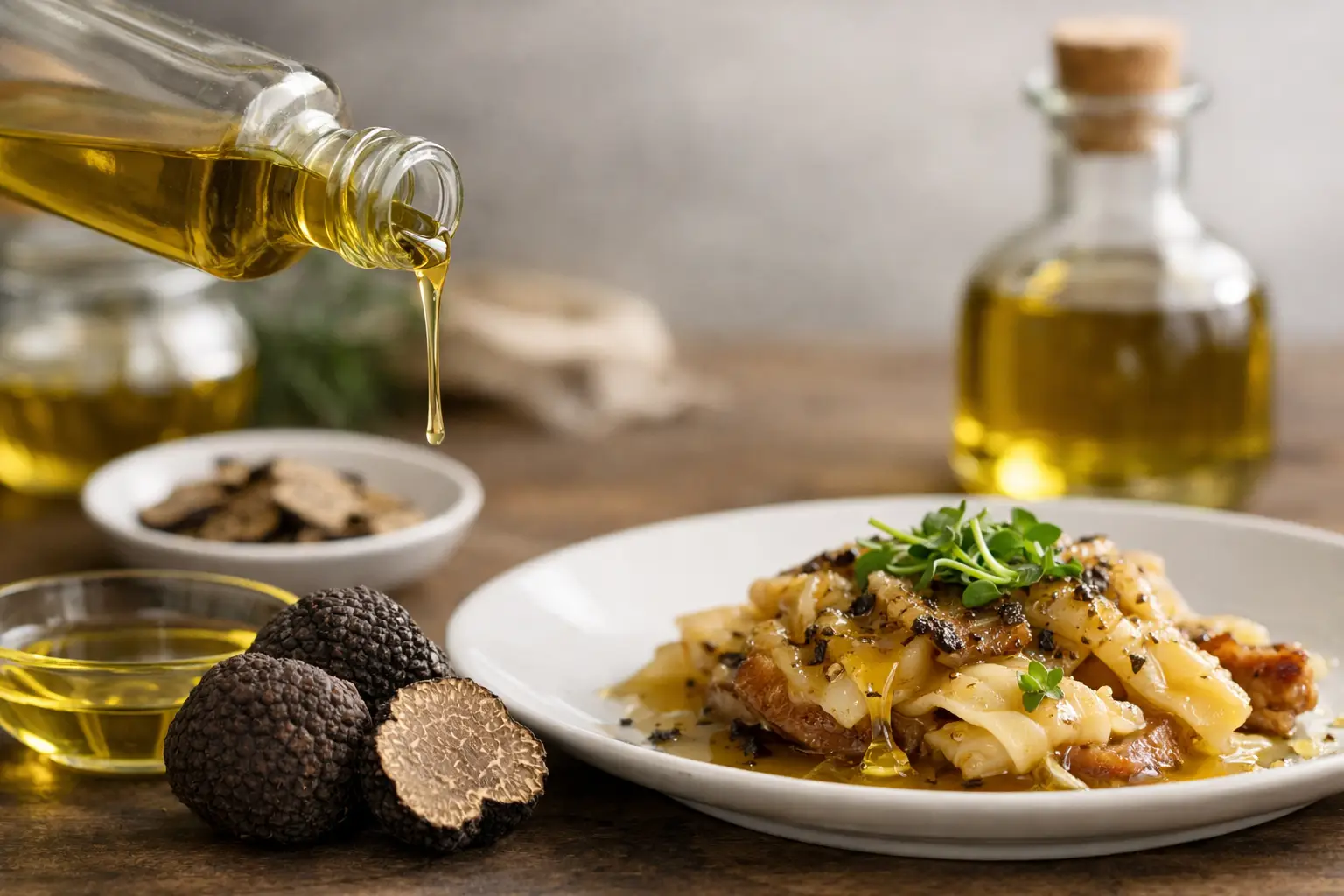
A plate of risotto can go from comforting to extraordinary with one final detail: a measured drizzle of truffle oil added just before it reaches the table. Can truffle oil be used as finishing oil? Absolutely. In fact, finishing is where its aromatic character is most persuasive, lending an earthy, savory perfume to foods that are already warm, rich, and ready to eat.
The key is restraint. Truffle oil is not meant to replace your everyday olive oil or become the dominant flavor in a dish. It is a final flourish – a luxurious accent that carries the unmistakable allure of black or white truffle without requiring fresh truffles at every meal.
Can Truffle Oil Be Used as Finishing Oil? Yes, With a Light Hand
A finishing oil is applied after cooking, usually immediately before serving. Its purpose is fragrance as much as flavor. While a cooking oil must withstand sustained heat, a finishing oil is chosen for what it contributes in its freshest state: aroma, texture, and a polished final note.
Truffle oil is particularly well suited to this role because heat can soften its delicate aromatic impact. Adding it after a dish leaves the burner preserves more of the scent that makes truffle so captivating. The warmth of the food helps release that aroma at the table, where it has the greatest effect.
Start with a few drops or a light teaspoon for a serving bowl, then taste. A little can transform a dish; too much can flatten the other ingredients and make even an exquisite meal feel one-dimensional. Think of it as you would a fine perfume or finishing salt: intentional, not abundant.
For the clearest, most elegant result, use truffle oil on simply prepared food with enough richness to carry it. Butter, cream, egg yolk, cheese, potatoes, and good olive oil are natural companions. A lean, aggressively acidic, or heavily spiced dish may leave little room for its nuanced earthiness.
Why Truffle Aroma Belongs at the End
The pleasure of truffle is largely aromatic. Its savory, woodland-like character rises from a warm dish before the first bite, creating the sense of occasion associated with a restaurant-worthy plate. Prolonged high heat can reduce that immediate aromatic lift, which is why finishing at the end is generally more rewarding than sautéing with truffle oil from the start.
This does not mean truffle oil must never meet heat. A small amount can be stirred into a finished sauce off the heat, folded into mashed potatoes, or brushed onto warm flatbread. The distinction is timing. Let the principal cooking fat do the work during searing, roasting, and frying, then let truffle oil provide the final, luscious signature.
Black truffle oil often feels deeper and more grounded, with an affinity for beef, mushrooms, potatoes, and aged cheese. White truffle oil tends to be more assertive and garlicky in aroma, making it especially compelling with eggs, fresh pasta, popcorn, and creamy polenta. Preferences vary, and the recipe should guide the choice rather than a rigid rule.
The Best Dishes for a Truffle Oil Finish
A finishing drizzle works best when the plate offers a mild, savory canvas. Warm dishes are especially effective because they gently open up the aroma without cooking it away.
Eggs, Potatoes, and Other Comforting Classics
Soft scrambled eggs, an omelet, or fried eggs over toast need only a few drops of white truffle oil to feel special occasion ready. Add it after the eggs are plated, alongside flaky sea salt and freshly ground black pepper. The same approach makes breakfast potatoes, hash browns, and a classic potato purée feel remarkably refined.
For mashed potatoes, stir a small amount into the finished potatoes after butter and cream have been incorporated. Taste before adding more. The goal is an earthy aroma that supports the potato’s sweetness, not an overpowering truffle flavor in every bite.
Pasta, Risotto, and Polenta
Creamy pasta is one of the most natural homes for a truffle oil finish. Fettuccine with Parmesan, gnocchi in brown butter, or a simple mushroom pasta gain depth from a light drizzle just before serving. Save some pasta water and build the sauce first, then finish with truffle oil once the pan is off the heat.
Risotto and polenta offer the same luxurious opportunity. Their soft texture holds aroma beautifully, while Parmesan and butter provide a rich foundation. Finish each individual bowl rather than adding a large pour to the entire pot. This gives you better control and lets the truffle fragrance arrive freshly at the table.
Pizza, Steak, and Roasted Vegetables
Truffle oil can bring a restrained gourmet touch to pizza, particularly a white pizza with mozzarella, ricotta, mushrooms, or potatoes. Drizzle it after baking, never before, and allow the pizza to rest for a minute so the surface is no longer fiercely hot.
With steak, use truffle oil as an accent rather than a marinade. A few drops over sliced filet, ribeye, or a mushroom side dish can amplify the meal’s savory character. Roasted cauliflower, asparagus, Brussels sprouts, and wild mushrooms are equally satisfying canvases, especially when finished with Parmesan or a squeeze of lemon to keep the richness in balance.
How Much Truffle Oil Should You Use?
The right amount depends on the oil’s concentration, the size of the dish, and the supporting ingredients. Begin conservatively: a few drops for one plate, roughly one teaspoon for a bowl serving two to four people. Toss, taste, and add only if the truffle aroma is not yet apparent.
There is a practical reason to finish individual portions whenever possible. A drizzle on each plate stays vivid and aromatic, whereas oil mixed into a large batch can become uneven or fade while the food waits to be served. This is especially true for dinner parties, when plating in stages may leave the first dish sitting longer than the last.
Truffle oil should complement salt, acid, and fat, not compete with them. If a dish tastes heavy after finishing, brighten it with lemon zest, a few drops of lemon juice, or fresh herbs. If it seems too sharp, Parmesan, butter, crème fraîche, or a soft egg can round it out.
Choosing the Right Moment to Add It
The phrase “off the heat” is useful, but it does not require food to be cold. Truffle oil shines on food that is warm enough to release its aroma yet no longer actively cooking. For a soup, add it to the bowl. For pasta, turn off the burner, toss the pasta with its sauce, then drizzle. For a roasted vegetable platter, wait until the vegetables are arranged for serving.
Avoid using truffle oil as the oil for deep-frying, high-heat searing, or long roasting. Those techniques ask too much of an ingredient valued primarily for fragrance. Use a neutral oil, olive oil, butter, or another suitable cooking fat for the heat, then bring in truffle oil at the end.
Storage matters, too. Keep the bottle tightly capped in a cool, dark place away from the stove and direct sunlight. As with any aromatic finishing oil, freshness is part of the experience. A quality truffle oil deserves to be enjoyed while its fragrance is at its most expressive.
A Few Finishing Mistakes Worth Avoiding
The most common mistake is treating truffle oil as though more always means better. A heavy pour can mask the clean flavor of the dish and make a premium ingredient seem less elegant. Another is pairing it with too many competing flavors, such as intense chile heat, strong smoke, or heavily sweet sauces.
It is also easy to overlook texture. Truffle oil is most memorable when it lands on something creamy, crisp, or tender: a warm bowl of fries, a silken soup, a crackling pizza crust, or a spoonful of buttery pasta. The contrast gives the aroma a place to linger.
For an easy but impressive first use, try finishing a bowl of hot popcorn with truffle oil, fine sea salt, and grated Parmesan. It is a small ritual with a dramatic payoff, and it teaches the essential lesson of truffle cooking: use excellent ingredients, add the truffle at the right moment, and let its fragrance do the talking.
The next time a simple dish needs a final touch, reach for truffle oil after the cooking is done. A careful drizzle can make an ordinary Tuesday dinner feel considered, indulgent, and entirely your own.
