
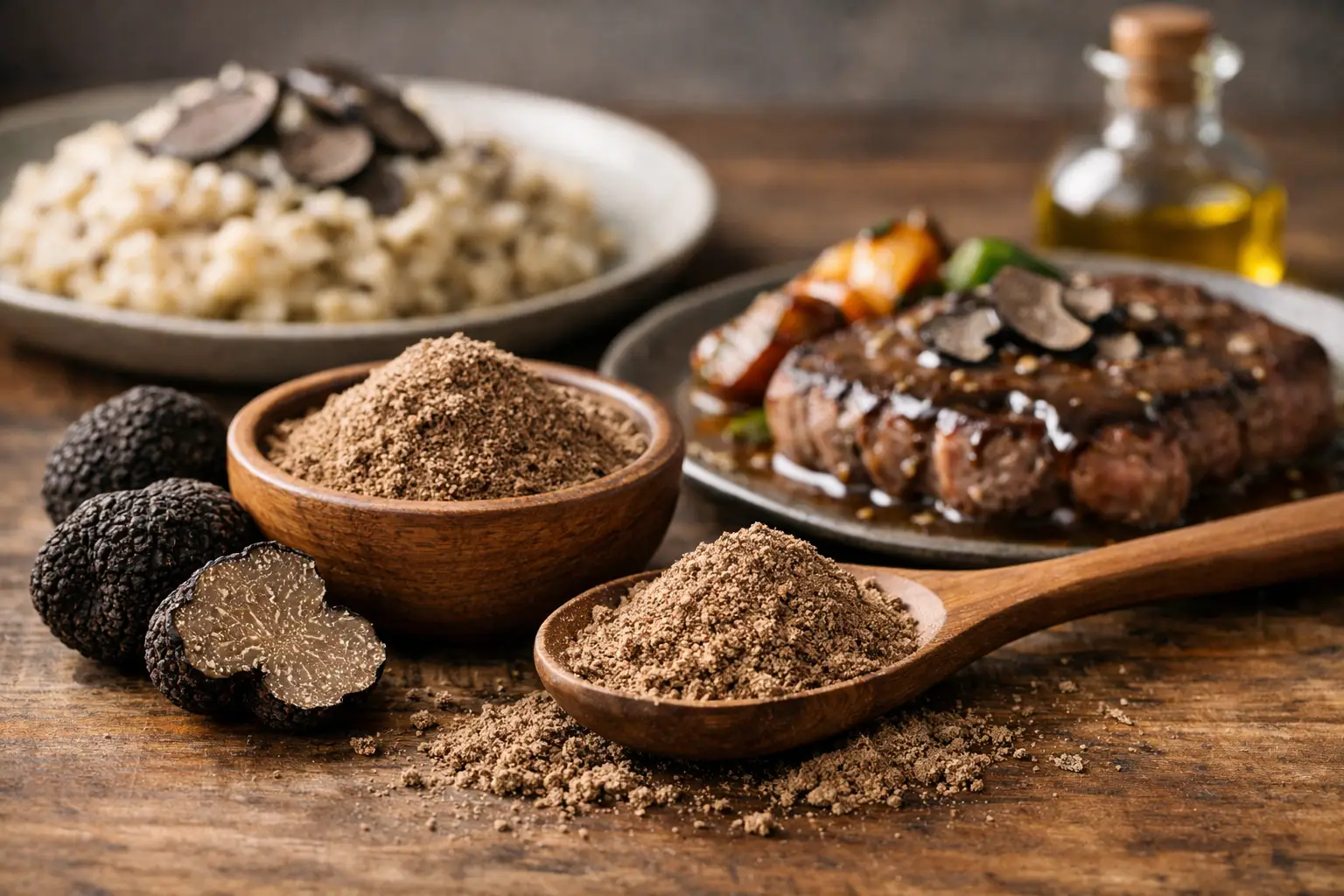
How to Use Truffle Powder for Richer Meals Leave a comment
A warm bowl of pasta, a pan of softly scrambled eggs, or a pile of crisp fries can become something far more memorable with one thoughtful finishing touch. Knowing how to use truffle powder is less about complicated technique than understanding timing: its aromatic character is at its most exquisite when it meets food just before serving.
Truffle powder brings the savory, earthy perfume of truffles to everyday cooking in a shelf-stable format that is easy to portion. It is made for the moments when a dish needs depth, fragrance, and a distinctly luxurious finish without the ceremony of shaving fresh truffle. Use it with restraint, pair it with ingredients that welcome its richness, and let the aroma do the talking.
What Truffle Powder Does Best
Think of truffle powder as a finishing seasoning rather than an all-purpose spice. It adds an earthy, woodland-like fragrance and a lingering umami quality that flatters creamy, buttery, potato-based, and egg-forward dishes. A small dusting can give familiar food the character of a restaurant special occasion.
The exact flavor and salt level depend on the product, so read the label before seasoning the rest of the dish. Some powders are designed to deliver truffle flavor alongside salt, while others may have a more concentrated, savory profile. Taste a pinch first. This one small step prevents an overly salty finish and helps you decide whether the dish also needs black pepper, lemon, Parmesan, or a drizzle of olive oil.
Truffle powder is especially useful when fresh truffles are not practical. It keeps in the pantry, requires no slicing or shaving, and gives cooks the freedom to add a touch of indulgence whenever the occasion calls for it – whether that is a dinner party or a Tuesday-night omelet.
How to Use Truffle Powder at the Right Moment
Heat can soften the delicate aromatic notes that make truffle so captivating. For that reason, add truffle powder after cooking whenever possible. Toss it with hot food off the heat, then serve promptly while the fragrance is still vivid.
Start with a light shower, not a heavy coating. For a two-person serving of pasta, potatoes, eggs, or popcorn, begin with about 1/4 teaspoon. Taste, then add more if needed. Rich dishes can carry a slightly more generous amount; lighter dishes benefit from a more restrained hand.
Fat is truffle powder’s best companion. Butter, cream, egg yolk, cheese, olive oil, and the natural marbling of steak all help carry its aroma across the palate. A little moisture also helps the seasoning cling. If you are finishing dry roasted potatoes or fries, toss them first with melted butter or olive oil, then add the powder while they are hot.
Finish pasta and risotto
Truffle powder is at home in silky pasta and risotto because starch, butter, and cheese create a luscious backdrop. Fold it into a finished mushroom risotto just before it reaches the table, or toss it through tagliatelle with butter, Parmesan, and a spoonful of pasta water. The result should smell inviting rather than aggressively perfumed.
For a simpler preparation, make cacio e pepe or a cream-based pasta as usual and finish each bowl individually. This approach gives you greater control and preserves the truffle aroma. Add cracked black pepper sparingly, since too much can overpower the powder’s nuanced earthiness.
Make eggs feel like an occasion
Eggs are one of truffle’s classic partners. Sprinkle truffle powder over softly scrambled eggs, a folded omelet, poached eggs on toast, or a creamy frittata after the eggs are cooked. A spoonful of crème fraîche, a little grated Parmesan, or buttered sourdough makes the combination even more indulgent.
For brunch entertaining, use the powder as the final layer on a platter of deviled eggs or a breakfast potato hash with runny fried eggs. It offers the kind of polished finish guests notice immediately, without adding another pan or complicated preparation.
Elevate potatoes, fries, and snacks
Potatoes have a gentle flavor and a satisfying richness that makes truffle powder shine. Toss hot French fries, roasted fingerlings, potato chips, or tater tots with truffle powder and finely grated Parmesan. Add chopped parsley for freshness and serve at once.
Popcorn is another excellent canvas. Toss freshly popped corn with warm melted butter, then season with truffle powder in stages, shaking the bowl between additions. The butter helps the powder adhere evenly. Because popcorn has so little inherent richness, it can take a touch more seasoning than pasta or eggs, but taste as you go.
Finish steak, chicken, and vegetables
Truffle powder can bring a refined edge to simply cooked proteins, particularly steak, roast chicken, and pork chops. Let the meat rest first, then dust the sliced portions lightly just before serving. A truffle finish is most successful when the original seasoning remains straightforward: salt, pepper, butter, and a good sear leave room for the truffle aroma to stand out.
With vegetables, choose varieties with enough sweetness or earthiness to hold their own. Roasted mushrooms, cauliflower, asparagus, corn, and root vegetables all work beautifully. Toss them with olive oil or butter, apply the truffle powder after roasting, and brighten the plate with a squeeze of lemon if the dish tastes too rich.
Pair Truffle Powder With Purpose
Truffle flavor has presence, so it benefits from thoughtful pairing. Creamy polenta with wild mushrooms is a natural match. So are macaroni and cheese, grilled cheese sandwiches, mushroom pizza, and warm white bean dishes. On a cheese board, a restrained sprinkle over warm baked Brie or a truffle-seasoned bowl of nuts can create an impressive contrast without asking the powder to do too much.
Acidity keeps truffle-forward food from becoming heavy. Lemon zest, a few drops of champagne vinegar, pickled shallots, or a crisp green salad can provide balance beside a rich truffle dish. Fresh herbs such as chives, parsley, and thyme are usually more harmonious than bold herbs like rosemary or oregano.
It also pays to avoid competing flavors. Very hot chiles, heavy smoke, intensely sweet sauces, and aggressive spice blends can bury truffle’s more subtle notes. That does not mean truffle powder cannot be used on spicy fries or a smoky burger. It simply means the truffle should be treated as a finishing accent, not expected to dominate every flavor on the plate.
Common Mistakes That Mute the Flavor
The most frequent mistake is adding truffle powder too early. Stirring it into a long-simmering sauce or exposing it to high oven heat may leave you with less aroma than you expected. Build the dish first, then finish it with powder once the heat is off.
The second is using too much. Truffle is luxurious because it is distinctive, not because it is loud. If the flavor begins to taste artificial, salty, or one-dimensional, the dish likely needs less powder and more balance. A little extra butter, plain pasta, potato, or cream can soften an over-seasoned result.
Finally, do not use truffle powder as a substitute for all seasoning. It complements good cooking rather than replacing it. Taste for salt first, ensure the dish has enough fat and seasoning, then use the powder to add its final aromatic layer.
Store It for a Fresh, Fragrant Finish
Keep truffle powder tightly sealed in a cool, dry cupboard away from the stove and direct sunlight. Moisture causes clumping, while heat and air gradually weaken aroma. Use a dry spoon, close the container promptly, and enjoy it while its fragrance is at its fullest.
For an effortless but memorable meal, start with something you already love – buttery pasta, crisp potatoes, or eggs cooked just the way you like them. Finish with a measured dusting of truffle powder, serve it warm, and let an ordinary plate earn a place at the center of the table.
