
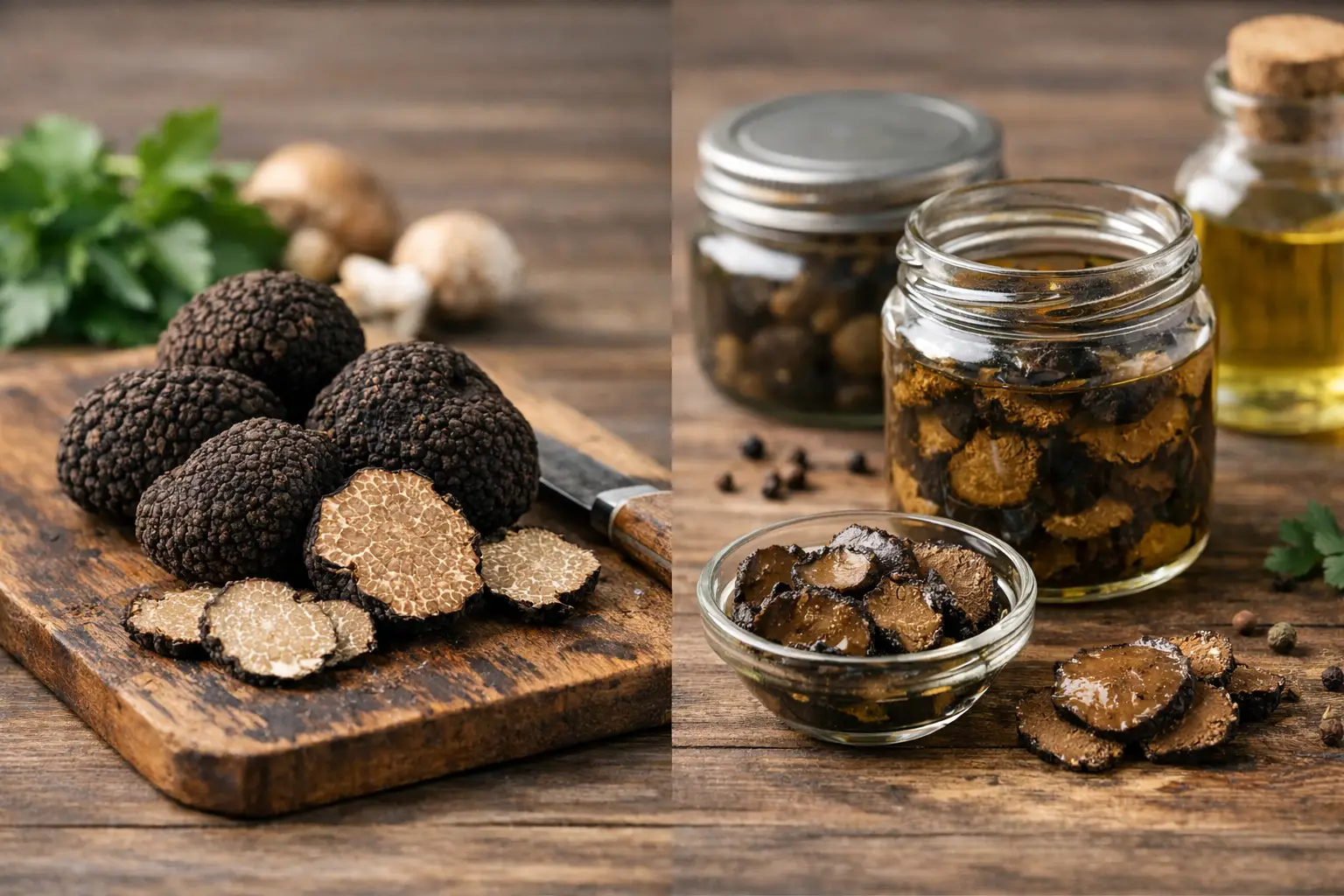
Fresh Truffles Versus Preserved Truffles 4
A just-shaved winter truffle over warm tagliolini is one experience. A spoonful of truffle carpaccio folded into a weeknight risotto is another. When people compare fresh truffles versus preserved truffles, they are usually asking a practical question: which one will actually give me the flavor, aroma, and occasion I want?
The answer is not that one is good and the other is second best. It is that they serve different culinary purposes. Fresh truffles deliver the most vivid, fleeting expression of the ingredient. Preserved truffles offer range, convenience, and consistency, often making truffle cooking far more realistic for home kitchens and professional service alike.
Fresh truffles versus preserved truffles: the real difference
Fresh truffles are seasonal, perishable fungi prized for their aroma above all else. Their appeal is immediate and sensory. When they are at peak quality, they offer a layered fragrance that can feel earthy, garlicky, nutty, musky, and deeply savory all at once. That perfume is what makes fresh black and white truffles so luxurious at the table.
Preserved truffles begin with real truffles, but they are prepared in ways that extend usability and shelf life. Depending on the product, that might mean sliced truffle in brine, truffle carpaccio, truffle paste, truffle powder, truffle salt, honey, oil, or sauce. The preservation method changes how the truffle presents itself. You trade some of the fleeting volatility of fresh aroma for convenience, versatility, and a product that is ready when you are.
That trade-off matters because truffles are rarely used the same way twice. A dinner party with handmade pasta calls for something different than scrambled eggs on a Sunday morning or a cheese board assembled in ten minutes before guests arrive.
What fresh truffles do best
Fresh truffles are unmatched when aroma is the star. Heat releases that perfume, but too much cooking can mute it, which is why fresh truffles are typically shaved over finished dishes rather than simmered for long periods. They shine on foods that act as a warm, rich backdrop: buttered pasta, creamy risotto, soft scrambled eggs, mashed potatoes, veal, roasted chicken, and delicate cheeses.
Texture also plays a role. A fresh truffle has a pleasing firmness when sliced or shaved thin. That visual presence adds theater and generosity to the dish. For special occasions, gifting, and restaurant-style plating at home, fresh truffles create a moment that preserved products do not replicate in the same way.
There is also the matter of nuance. Fresh truffles can vary by species, season, origin, and maturity. That variability is part of their appeal. A fine fresh truffle feels alive in the culinary sense – expressive, distinct, and worth treating with restraint.
The limitation is obvious. Fresh truffles are expensive, highly perishable, and best used quickly. Once they arrive, the clock starts. Storage helps, but not indefinitely, and every passing day affects aroma. If you are not prepared to build a menu around them right away, some of their value can be lost before they ever reach the plate.
Where preserved truffles make more sense
Preserved truffle products are often the smarter choice when flexibility matters. They allow you to bring truffle flavor into your cooking without timing your meals around a narrow freshness window. That makes them especially attractive for entertaining, gifting, pantry stocking, and everyday luxury.
A preserved format can also be more targeted. Truffle salt is ideal when you want a finishing touch that adds both seasoning and aroma to fries, popcorn, eggs, or grilled vegetables. Truffle honey creates an exquisite sweet-savory contrast with cheese, charcuterie, roasted carrots, or crisp fried chicken. Truffle carpaccio offers ready-to-use slices that work beautifully on pizza, pasta, crostini, and creamy sauces. Truffle powder gives you concentrated seasoning power in rubs, sauces, and compound butters.
For many cooks, preserved truffles remove the intimidation factor. You do not need a truffle shaver, a precise service plan, or the pressure of using everything at peak freshness within days. You simply open the jar or bottle and use what suits the dish.
That practicality is not a compromise in the wrong hands. It is often how truffle becomes part of real cooking rather than a once-a-year splurge.
Flavor and aroma are not the same thing
This is where fresh truffles versus preserved truffles gets more interesting. People often use flavor and aroma as if they are interchangeable, but with truffles they are closely related and still different.
Fresh truffles are prized for aromatic complexity. Their scent rises from the plate and defines the eating experience before the first bite. Preserved products, depending on format, may deliver a more anchored, integrated truffle presence rather than an explosive aromatic top note. In some applications, that is exactly what you want.
If you are finishing warm pasta for guests and want that unmistakable truffle fragrance at the table, fresh is the stronger choice. If you are building a truffle aioli, seasoning roasted potatoes, enriching a cream sauce, or adding depth to a savory spread, preserved products can perform beautifully because they are designed to blend into the dish as much as crown it.
This is why the best truffle kitchens often use both. Fresh for impact. Preserved for continuity.
Choosing the right format for the dish
The smartest way to buy truffles is to start with the dish, not the ingredient fantasy.
If the meal is elegant, minimal, and built around a few luxurious elements, fresh truffles are often worth it. Think buttered tagliatelle, silky eggs, potato puree, or a simple Parmesan risotto. These dishes leave room for the truffle to lead.
If the meal needs convenience, repeat use, or broader flavor coverage, preserved truffles are usually better. A truffle pantry lets you elevate burgers, flatbreads, steak, mac and cheese, deviled eggs, and even cocktail snacks without planning a special menu days in advance.
It also depends on the audience. A serious cook may appreciate the ritual and fleeting beauty of fresh truffles. A host preparing food for a full house may get more value from products that deliver reliable flavor across several dishes. A gift buyer may want something premium, beautiful, and easy to enjoy without instruction. Preserved truffle products fit that brief exceptionally well.
Cost, waste, and value
Fresh truffles carry prestige, but value is about more than price per ounce. It is about how much pleasure and use you actually get.
With fresh truffles, the best-case scenario is extraordinary. The risk is waste if timing, storage, or menu planning are off. With preserved truffles, the cost is often easier to justify because you can portion them over time and across multiple meals. For many households, that makes preserved products the more luxurious choice in practice, because they are used often enough to become part of the rhythm of cooking.
For culinary professionals, the same logic applies. Fresh truffles can drive a seasonal feature or tasting menu. Preserved formats can support consistency, reduce spoilage, and allow truffle notes to appear across a wider range of dishes without compromising margins.
How to shop with confidence
Quality matters in both categories. Fresh truffles should be firm, aromatic, and properly handled from harvest to delivery. Preserved truffle products should be chosen with the same care. Look for products that are specific about the truffle variety, origin, and format, and that make culinary sense rather than leaning on novelty alone.
A well-curated truffle pantry should feel intentional. Truffle salt for finishing. Truffle carpaccio for composed dishes. Truffle honey for cheese and appetizers. Truffle powder for seasoning. Then, when the occasion calls for it, fresh black or white truffles for that unmistakable table-side flourish. This is the approach Truffle Guys has championed for years: luxury that is not locked behind complexity.
The most satisfying answer to fresh truffles versus preserved truffles is not either-or. Fresh truffles are for immediacy, perfume, and occasion. Preserved truffles are for versatility, access, and everyday indulgence. If you want the purest truffle moment, choose fresh and build the meal around it. If you want truffle to appear more often, more easily, and across more dishes, preserved is the better buy.
A well-stocked kitchen has room for both, because the best truffle experience is the one that fits the way you actually cook and serve.

4 Comments
Trackbacks and Pingbacks
[…] carpaccio is a finishing ingredient first. It brings delicate slices of truffle, usually preserved in oil or brine, that add visual appeal and a savory, earthy perfume when handled with restraint. In risotto, that […]
[…] Fresh truffles and truffle pantry products should be appreciated on their own terms. Comparing them as if one must replace the other misses the pleasure of both. […]
[…] powder is especially useful when fresh truffles are not practical. It keeps in the pantry, requires no slicing or shaving, and gives cooks the […]
[…] carpaccio is typically made from thin slices of truffle preserved in oil, often with a touch of salt or other seasonings. It offers the visual elegance and savory […]