
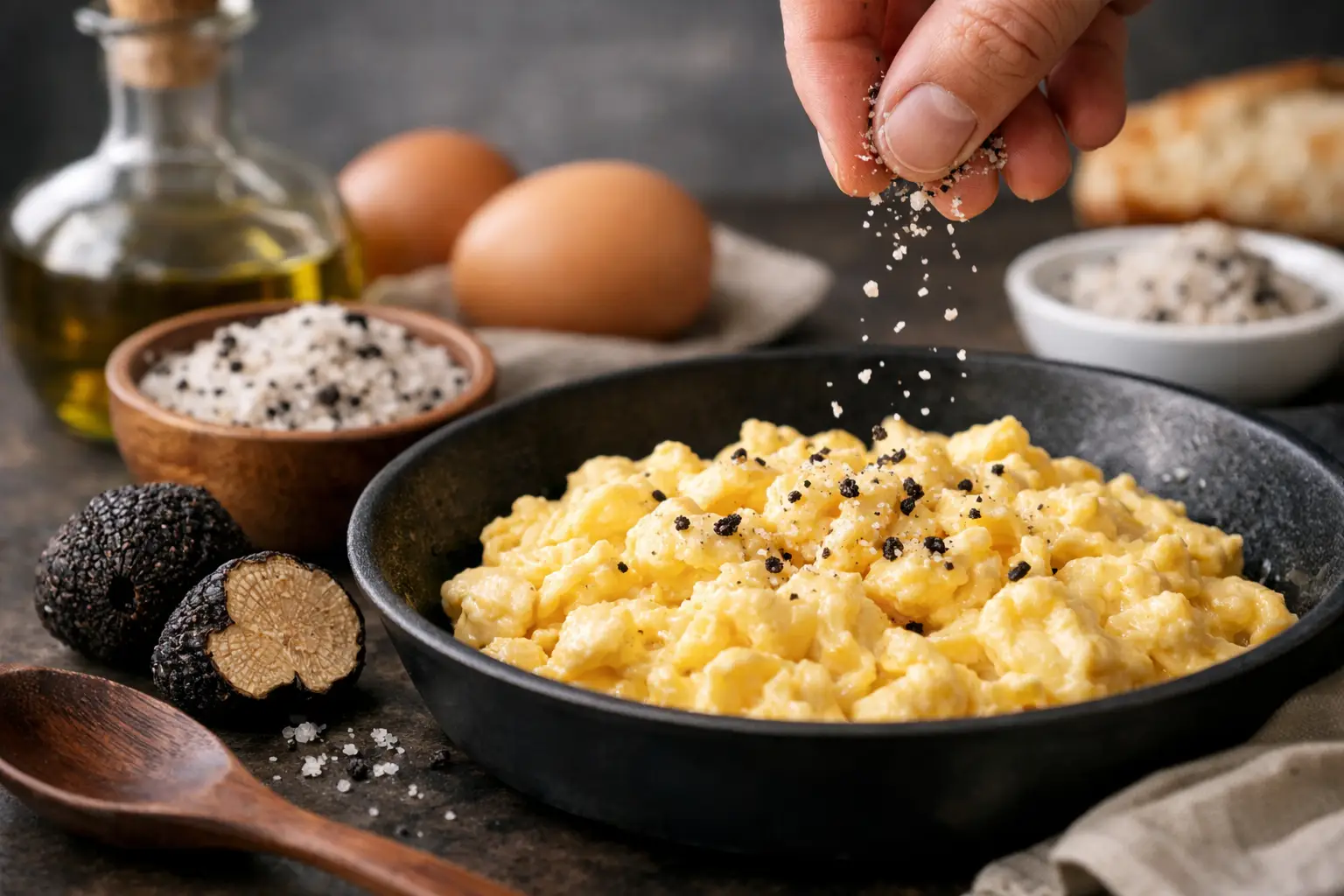
How to Season Scrambled Eggs With Truffle Salt 1
Scrambled eggs can go from everyday to exceptional with one small adjustment: knowing how to season scrambled eggs with truffle salt without burying the eggs themselves. Truffle salt is not just salt with a fashionable label. It is a finishing ingredient with aroma, salinity, and depth, and eggs happen to be one of its best pairings when you use it with restraint.
That restraint is the difference between luxurious and heavy-handed. Eggs are delicate, creamy, and mildly sweet. Truffle salt should sharpen those qualities and add an earthy finish, not dominate the plate. If you want that restaurant-style effect at home, timing matters as much as quantity.
How to season scrambled eggs with truffle salt for the best flavor
The best way to use truffle salt on scrambled eggs is to season lightly during cooking with plain salt, then finish with a small pinch of truffle salt just before serving. This gives you proper seasoning throughout the eggs while preserving the truffle aroma, which fades when exposed to too much heat.
That point is worth emphasizing. Truffle salt is most effective as a finishing touch. High heat dulls the fragrance that makes it special, so if you add all of it to raw eggs at the beginning, you lose some of the elegance you paid for. A modest final sprinkle lets the aroma bloom the moment the eggs hit the plate.
For most servings, start with about 1/8 teaspoon of truffle salt for 2 to 3 eggs. If your truffle salt is especially pungent or finely milled, use a little less. If it is blended with larger sea salt crystals, you may need a touch more, but increase slowly. Truffle flavor should read as sophisticated and savory, never loud.
Start with good eggs and a gentle method
If the eggs are overcooked, dry, or aggressively browned, truffle salt cannot rescue them. Soft scrambled eggs are the ideal canvas because their creamy texture carries aroma beautifully. The richer and more tender the eggs, the more refined the result.
Crack your eggs into a bowl and whisk until the yolks and whites are fully blended. If you enjoy a silkier texture, add a small spoonful of crème fraiche, whole milk, or heavy cream, though this is optional. Butter is the better fat here than olive oil because it supports the lush, rounded flavor profile that makes truffle feel at home.
Cook the eggs over low to medium-low heat. Stir slowly and consistently, pulling the curds across the pan rather than scrambling them aggressively. You want small, tender folds instead of dry bits. Remove the eggs from the heat when they still look slightly glossy because residual heat will finish the job.
At that stage, add your truffle salt. A final pinch over the top, followed by one gentle fold, is usually enough.
Should you add truffle salt before or after cooking?
After cooking is almost always better. You can season the eggs early with a very small amount of regular salt so the interior tastes seasoned, then apply truffle salt at the end for aroma. This two-salt approach may sound fussy, but it is the cleanest way to control both salinity and fragrance.
If you only have truffle salt on hand, you can still make it work. Use a modest pinch in the beaten eggs and a second tiny pinch just before serving. The key word is tiny. Since truffle salt carries both flavor and sodium, it is easy to overshoot.
How much truffle salt to use
For 2 eggs, use a scant 1/8 teaspoon as a finish. For 4 eggs, start with 1/4 teaspoon total, divided between the pan and the plate if needed. For a larger brunch batch, scale cautiously rather than linearly. Truffle tends to feel stronger in volume cooking because aroma accumulates across the dish.
Grain size matters too. Fine truffle salts disperse quickly and can taste stronger. Flaky or coarse salts create pockets of flavor, which can be beautiful when you want occasional bursts but less ideal if you prefer an even seasoning. Taste a few crystals on their own before cooking. That quick test tells you whether your salt leans subtle, savory, or assertive.
The flavor balance that makes truffle eggs taste expensive
What makes truffle scrambled eggs memorable is contrast. The eggs should remain buttery and delicate, while the truffle note adds a deep, woodsy finish. Salt sharpens the flavor, fat carries it, and gentle heat keeps it elegant.
This is why restraint matters more than abundance. More truffle does not automatically mean more luxury. Too much can flatten the freshness of the eggs and leave a lingering artificial note, especially if the salt is strongly scented. The better result is a whisper of truffle that rises as you eat.
Texture also plays a role. Soft, custardy eggs hold truffle aroma longer on the palate than firm scrambled eggs do. If you like your eggs fully set, use slightly less truffle salt because firmer eggs do not cushion the seasoning in the same way.
What to add and what to avoid
Truffle salt pairs beautifully with ingredients that support its richness without competing for attention. Chives are one of the best additions because they bring freshness and a mild onion note. A little finely grated Parmesan can work as well, though now you are adding more salt, so you need to scale back the truffle salt accordingly. Buttered toast, brioche, or a warm croissant make excellent serving partners because they absorb the soft curds and carry the aroma.
A few ingredients are less cooperative. Sharp cheddar, smoked paprika, salsa, and hot sauce all tend to overpower truffle. The same goes for heavily browned bacon if used in excess. You can absolutely serve bacon on the side, but if the goal is to taste the truffle, let the eggs be the star.
If you want a more complete plate, keep the supporting cast quiet. Sauteed mushrooms, a few shaved asparagus tips, or a spoonful of creme fraiche make sense. Acidic additions like tomatoes can work, but use them sparingly because too much brightness can interrupt the truffle finish.
A simple method for luxurious truffle scrambled eggs
Whisk 3 large eggs until fully combined. Add a small pinch of kosher salt if you are seasoning the base separately. Melt 1 tablespoon of butter in a nonstick skillet over low heat, then add the eggs and stir slowly with a spatula, drawing the eggs from the edges toward the center.
When soft curds begin to form, keep the heat low and continue folding until the eggs are just set but still glossy. Remove the pan from the heat. Finish with 1/8 teaspoon truffle salt, or slightly less if your salt is highly aromatic, and fold once or twice.
Plate immediately. If you like, finish with chives and a final delicate pinch of truffle salt on top. This last touch gives the eggs their most fragrant moment.
Common mistakes when seasoning scrambled eggs with truffle salt
The most common mistake is treating truffle salt like everyday table salt. It is not there simply to make food salty. It is there to provide aroma and a finishing character. If you use it heavily from the start, the eggs may taste salty before they ever taste luxurious.
The second mistake is cooking the eggs too hot. Fast, high-heat scrambling creates firmer curds and can mute the elegance of the dish. Truffle wants a gentle setting.
The third mistake is pairing truffle eggs with too many bold flavors on the same plate. A breakfast spread loaded with spicy sausage, roasted peppers, and extra-sharp cheese can be delicious, but it is not the right stage for subtle truffle aroma.
Finally, avoid letting the eggs sit too long before serving. Truffle salt is most expressive when fresh. Serve promptly while the eggs are warm and the aroma is still lively.
For home cooks who want a polished result with very little effort, this is one of the smartest ways to use a premium finishing salt. A quality truffle salt, used carefully, turns a familiar breakfast into something luscious and unmistakably special. Keep the eggs soft, the seasoning measured, and the final sprinkle deliberate. That is where the luxury lives.

One Comment
Trackbacks and Pingbacks
[…] mineral brightness of salt, followed by a subtle earthy finish that lingers after each bite. On scrambled eggs, it tastes savory and rounded. On steak, it sharpens the crust while adding an elegant truffle […]