
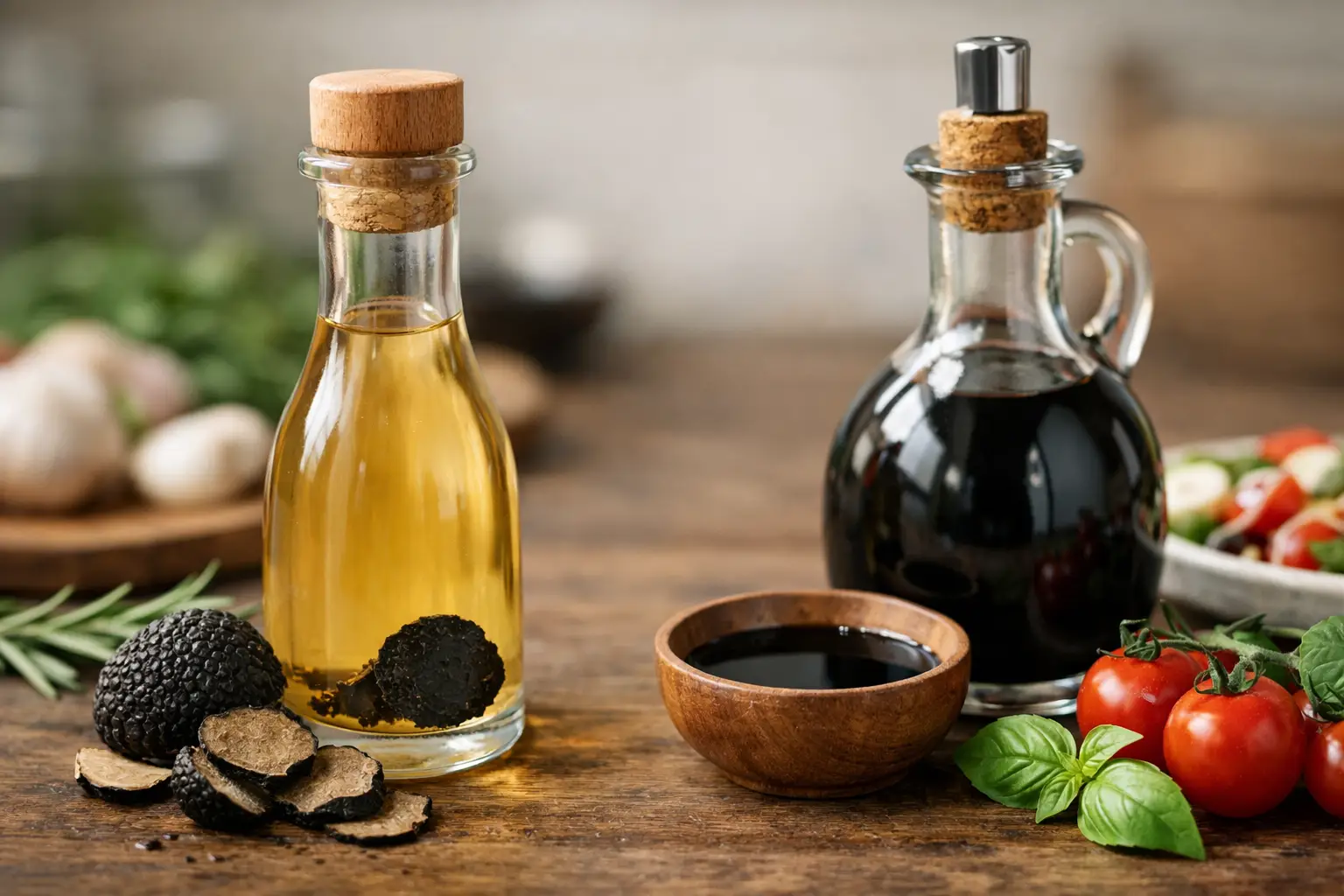
Truffle Vinegar Versus Balsamic Vinegar in Cooking Leave a comment
A spoonful can decide whether a dish tastes polished or merely dressed. In the question of truffle vinegar versus balsamic vinegar, the right choice comes down to more than color or acidity. One brings the unmistakable, earthy perfume of truffles; the other offers a rounded grape sweetness and a familiar Italian tang. Both can turn simple ingredients into something special, but they do very different work on the plate.
For cooks who keep premium pantry ingredients within reach, the distinction is useful. Truffle vinegar is a finishing accent with aromatic presence. Balsamic vinegar is a broader culinary foundation, capable of dressing, glazing, deglazing, and balancing rich foods. Knowing when to reach for each makes everyday salads, roasted vegetables, steaks, cheeses, and pasta feel far more considered.
Truffle Vinegar Versus Balsamic Vinegar: The Flavor Difference
Truffle vinegar begins with vinegar, often white wine or another clean, bright base, infused with truffle or truffle-derived aromas. Its defining character is not sweetness but fragrance: woodland earth, roasted nuts, mushroom depth, and a savory quality that lingers after the acidity fades. A good truffle vinegar should smell luxurious without tasting heavy. It has the power to suggest a truffle-forward dish with only a few drops.
Balsamic vinegar is made from grape must and wine vinegar, then aged or matured to develop its signature sweet-tart profile. The finest traditional styles from Modena or Reggio Emilia can be remarkably dense and complex, with notes of dried cherry, fig, wood, and caramelized grape. More accessible balsamic vinegars are typically brighter and thinner, but still offer a pleasing balance of fruit, acidity, and sweetness.
That difference matters at the table. Truffle vinegar lends savory intrigue to ingredients that already have gentle richness, such as eggs, potatoes, risotto, mushrooms, and creamy cheese. Balsamic vinegar adds contrast. It cuts through fatty meats, soft cheeses, and olive oil while bringing sweetness to bitter greens, tomatoes, and roasted vegetables.
Neither is inherently better. If a dish needs a dark, glossy note with fruit and gentle acidity, balsamic is the natural choice. If it needs an aromatic finish that makes the first bite feel more extravagant, truffle vinegar has the advantage.
Acidity, Sweetness, and Texture
The palate experience is where the comparison becomes especially clear. Most truffle vinegars are comparatively dry and direct. Their acidity wakes up rich foods, while their truffle aroma remains the main event. Because the flavor is concentrated, use it with restraint. A heavy hand can obscure delicate ingredients or make a dish feel perfumed rather than balanced.
Balsamic vinegar generally has more natural sweetness and a softer, rounder feel. The higher the quality and longer the aging, the more syrupy and layered it may become. A few drops of aged balsamic on Parmigiano-Reggiano, ripe strawberries, or grilled peaches can be enough to create a complete flavor experience.
Texture also changes how each vinegar is used. A thin balsamic works beautifully in vinaigrettes and marinades. A dense balsamic glaze coats ingredients and creates visual drama on the plate. Truffle vinegar is usually best treated as a finishing vinegar, stirred into a dressing or scattered over food just before serving so its aroma remains vivid.
When to Use Truffle Vinegar
Truffle vinegar excels when the dish has enough richness to carry its aroma but not so many competing flavors that the truffle disappears. Think warm potato salad with chives, a shaved fennel salad with aged cheese, or buttery pasta finished with black pepper. It is also exceptional over a steak or roast chicken when you want a refined alternative to a heavy sauce.
A simple mushroom crostini becomes more memorable with a light drizzle of truffle vinegar after it comes out of the oven. The same is true of a fried egg over sourdough, creamy polenta, or a bowl of white beans with olive oil and herbs. In these dishes, the vinegar provides lift while the truffle character makes the flavor feel intentionally luxurious.
It pairs particularly well with nutty, creamy, and earthy ingredients. Walnuts, hazelnuts, cauliflower, celery root, Parmesan, burrata, and wild mushrooms all give it a welcoming backdrop. For entertaining, whisk a small amount into olive oil for a bread-dipping plate, then finish with flaky sea salt. The effect is elegant and immediate.
Heat is the main trade-off. Extended cooking can mute truffle aroma, so truffle vinegar is rarely the best choice for a long braise or a sauce that will simmer for 20 minutes. Add it near the end, tasting as you go. A final teaspoon may be all a serving bowl needs.
A Note on Quality
The category varies widely. Some truffle vinegars lean on natural flavoring, while others are made with actual truffle ingredients or a more carefully built infusion. Read the label and let the aroma guide you. A quality bottle should offer a clean vinegar backbone and an appetizing truffle scent, not an artificial perfume that overwhelms the food.
When Balsamic Vinegar Is the Better Choice
Balsamic vinegar earns its place when a dish benefits from sweetness as much as acidity. It is a natural match for tomato salads, grilled vegetables, roasted Brussels sprouts, pork tenderloin, and duck. Its fruit-forward depth also makes it more adaptable for marinades, where it can balance garlic, herbs, olive oil, and pepper without demanding center stage.
For cheese boards, balsamic is usually the more versatile companion. It flatters sharp aged cheeses, tangy goat cheese, and blue cheese, especially alongside figs, pears, or toasted nuts. A dense aged balsamic can even stand in for a dessert sauce over vanilla gelato or fresh berries.
Balsamic is also more forgiving in generous amounts. A vinaigrette may call for several tablespoons, and a roasted vegetable tray can take a substantial drizzle before or after cooking. With truffle vinegar, small additions are generally more successful because aroma, rather than volume, is its greatest contribution.
There is one important distinction for discerning cooks: traditional balsamic vinegar and everyday balsamic are not interchangeable. Traditional balsamic is intensely concentrated and should be used like a finishing condiment. A standard balsamic vinegar is better for vinaigrettes, marinades, and reductions. Choose based on the bottle in your hand, not only the name on the label.
Can You Substitute One for the Other?
You can, but the result will change. Replacing balsamic with truffle vinegar removes sweetness and adds savory mushroom character. That can be delicious in a warm lentil salad or over roasted squash, but it may feel out of place in a Caprese salad or berry dessert. Replacing truffle vinegar with balsamic gives a dish pleasant acidity, yet it will not deliver that distinctive truffle finish.
If you want to experiment, use the two together rather than treating them as duplicates. A small amount of balsamic can supply body and sweetness in a vinaigrette, while a few drops of truffle vinegar at the end provide aromatic depth. This approach works especially well with bitter greens, roasted beets, and shaved Parmesan.
Choosing the Right Bottle for the Occasion
Keep balsamic vinegar on hand for its everyday range. It handles the practical work of salad dressing, marinades, vegetable finishing, and pantry-friendly sauces with confidence. Reserve truffle vinegar for the moments when you want a dish to announce itself: a late-night plate of pasta, a dinner-party steak, or a simple bowl of potatoes transformed with butter and herbs.
For a more truffle-forward pantry, pair truffle vinegar with a finishing salt or a light drizzle of truffle oil, but use each element sparingly. The most exquisite results come from balance, not intensity. Truffle Guys approaches truffle condiments with that same philosophy: a small, well-placed finishing touch can make familiar food feel worthy of an occasion.
The next time a dish tastes rich but slightly flat, pause before reaching for more salt. A drop of balsamic may bring brightness and gentle sweetness. A drop of truffle vinegar may bring depth, aroma, and a little ceremony to the table.
