
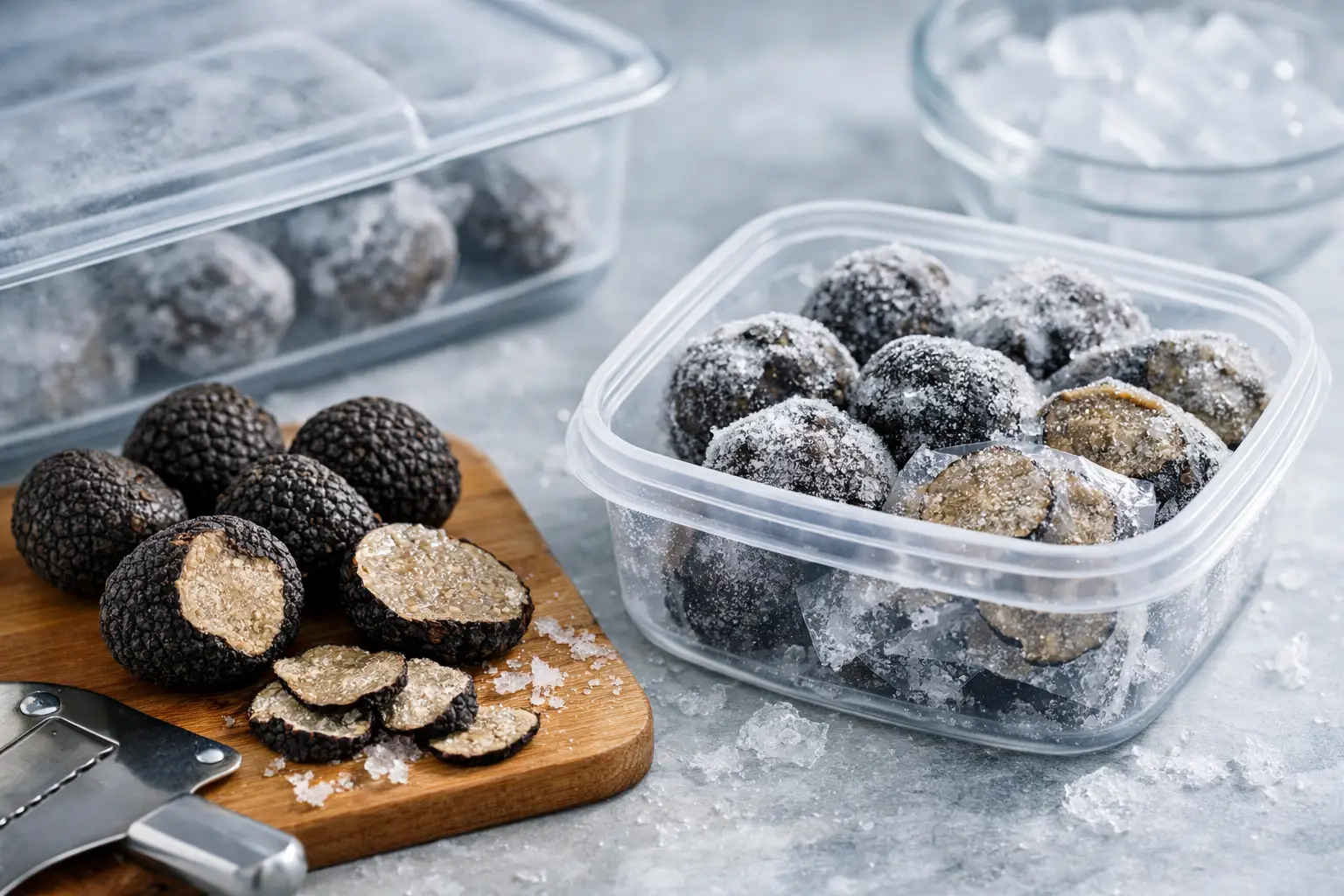
Can You Freeze Fresh Truffles? Leave a comment
A fresh truffle has a short, glorious window. One day it is intensely aromatic, earthy, and intoxicating over warm pasta or softly scrambled eggs. A few days later, if stored carelessly, that same truffle can lose its magic. So can you freeze fresh truffles? Yes – but whether you should depends on what you expect from them when they come back out.
Freezing is a practical option when you want to extend the life of a fresh black or white truffle beyond its peak. It is not a perfect preservation method, and it will not give you the exact experience of a just-arrived truffle shaved tableside. Still, if you understand the trade-offs, freezing can help you save an expensive ingredient for cooked dishes where aroma and flavor matter more than pristine texture.
Can You Freeze Fresh Truffles Without Ruining Them?
You can freeze fresh truffles, but freezing changes them. The biggest shift is texture. Fresh truffles contain water, and when that water freezes, ice crystals form inside the flesh. Once thawed, the truffle tends to become softer, slightly spongy, and less elegant for raw shaving.
Aroma also takes a hit. Truffles are prized for their volatile compounds – the fragrant notes that bloom with warmth and rise from a plate the moment they are sliced. Freezing preserves some of that character, but not all of it. The result is usually good enough for risotto, sauces, compound butter, or folded into warm dishes, especially with black truffles. For a raw finishing touch, the difference is more noticeable.
That is why the answer is not simply yes or no. Freezing works best when your goal is to preserve truffles for cooking rather than for the full fresh-luxury experience.
Which Truffles Freeze Best?
Black truffles generally handle freezing better than white truffles. Their aroma profile is more grounded and savory, and they tend to remain useful in hot preparations even after some loss of perfume. If you plan to grate frozen truffle into cream sauce, layer it into mashed potatoes, or shave it over a pizza just out of the oven, black truffles are usually the better candidate.
White truffles are another story. Their appeal is tied so closely to their heady, unmistakable aroma that any preservation method feels like a compromise. Freezing a white truffle is still possible, but if you invested in one for its extraordinary fragrance, you will notice the decline more sharply. In most cases, white truffles are best enjoyed fresh and quickly.
If you do freeze either variety, do it while the truffle is still in excellent condition. Freezing will pause decline – it will not reverse it.
When Freezing Makes Sense
There are moments when freezing is the smart move. Maybe you bought more than you can reasonably use in a few days. Maybe you are planning a dinner party next week and need to hold a truffle a little longer. Maybe you want to portion a larger truffle across several cooked dishes instead of using it all at once.
Freezing also makes sense if you like practical luxury in the kitchen. A small amount of frozen truffle grated directly into a hot pan can still transform eggs, pasta, potato dishes, or a creamy fonduta. For home cooks who want to stretch the value of a premium ingredient, that can be a worthwhile trade.
What freezing does not make sense for is preserving a truffle for a grand raw presentation. If your plan is paper-thin slices over carpaccio or a pristine shaving over buttery tagliolini, use the truffle fresh.
How to Freeze Fresh Truffles Properly
If you are going to freeze fresh truffles, speed and protection matter. Truffles absorb odors easily and lose moisture quickly, so the goal is to keep them insulated from air, frost, and anything else in the freezer.
Start by gently brushing off any visible dirt. Avoid washing unless absolutely necessary, since excess moisture works against you. If you must rinse, do it very quickly and dry the truffle thoroughly with paper towels before freezing.
Next, wrap each truffle tightly. A layer of paper towel can help absorb residual surface moisture, followed by plastic wrap or vacuum sealing if available. Then place the wrapped truffle in an airtight freezer bag or sealed container. Double protection is helpful here because truffles are delicate and aromatic.
You can freeze them whole, halved, or sliced. Whole truffles retain their character slightly better, while sliced or portioned truffles are more convenient if you want to use just a little at a time. If you expect to cook with small amounts, dividing before freezing is the better approach.
Label the package with the date. Even though frozen food can last longer, truffles are not something you want forgotten in the back of the freezer for months.
How Long Can Frozen Truffles Last?
For best quality, use frozen truffles within one to three months. They may remain safe beyond that if continuously frozen, but the aromatic payoff declines. Since truffles are all about sensory impact, quality matters more than technical shelf life.
A shorter freezer stay usually means better results. Think of freezing as a brief holding strategy, not long-term storage.
The Best Way to Use Frozen Truffles
In many cases, do not thaw them fully. A frozen truffle is easier to grate or microplane directly into a warm dish, and that approach helps preserve what aroma remains. The heat from the food releases the fragrance where it matters most.
This is especially effective with black truffles. Grate frozen truffle into scrambled eggs just before they finish cooking. Fold it into warm risotto with butter and Parmigiano Reggiano. Add it to cream sauce, potato puree, or truffle butter. Even a small amount can create that unmistakable savory depth.
If you want slices instead of grated pieces, let the truffle soften slightly in the refrigerator just until it is workable. Avoid bringing it to room temperature for long periods, as condensation and aroma loss can happen quickly.
Frozen truffles are at their best in warm, rich preparations that capture and carry aroma. Fat helps. Butter, cream, cheese, egg yolks, and olive oil all make excellent partners.
Better Alternatives to Freezing Fresh Truffles
If your truffle is fresh and you plan to use it within a few days, refrigeration is usually better than freezing. Wrap the truffle in a dry paper towel, place it in an airtight container, and store it in the refrigerator. Change the paper towel daily to manage moisture. This helps maintain texture and reduce the risk of spoilage.
Some people store truffles with eggs or rice. Eggs can absorb aroma through their shells, which gives you truffle-scented eggs for omelets or fresh pasta. Rice can help manage moisture, but it may also dry the truffle out faster if you are not careful. Neither method is ideal for long storage, but both can be useful if you are cooking within a very short window.
Another strong alternative is to preserve the truffle in a finished product rather than freezing it whole. You can shave fresh truffle into softened butter, seal it well, and refrigerate or freeze the butter. You can also use fresh truffle in cream, cheese-based sauces, or infused preparations where the flavor is meant to be enjoyed in cooked form. This often gives you a more rewarding result than thawing a whole truffle later and wishing it were fresher.
For many home cooks, this is where specialty pantry items shine. A well-made truffle butter, truffle salt, or truffle carpaccio gives you convenience and consistency when fresh truffles are not at their peak.
Can You Freeze Fresh Truffles and Still Get Great Flavor?
Yes, especially if your expectations are calibrated correctly. You are preserving usable flavor, not preserving perfection. A frozen fresh truffle can still make a bowl of pasta feel luxurious, turn mashed potatoes into a dinner-party side, or add unmistakable depth to eggs on a quiet Sunday morning.
The key is matching the preservation method to the use. Freeze black truffles if you need extra time and plan to cook with them. Be more cautious with white truffles, whose aromatic beauty is most compelling when fresh. Wrap carefully, use them quickly, and bring them back into the kitchen with warmth, fat, and restraint.
At Truffle Guys, we think the best truffle experience is the one that meets the moment – whether that means enjoying a fresh truffle at peak ripeness or preserving a portion wisely so none of that exquisite ingredient goes to waste. Treat it with care, and even from the freezer, a truffle can still make dinner feel like an occasion.
