
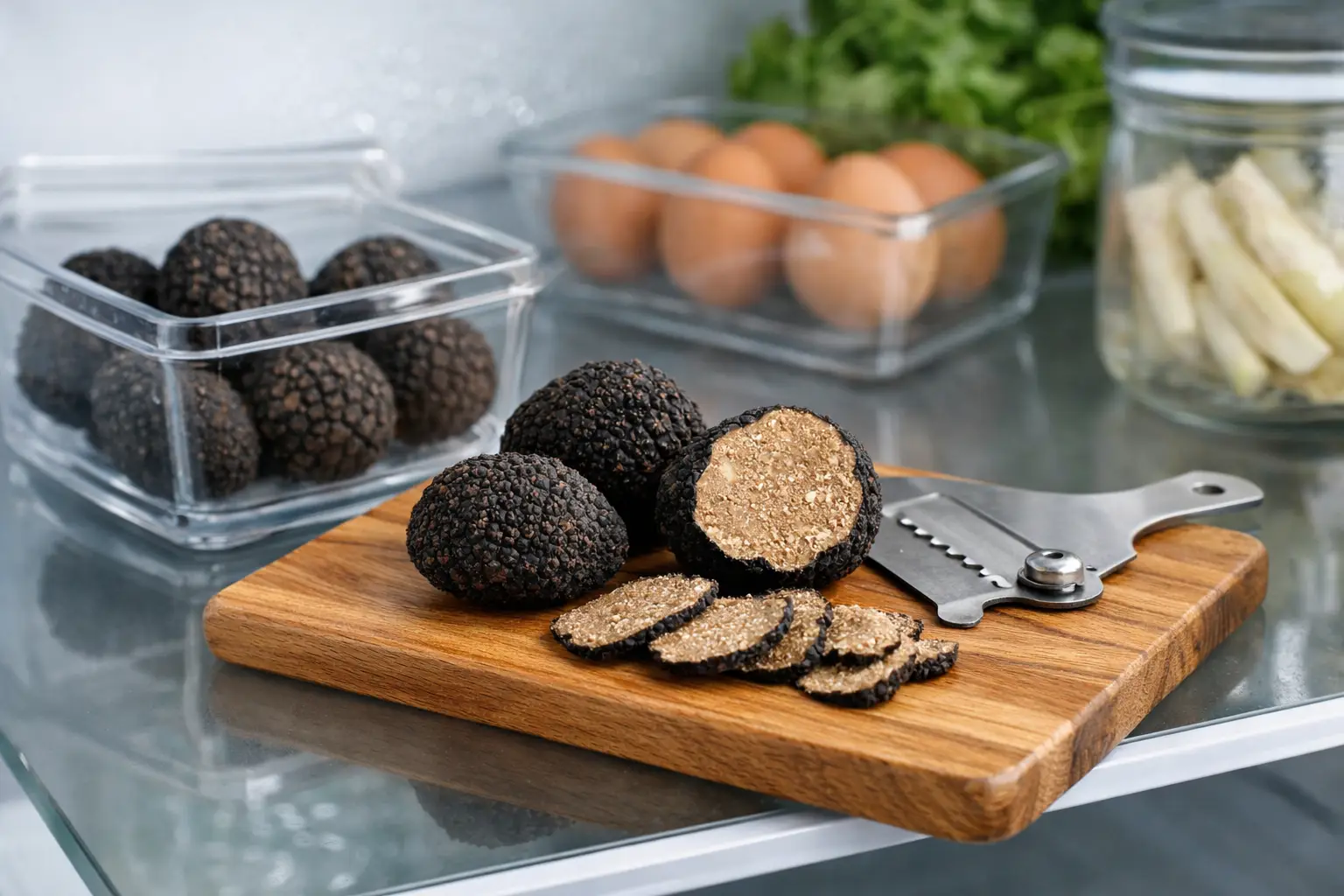
How Long Do Fresh Truffles Last in the Fridge? Leave a comment
A fresh truffle is at its most captivating during a remarkably short window. If you are wondering how long do fresh truffles last, the practical answer is usually five to seven days in the refrigerator, with the first few days offering the fullest perfume, firmest texture, and most memorable flavor. Treat them less like a pantry ingredient and more like a prized seasonal produce item: delicate, highly aromatic, and best enjoyed without delay.
That short lifespan is part of the luxury. Fresh truffles are not meant to wait for a distant special occasion. They are the special occasion, ready to transform warm eggs, silky pasta, risotto, steak, or a simple buttered potato with a few generous shavings.
How Long Do Fresh Truffles Last After Delivery?
Properly stored fresh truffles generally keep for five to seven days. A particularly fresh, firm black truffle may remain enjoyable for up to 10 days, while fragrant white truffles are often at their best within three to five days. The exact timeline depends on the truffle variety, how recently it was harvested, its condition upon arrival, and how carefully it is stored at home.
Black winter truffles tend to be somewhat more resilient. Their aroma is deep and earthy, often with notes of cocoa, forest floor, and roasted nuts, and they can retain good character for several days when handled correctly. White truffles are more volatile and intensely perfumed. Their garlic, honey, and wild mushroom fragrance can be extraordinary, but that expressive aroma fades faster. When white truffles arrive, plan a menu promptly.
Freshness is not just about whether a truffle is technically safe to eat. It is about whether it still delivers the reason you bought it. A truffle can remain edible after its aromatic peak, yet offer far less drama at the table. For the most luscious experience, serve fresh truffles within the first 48 to 72 hours whenever possible.
The Best Way to Store Fresh Truffles
The goal is simple: keep the truffle cold, dry, and protected without sealing it into a damp environment. Moisture is the enemy. It encourages spoilage, softens the exterior, and can mute the truffle’s distinctive fragrance.
Gently wrap each truffle in a clean, dry paper towel. Place it in a small airtight container or glass jar, then store it in the refrigerator, ideally in the main body of the fridge where the temperature is consistently cold. Avoid the crisper drawer if it tends to hold excess humidity, and do not store truffles near strongly scented foods. Their aroma is powerful, but they can also absorb surrounding odors.
Change the paper towel every day. This small ritual makes a meaningful difference. The towel draws away natural moisture released by the truffle, while a daily check lets you catch any softening or condensation before it becomes a problem. If the towel is damp, replace it immediately and wipe the container dry.
Do not wash a fresh truffle before storage. Water adds unnecessary moisture and shortens its usable life. Instead, brush away any visible soil just before cooking with a soft truffle brush or a clean, dry brush reserved for food use. If a brief rinse is truly necessary, do it immediately before serving and dry the truffle thoroughly.
Should You Store Fresh Truffles in Rice?
Rice is a traditional storage method, but it comes with a trade-off. Rice can help absorb moisture, and it will take on some truffle aroma, making it lovely for a truffle risotto or rice pudding. However, rice can also pull moisture from the truffle itself, causing it to dry out faster.
For a truffle you plan to use within a day or two, storing it with rice can be worthwhile if you intend to cook the infused rice. For longer storage, paper towel in an airtight container is usually the more reliable choice. It preserves the truffle’s own texture rather than sacrificing it for a secondary ingredient.
Can Fresh Truffles Be Frozen?
Freezing is possible, but it is a preservation compromise rather than the ideal plan. A frozen truffle will lose some of its fresh perfume and may develop a softer, less elegant texture once thawed. Still, if you cannot use it before it begins to decline, freezing can preserve enough flavor for cooked dishes.
Wrap the truffle tightly, place it in an airtight freezer-safe container, and freeze it whole. Grate or shave it directly from frozen over hot pasta, scrambled eggs, sauces, or risotto. Do not thaw it on the counter, where condensation can make the texture watery. Reserve frozen truffle for preparations where heat and fat can carry its remaining aroma.
Signs Your Fresh Truffle Is Still at Its Peak
A beautiful fresh truffle should feel firm and weighty for its size. Its surface may be naturally irregular, but it should not feel squishy, wet, or slimy. The aroma should be clear and inviting: earthy for black truffles, more pungent and floral for white varieties, with a savory depth that becomes especially vivid as the truffle warms slightly.
A little drying on the exterior does not automatically mean the truffle is unusable. If it remains firm, smells clean, and shows no signs of mold, it can still bring excellent flavor to a warm dish. In fact, a lightly dehydrated black truffle may grate beautifully over pasta or eggs.
Discard a fresh truffle if it develops visible mold, a sticky or slick surface, extensive soft spots, or a sour, fermented, or ammonia-like smell. Trust your senses. A truffle’s aroma should be luxurious and earthy, never unpleasantly sharp or stale.
Make the Most of a Short Fresh-Truffle Window
Fresh truffles reward restraint. High heat, aggressive seasoning, and heavily spiced sauces can overwhelm their nuance. The most successful dishes begin with simple, warm, fat-rich foundations that allow the truffle to perfume the plate.
Use black truffle over freshly made pasta with butter and Parmigiano-Reggiano, a creamy risotto, soft scrambled eggs, roasted chicken, or a steak resting under a spoonful of butter. White truffle is exquisite over eggs, potato puree, delicate pasta, mild cheese, or a warm risotto finished with good butter. Shave it at the table whenever possible. The heat of the dish releases the aroma, and the final flourish gives guests the full sensory experience.
If you have several truffles, do not feel obliged to serve them all in one extravagant course. A small amount can elevate a sequence of meals over a few days. Shave some over dinner on the first night, tuck thin slices into a simple omelet the next morning, then finish a creamy pasta or risotto the following evening. This approach lets you enjoy the changing character of the truffle while it is still at its most expressive.
Keep other flavors disciplined. A fine olive oil, cultured butter, eggs, aged cheese, pasta, potatoes, and gently cooked mushrooms are natural partners. Fresh truffle does not need competition. It needs warmth, richness, and a little room to speak.
Plan Your Menu Before the Truffles Arrive
The finest storage method cannot replace good timing. Order fresh truffles when you already have a few dishes in mind and the ingredients ready. That may mean eggs and butter in the refrigerator, fresh pasta on hand, a wedge of aged cheese waiting to be grated, and a dinner worth lingering over.
For entertaining, schedule fresh truffles to arrive one or two days before the meal rather than too far in advance. For professional kitchens, build them into an immediate special or tasting menu. Their rarity and fleeting aroma are precisely what make a truffle shaving feel so exceptional.
A fresh truffle asks to be used, not admired from afar. Store it carefully, check it daily, and bring it to a warm, uncomplicated dish while its fragrance is still filling the room. The reward is one of the most exquisite finishing touches in cooking.
