
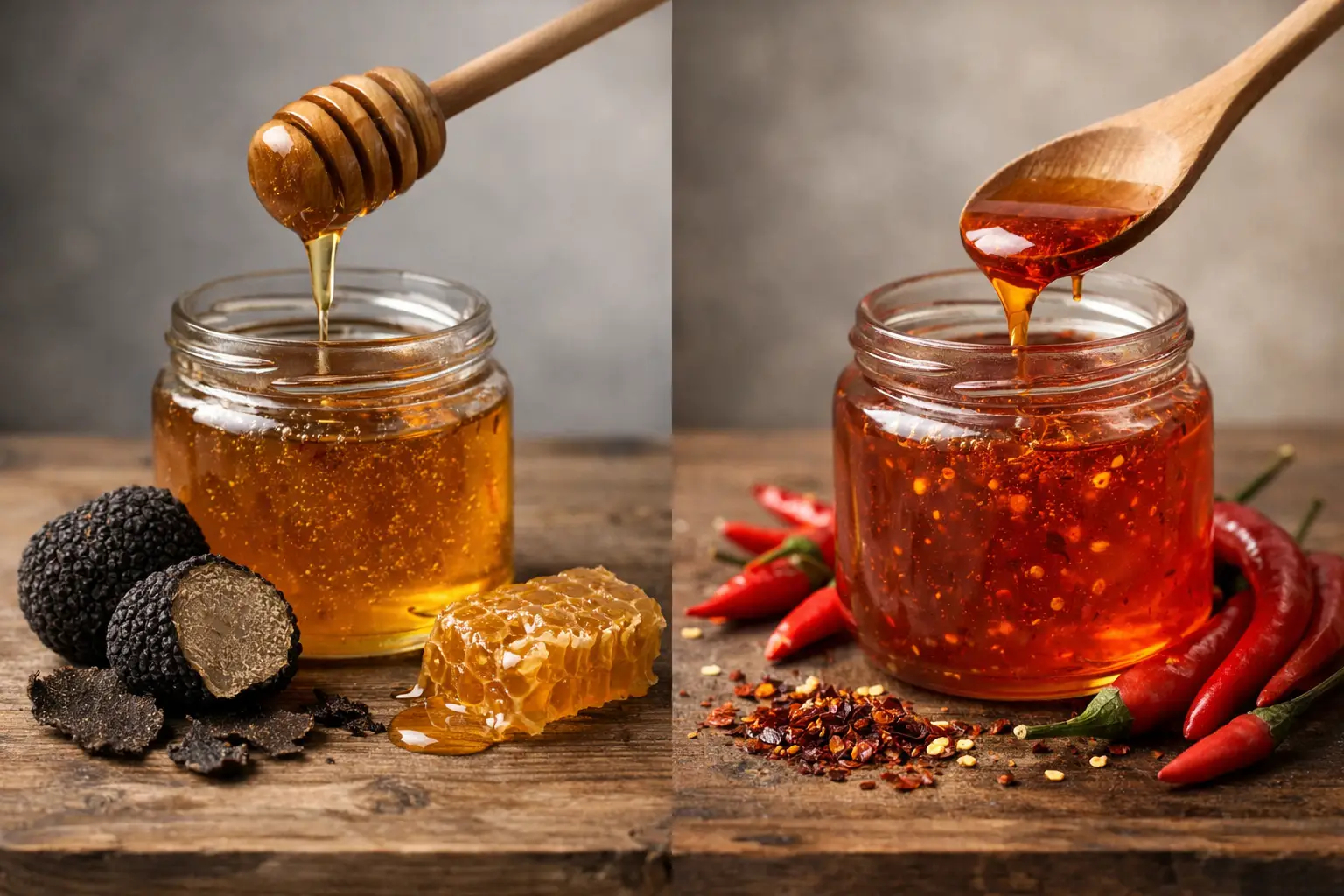
Truffle Honey Versus Hot Honey: Which Is Better? Leave a comment
A drizzle of honey can turn a simple plate into something memorable, but the flavor direction matters. In the choice of truffle honey versus hot honey, one brings deep woodland aroma and savory luxury; the other delivers a bright, peppery kick. Both deserve a place in a well-stocked gourmet pantry, yet they create very different experiences on the same food.
Truffle Honey Versus Hot Honey at a Glance
Truffle honey is made to be savored slowly. Its sweetness carries the earthy, musky perfume of truffle, creating a luscious contrast against rich cheese, roasted vegetables, and buttery dishes. It is less about heat or intensity and more about aroma – the distinctive, lingering quality that makes truffles feel like a special occasion.
Hot honey begins with a different intention. Honey is infused or blended with chile peppers, giving it a sweet start followed by spice. Depending on the pepper and recipe, that heat may be gentle and fruity or sharp enough to cut through fatty meats and melted cheese. Its appeal is immediate, lively, and slightly addictive.
Neither is inherently better. The right choice depends on whether a dish needs depth or fire, and whether the rest of the menu is built around elegant richness or bold contrast.
What Truffle Honey Tastes Like
A quality truffle honey should smell as captivating as it tastes. The honey provides floral sweetness, while truffle contributes earthiness, umami, and an unmistakable forest-floor character. Black truffle honey often feels darker and more savory, with a robust profile that holds up beautifully to aged cheese and roasted meats. White truffle honey can present a more fragrant, garlic-like aroma that is particularly appealing with mild, creamy ingredients.
Because truffle is aromatic rather than spicy, truffle honey is most effective as a finishing ingredient. High heat can mute its finer notes, so it is best drizzled over food just before serving. A little goes a long way. One measured ribbon across warm brie or a few drops over ricotta crostini can transform the entire bite.
What Hot Honey Tastes Like
Hot honey is built around contrast. Its natural sweetness rounds out chile heat, allowing spice to linger without becoming as aggressive as a straight hot sauce. The result can range from warmly tingly to decisively fiery, depending on the blend.
That versatility makes hot honey a natural match for casual favorites with rich, salty, or smoky elements. Think pepperoni pizza, fried chicken, crispy bacon, barbecue, and sharp cheddar. It can also bring welcome tension to sweeter dishes, especially cornbread, biscuits, and roasted stone fruit. Where truffle honey whispers, hot honey announces itself.
When to Use Truffle Honey
Choose truffle honey when the goal is to make familiar ingredients feel more luxurious. Its refined character shines beside foods with enough richness to carry the aroma without competing with it. A cheese board is the classic starting point, particularly with triple-cream brie, taleggio, goat cheese, pecorino, or a well-aged Parmigiano Reggiano.
It is equally compelling beyond the cheese course. Drizzle it over roasted carrots with hazelnuts, add a small amount to a vinaigrette for bitter greens, or finish a flatbread with fontina, mushrooms, and fresh herbs. With meat, truffle honey is especially good on roasted pork tenderloin, duck breast, or chicken with a crisp golden skin.
For entertaining, it has an advantage over many specialty condiments: it looks effortless. Set out a small bowl alongside a cheese platter and let guests add their own finishing touch. The aroma immediately signals that this is not an ordinary honey.
The Best Pairings for Truffle Honey
Creamy and salty ingredients are truffle honey’s strongest companions because they give its perfume a rich backdrop. A warm wheel of brie with truffle honey and toasted walnuts is simple but spectacular. Fresh ricotta, crusty bread, and a finishing pinch of sea salt offer a lighter interpretation.
Truffle honey also deserves consideration at brunch. Spoon it over soft scrambled eggs, use it to glaze breakfast sausage, or serve it with a savory French toast topped with mushrooms. The combination of egg yolk, butter, and truffle aroma has the indulgence of a restaurant dish while requiring almost no extra work.
When to Use Hot Honey
Reach for hot honey when a dish feels rich, salty, or one-note and needs lift. Its chile heat cuts through fat beautifully, making it a particularly smart choice for pizza, fried foods, and grilled meats. A finishing drizzle over a mozzarella pizza with spicy sausage delivers sweetness, heat, and acidity-friendly brightness in one move.
Hot honey is also more forgiving in cooked applications. It can be brushed onto chicken wings near the end of roasting, stirred into a glaze for ribs, or whisked into a sauce for grilled shrimp. The heat remains part of the equation even when the floral delicacy of the honey becomes less prominent.
At a relaxed gathering, hot honey has broad appeal because guests understand the flavor cue immediately. Still, consider the spice tolerance around the table. A mild version can be generously drizzled, while a hotter blend is best offered on the side so everyone can control the intensity.
The Best Pairings for Hot Honey
Crisp, salty foods are nearly made for hot honey. Fried chicken, crispy potatoes, bacon, and tempura vegetables all gain a glossy finish and a welcome spark. It is also an excellent partner for blue cheese, feta, and sharp cheddar, where the sweetness softens salt and the chile keeps each bite energetic.
For a more polished use, pair hot honey with grilled peaches and burrata, or brush it over salmon before serving with a squeeze of lemon. The trick is to keep the plate balanced. If the honey brings significant heat, use cooling dairy, fresh herbs, or bright citrus to prevent the flavor from feeling heavy.
Can You Use Both on the Same Menu?
Absolutely, as long as they are assigned different jobs. Truffle honey works beautifully as an elegant opening note on a cheese board or crostini course. Hot honey can then move into the main course, where it has the structure to stand up to pizza, grilled meats, or crispy vegetables.
Using both on the same individual dish is possible, but restraint matters. Truffle aroma is nuanced and can disappear behind assertive chile heat. If you want to experiment, use a mild hot honey sparingly and let truffle honey remain the primary finishing element on a mushroom flatbread or roasted squash. Taste as you go rather than applying both generously.
Choosing the Right Honey for Your Pantry
If you regularly serve cheese, cook eggs, enjoy mushrooms, or look for an easy way to elevate a dinner party, truffle honey is the more distinctive luxury purchase. It adds a gourmet signature to dishes that do not need more spice. Look for a honey with a clear truffle aroma and a balanced sweetness rather than one that tastes overly perfumed.
If pizza night, grilled meats, and spicy-sweet snacks are staples in your kitchen, hot honey will likely see more frequent use. It is adaptable, crowd-pleasing, and well suited to bold flavors. The best option has real chile character, not merely sugar followed by blunt heat.
There is also room for both. Keep truffle honey for moments when you want a plate to feel exquisite, and hot honey for dishes that benefit from a little edge. The next time a warm cheese course, roasted vegetable platter, or just-baked pizza reaches the table, let the flavor you want guests to remember make the choice.
