
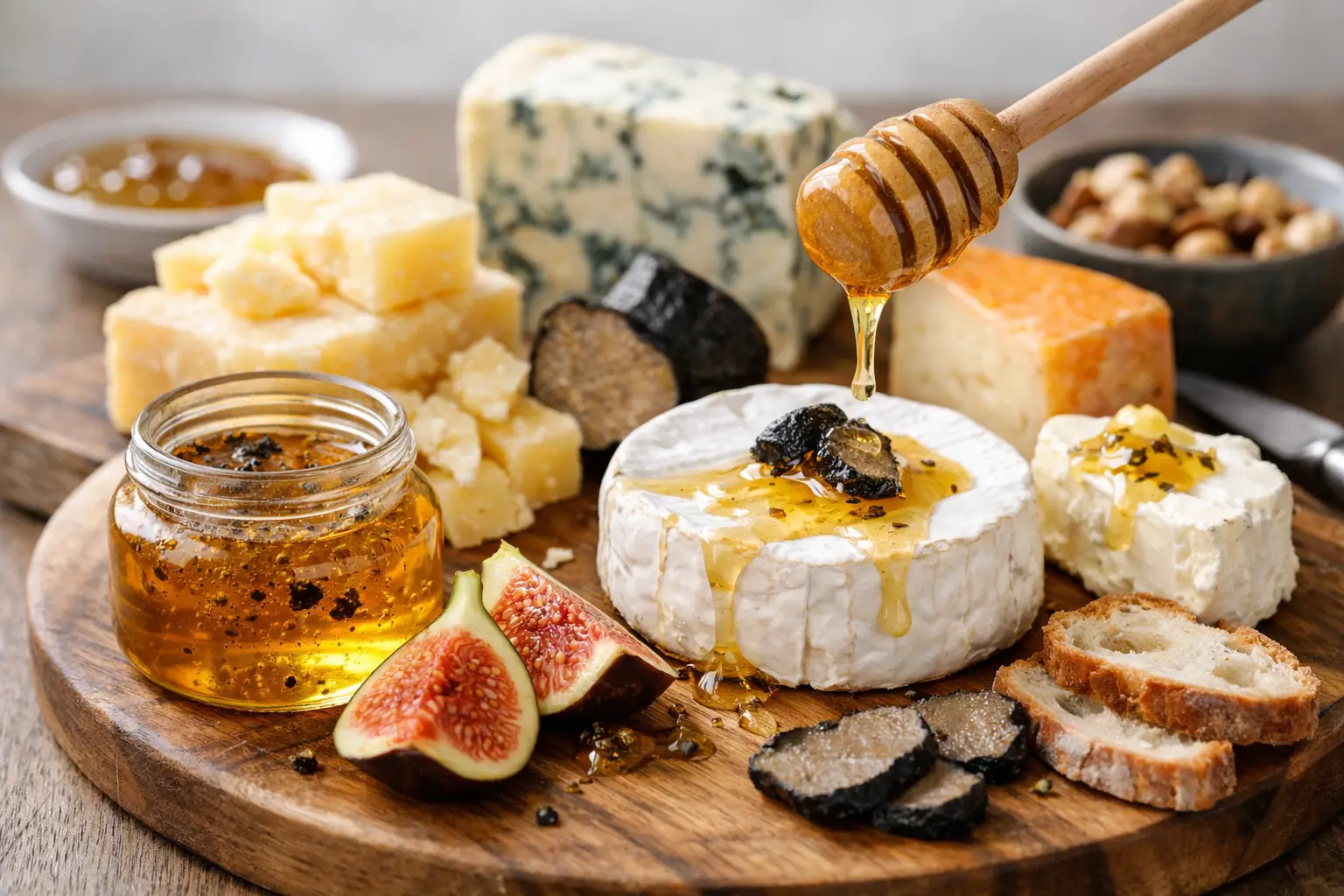
How to Pair Truffle Honey With Cheese Leave a comment
A well-built cheese board usually needs one thing to move from good to memorable – contrast. That is exactly why learning how to pair truffle honey with cheese matters. The earthy depth of truffle and the soft sweetness of honey can turn a simple wedge into something more layered, more elegant, and much more satisfying.
The key is restraint. Truffle honey is a finishing touch, not a blanket. When used with the right cheese, it adds aromatic richness, rounds out salt and tang, and brings a luxurious savory-sweet note that feels special occasion ready without requiring much effort.
How to Pair Truffle Honey With Cheese Without Overdoing It
The first rule is balance. Truffle honey has two strong personalities in one jar: floral sweetness and unmistakable truffle aroma. Some cheeses welcome both. Others get buried.
In general, truffle honey works best with cheeses that offer one of three things: creaminess, salt, or nutty aged character. Triple-cream styles soften the truffle’s intensity and create a lush, almost spoonable bite. Salty cheeses sharpen the contrast and keep the honey from tasting cloying. Firm aged cheeses bring enough complexity to stand beside truffle rather than disappearing under it.
Texture matters almost as much as flavor. A dense, crumbly cheese and a silky drizzle create a more dynamic bite than two soft elements together. That said, a ripe bloomy rind paired with just a touch of truffle honey can be exquisite when you want something rich and decadent.
Portioning is where most pairings go wrong. Start with a very light drizzle or a small dab on the side. You want the cheese to lead and the truffle honey to follow. If every bite tastes primarily of honey, you have lost the character of both ingredients.
The Best Cheeses for Truffle Honey
Brie and triple-cream cheeses
This is one of the most reliable pairings. Brie, Delice-style cheeses, and other triple-creams have a buttery, mushroom-friendly profile that naturally complements truffle. Add a small spoonful of truffle honey and the result is luscious and rounded, with enough sweetness to lift the cream without making it feel heavy.
This pairing shines at room temperature. Cold triple-cream cheese can mute aroma, while gently warmed cheese becomes more expressive and allows the truffle to bloom.
Pecorino and other sheep’s milk cheeses
If you like sweet-salty contrast, start here. Pecorino has a firm texture and a salty, slightly grassy edge that plays beautifully against truffle honey. The honey softens the sharpness while the cheese keeps the sweetness in check.
A younger Pecorino gives you a creamier bite. An aged one delivers more crystalline texture and a bolder finish. Both work, but the older the cheese, the more sparing you should be with the honey.
Parmigiano Reggiano and aged alpine cheeses
Nutty, savory, and deeply developed cheeses are excellent with truffle honey when the drizzle is controlled. Parmigiano Reggiano, aged Gouda, Gruyere, and Comte all have enough structure and flavor concentration to handle truffle’s earthy perfume.
The appeal here is not just sweetness. It is the way honey highlights toasted, brothy, and caramelized notes already present in the cheese. Break aged cheeses into shards instead of slicing them neatly. The rough edges catch the honey better and create a more natural, generous presentation.
Blue cheese, in moderation
This pairing can be spectacular or too intense depending on the style. A creamy Gorgonzola Dolce or a mild blue can be excellent with truffle honey because the sweetness tempers the blue’s bite. A very aggressive, salty blue may compete too hard with the truffle.
If you want drama on a board, this is the pairing to include. Just keep portions small. One bold cheese with truffle honey is exciting. Several strong cheeses together can make the whole board feel crowded.
Goat cheese and fresh cheeses
Fresh goat cheese can work, especially if it is creamy and not overly acidic. The tang gives the honey somewhere to land, and the truffle adds depth to a cheese that might otherwise read bright and simple. Ricotta and mascarpone can also be lovely vehicles for truffle honey, particularly when served on crostini.
This is a softer, fresher style of pairing. It feels less traditional than aged cheese and honey, but for spring entertaining or brunch spreads, it has real appeal.
Cheeses That Usually Do Not Work as Well
Very delicate cheeses can get overwhelmed. Mild mozzarella, burrata, and young Monterey Jack often do not bring enough salt or complexity to support truffle honey. The result can taste flat or one-note.
Very smoky cheeses can also be difficult. Smoke, truffle, and sweetness compete for attention, and the pairing can feel muddled rather than refined. If you want the board to feel polished, it is usually better to let truffle honey pair with clean, expressive cheeses instead.
Building a Board Around Truffle Honey
If truffle honey is on the board, let it guide the rest of the choices. You do not need six cheeses and a dozen accompaniments. A more edited selection often feels more luxurious.
Choose three to four cheeses with different textures. A triple-cream, an aged sheep’s milk cheese, and a firm alpine cheese create enough contrast without redundancy. If you want a fourth, add a mild blue.
Then think about supporting elements that will not fight the truffle. Plain crackers, toasted baguette slices, Marcona almonds, and fresh pear slices all work well. Fruit pastes, heavily spiced nuts, or strongly flavored jams can crowd the palate and make the truffle honey less distinct.
For presentation, serve the truffle honey in a small bowl or jar with a dedicated spoon. Drizzling directly over the entire cheese board may look generous, but it removes choice and can saturate everything too quickly. Guests should be able to try each cheese with and without it.
How to Pair Truffle Honey With Cheese for Entertaining
For entertaining, timing matters. Cheese should come out of the refrigerator 30 to 60 minutes before serving so texture and aroma can open up. Truffle honey should be easy to spoon, not stiff or chilled.
Think in bites, not just ingredients. A thin slice of aged Pecorino with a touch of truffle honey on a crisp cracker is different from a soft wedge of Brie spread onto warm bread with the same drizzle. One is sharper and more structured. The other is richer and more indulgent. Offering both styles gives guests an immediate sense of range.
This is also where restraint becomes hospitality. Not every guest wants the same intensity of truffle, so keep the honey as an optional accent. That approach feels more polished and lets the ingredient remain premium rather than overpowering.
If you are building a board for cocktails before dinner, favor firmer, saltier cheeses and lighter applications of honey. If the board is the event, a triple-cream and a soft blue with truffle honey can lean more decadent.
A Few Pairing Ideas That Consistently Work
Brie with truffle honey and sliced pear is one of the easiest combinations to serve and one of the most universally liked. It is creamy, floral, and gently earthy.
Pecorino with truffle honey on a plain crostini has a more savory edge. This is an excellent choice if you want something that feels wine-bar polished but still approachable.
Parmigiano Reggiano with just a few drops of truffle honey and toasted almonds offers a firmer, more structured bite. It is especially good for guests who prefer aged cheeses over soft ones.
A mild Gorgonzola with truffle honey can be a standout on a holiday board. The richness feels festive, and a little goes a long way.
Common Mistakes to Avoid
The biggest mistake is pairing truffle honey with too many competing flavors at once. Truffle already brings complexity, so it does not need chili jam, candied nuts, and fig spread all in the same bite.
Another misstep is using too much honey on young, mild cheese. That can turn an elegant pairing into dessert. If you want a sweeter board, choose cheeses with more salt or age so the contrast stays intact.
Finally, do not overlook quality. A thoughtfully made truffle honey with a true aromatic profile will taste more integrated and less artificial. That difference shows up clearly when the ingredient is used so simply. Truffle Guys understands this well – with premium pantry products, the finish is often where the luxury lives.
Truffle honey does not need a complicated setting to impress. A beautiful cheese, a modest drizzle, and a little confidence are usually enough to create the kind of bite people remember and ask about long after the board is gone.
