
Where Do Black Truffles Come From and Why? Leave a comment
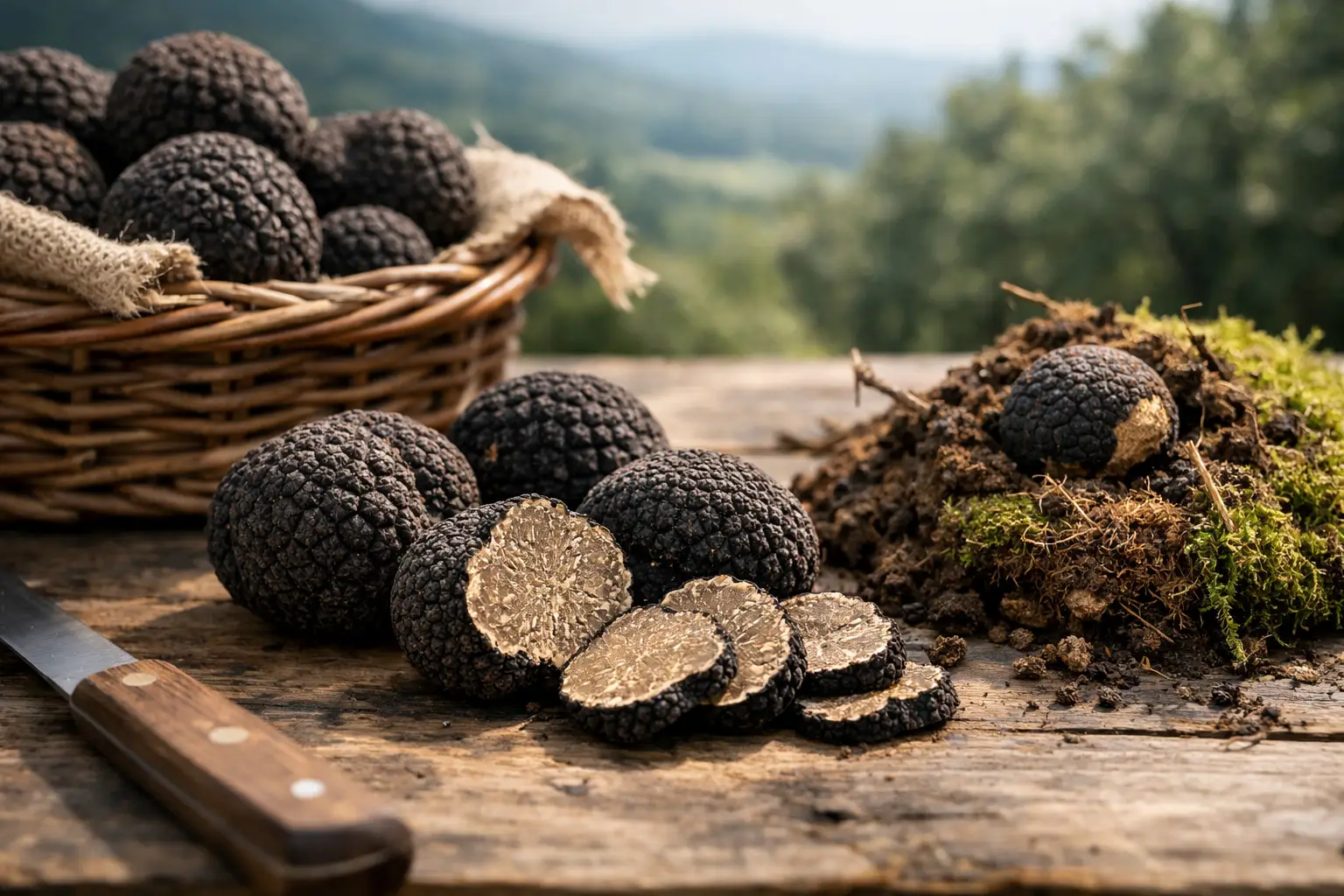
A black truffle shaved over warm tagliatelle can make a simple dinner feel like a special occasion. But where do black truffles come from? Not from a field, a farm row, or the roots of a single tree. These prized fungi begin their lives underground in particular European landscapes, shaped by limestone-rich soil, living trees, weather, and an unusually patient harvest.
Their origin matters because truffles are an expression of place. Like fine wine, a black truffle carries the character of its region into the kitchen: earthy, woodsy, cocoa-like, sometimes peppery, and deeply savory. Understanding where they grow makes it easier to appreciate why they are rare, why their seasons are short, and why a little can transform eggs, risotto, steak, or potatoes.
Where Do Black Truffles Come From?
The black truffle most associated with luxury cooking is Tuber melanosporum, often called the Périgord black truffle or winter black truffle. It is native to southern Europe and is especially celebrated in France, Spain, and Italy. Each country has historic truffle regions with the soils, host trees, and climate this species needs to thrive.
In France, the Périgord region gave the truffle its familiar name, though important harvests also come from Provence and other areas in the south. Spanish black truffles are widely respected, particularly those from Aragón, Castilla y León, Catalonia, and Soria. Italy produces exceptional black truffles in regions including Umbria, Tuscany, Marche, and Piedmont.
These are not interchangeable origins. A truffle from a dry Spanish grove may show a slightly different aromatic balance than one from a French limestone hillside or an Italian woodland. Still, all excellent Tuber melanosporum share a defining character: a luxurious perfume that is earthy and musky, with notes that can recall roasted nuts, damp forest floor, dark chocolate, and ripe fruit.
A Truffle Is a Fungus, Not a Root Vegetable
Black truffles grow below the soil surface, usually a few inches deep. They are the fruiting bodies of fungi that live in a close relationship with the roots of certain trees. This partnership is called mycorrhiza. The fungus helps the tree absorb water and minerals, while the tree supplies sugars produced through photosynthesis.
That relationship explains why truffles cannot simply be planted like potatoes. A truffle needs a compatible host tree, suitable soil biology, the right moisture pattern, and time. The trees most commonly associated with black truffles include oak, holm oak, hazelnut, and sometimes beech or hornbeam. A truffle orchard may look modest above ground, but below the surface it is a highly specialized ecosystem.
The Soil and Climate Behind Great Black Truffles
The finest black truffle terrain is often calcareous, meaning it contains significant limestone. These soils tend to be well drained and alkaline, with a pH generally above neutral. Truffles dislike standing water and compacted ground, yet they also need enough moisture at key points in their development. A dry summer can reduce a harvest; excessive rain can create different problems.
Mediterranean and continental-influenced climates are particularly favorable. Cold winters help support the maturation of winter black truffles, while warm summers and seasonal rainfall shape their underground growth. Elevation, slope, surrounding vegetation, and even how a grove is managed can influence production.
This is why black truffles are both cultivated and still wonderfully unpredictable. Growers can inoculate young oak or hazelnut trees with truffle spores and establish carefully managed orchards. But planting trees does not guarantee truffles. It may take five to ten years before a productive orchard yields a meaningful harvest, and annual output can rise or fall with weather and soil conditions.
Wild truffles continue to be harvested in natural woodlands as well. In either setting, provenance is not a marketing detail. It is central to flavor, availability, and value.
Black Truffle Season Is a Winter Affair
For Tuber melanosporum, the classic season runs roughly from late autumn through winter, often peaking between December and February. Timing varies by region and weather, but a mature black truffle is harvested only after it has developed its fullest aroma.
An underripe truffle may look impressive but offer little fragrance. At peak maturity, the interior, known as the gleba, is dark with fine white marbling, while the exterior is black and textured. Its aroma should be immediate but not harsh: rich, savory, and alive.
This seasonal nature is part of the pleasure. Fresh truffles are fleeting ingredients, best enjoyed promptly and handled with restraint. Their perfume is volatile, and prolonged cooking can diminish the very quality that makes them extraordinary. Shave fresh black truffle over food at the last moment, when steam and fat can carry the aroma to the table.
How Truffle Hunters Find Them
Because truffles mature underground, they are traditionally located with trained dogs. A skilled truffle dog works by scent, signaling its handler when it detects a ripe truffle beneath the soil. The harvester then digs carefully by hand, protecting the surrounding roots and any immature truffles nearby.
Dogs are now the standard in many regions because they can be trained to locate ripe truffles without damaging the harvest. Older stories often feature pigs, which are naturally attracted to truffle aromas, but pigs can be harder to manage and may be inclined to eat the prize.
Harvesting is as much judgment as it is detection. The best truffle hunters read the ground, the trees, the season, and the dog. Responsible harvesting protects future yields, which is essential in a category dependent on healthy forests and carefully tended orchards.
Not Every Black Truffle Is the Same
“Black truffle” is a broad culinary term, and it can describe several species with very different aromas, seasons, and prices. The winter black truffle, Tuber melanosporum, is the benchmark for its depth and finesse. It is the truffle many diners mean when they imagine the classic experience of truffle shaved over pasta or folded into a buttery sauce.
Other species include the summer black truffle, Tuber aestivum, which is generally milder and harvested in warmer months. Burgundy truffle, often classified as Tuber uncinatum, is closely related but typically has a different autumn season and a more pronounced hazelnut-like profile. Tuber brumale, or winter truffle, can also appear in the market and offers an earthy aroma, though it is usually less intense than Tuber melanosporum.
None of this means one truffle is automatically “good” and another is not. It depends on the dish, the season, and the experience you want. A delicate summer truffle can be lovely over soft scrambled eggs or fresh cheese. For a more dramatic finish on pasta, roast chicken, or a celebratory steak, the concentrated perfume of winter black truffle is difficult to surpass.
Bringing Black Truffle Character Into Everyday Cooking
Fresh truffles offer an incomparable seasonal experience, but their flavor profile can also be enjoyed through thoughtfully made pantry ingredients. This is where truffle oils, salts, powders, carpaccio, and sauces earn their place in a well-stocked kitchen. They provide a practical way to bring earthy, savory truffle character to dishes whenever inspiration strikes.
The key is to use them as finishing ingredients, not as a heavy-handed sauce. A few drops of black truffle oil can bring an elegant aroma to mashed potatoes or popcorn. Black truffle salt adds instant depth to fried eggs, grilled steak, roasted vegetables, and even a simple buttered baguette. Truffle carpaccio can be layered over pizza after baking, stirred into risotto, or spooned onto a warm baked potato.
Fat is truffle’s great companion. Butter, olive oil, cream, cheese, egg yolk, and the marbling of a good cut of beef all help carry its aroma. Keep the rest of the plate uncomplicated. Truffle does not need competition from aggressive heat, too much garlic, or heavily sweet sauces. It rewards a measured hand and warm food served immediately.
At Truffle Guys, that philosophy is simple: exceptional truffle ingredients should feel celebratory, but never out of reach. The right finishing touch can turn a weeknight pasta, a tray of crisp fries, or an appetizer for guests into something memorable.
The next time that unmistakable aroma rises from a warm plate, think beyond the shave itself. It began beneath European trees, in patient partnership with soil and season, before arriving at your table ready to make an ordinary meal feel exquisitely considered.
