
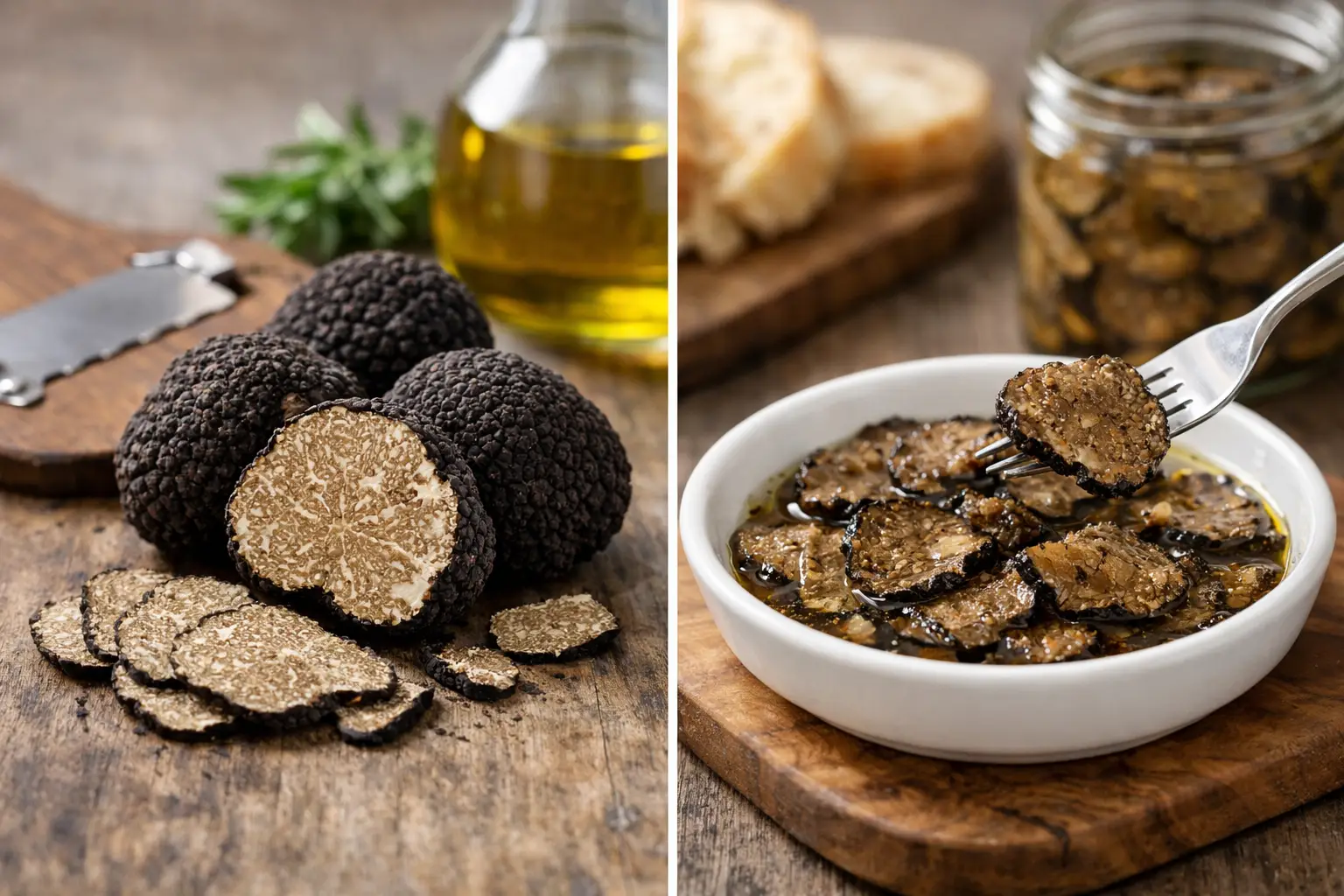
Fresh Truffles vs Truffle Carpaccio: Which to Use 1
A warm bowl of tagliatelle, a softly scrambled egg, or a crisp pizza can become unforgettable with one well-chosen truffle finish. But fresh truffles vs truffle carpaccio is not simply a question of which is more luxurious. Each offers a different expression of truffle flavor, a different level of convenience, and a different role in the kitchen.
Fresh truffles deliver an aromatic, fleeting experience that belongs at the center of a special meal. Truffle carpaccio brings the savory depth of sliced black truffle to everyday cooking, entertaining, and restaurant-style finishing – without the urgency of using a fresh truffle immediately. Knowing when to reach for each lets you cook with greater confidence and far more pleasure.
Fresh Truffles vs Truffle Carpaccio: The Essential Difference
Fresh truffles are whole, seasonal fungi prized for their perfume, texture, and remarkable ability to transform warm food. A fresh black or white truffle is shaved in thin, delicate slices just before serving, allowing its aroma to rise with the steam of buttered pasta, risotto, eggs, potatoes, or a creamy sauce.
Truffle carpaccio is made from thin slices of black truffle preserved in oil, often with a little salt. It captures the earthy, savory character of black truffle in a ready-to-use format. Rather than shaving a whole truffle at the table, you spoon or arrange the slices directly over a finished dish, then use a touch of the flavorful oil to carry that character through the plate.
Neither is a substitute in every circumstance. Fresh truffles are about peak aroma and occasion. Carpaccio is about dependable flavor, ease, and the freedom to add a polished truffle finish whenever inspiration strikes.
Why Fresh Truffles Feel So Extraordinary
The defining quality of a fresh truffle is its fragrance. Fresh black truffles offer deep woodland notes, hints of cocoa, earth, and roasted nuts, with a savory quality that becomes especially expressive against warm, rich foods. Fresh white truffles are more intensely aromatic, with a heady perfume that can suggest garlic, cheese, hay, and ripe autumn fields.
That aroma is volatile. It is at its most captivating when the truffle is fresh, properly stored, and shaved moments before the dish reaches the table. This is why fresh truffles are not usually stirred into a long-cooked sauce or exposed to high heat. Heat can soften the aroma that makes them so prized.
Fresh truffles also offer a pleasingly natural texture. Their paper-thin shavings add a tender bite and visual drama that preserved slices cannot fully replicate. For an anniversary dinner, a holiday feast, or an intimate meal built around a few impeccable ingredients, fresh truffles create the kind of experience guests remember.
Best uses for fresh truffles
Fresh truffles shine on dishes with gentle flavors and enough warmth or fat to release their aroma. Think silky risotto finished with butter and Parmigiano-Reggiano, fresh pasta with cream, a classic omelet, potato purée, or a simply prepared filet topped with a glossy pan sauce.
White truffles deserve restraint. Shave them over warm pasta, eggs, polenta, or risotto and let their perfume lead. Black truffles are slightly more flexible and can complement roast chicken, mushroom dishes, creamy cheeses, and elegant sauces, though they are still best added at the finish.
Fresh truffles require prompt use. They should be refrigerated carefully, kept dry, and enjoyed within their short window of peak quality. Their cost and seasonality make them a purposeful purchase rather than an everyday pantry staple.
What Truffle Carpaccio Brings to the Table
Truffle carpaccio is one of the most practical ways to keep authentic black truffle flavor within reach. The slices are already prepared, preserved, and ready to layer over food. There is no cleaning, no shaving, and no pressure to plan an entire menu around a perishable ingredient.
The flavor is more settled and savory than the soaring aroma of a fresh truffle. Preserving black truffle slices in oil rounds out their character, creating an earthy, umami-rich accent that works beautifully with foods you already love. The slices offer visible truffle presence, while the oil provides an extra finishing element for sauces, dressings, or warm dishes.
This makes carpaccio particularly appealing for hosts and home cooks who want to serve something impressive without turning dinner into a high-stakes production. A jar in the pantry can elevate a weeknight meal as easily as it can finish a special occasion appetizer.
Best uses for truffle carpaccio
Truffle carpaccio is wonderfully at home on crostini with soft cheese, in a grilled cheese sandwich, over a mushroom pizza, or folded into creamy macaroni and cheese. It brings richness to scrambled eggs, roasted potatoes, burgers, and steak without requiring the precision or timing of fresh truffle service.
It also performs well in dishes that need a little more structure. Fold a few slices into warm risotto near the end of cooking. Spoon them over a roasted chicken with its pan juices. Add them to a creamy pasta sauce just before serving, or place them on a burrata platter with crusty bread and a sprinkle of sea salt.
Because truffle carpaccio is preserved, it is also a natural choice for gifting. It feels refined, travels well, and gives even a less experienced cook a clear path to creating something luscious.
Aroma, Texture, and Flavor: A Direct Comparison
If fragrance is the goal, fresh truffles win. Their aroma is brighter, more complex, and more immediate, especially when shaved over hot food. The experience is theatrical in the best sense: a few slices can perfume an entire plate.
If savory depth and convenience matter most, truffle carpaccio has the advantage. Its flavor is consistent, its slices are ready when you are, and its oil adds another layer of truffle character. It is less delicate than fresh truffle, but that is often precisely what makes it useful.
Texture is another dividing line. Fresh shavings are tender and elegant, with a subtle firmness that signals a truly seasonal ingredient. Carpaccio slices are softer from preservation and contribute more of a rich, marinated texture. Both look beautiful on a plate, but they create different eating experiences.
How to Choose for the Meal You Are Making
Choose fresh truffles when the truffle itself is the event. If you are building a menu around a seasonal ingredient, serving a small number of guests, or finishing a simple dish where every component matters, fresh truffle is the exceptional choice. Use it generously enough to be noticed, but pair it with restraint. Too many competing flavors can blur its character.
Choose truffle carpaccio when you want flexible luxury. It is ideal for a dinner party with several courses, a cheese board, a quick pasta supper, or any meal where you want visible truffle slices and deep flavor without last-minute handling. It is also a smart way to experiment with truffle cooking before investing in a fresh truffle.
For professional kitchens, the choice often comes down to service. Fresh truffles create a premium seasonal offering and an unforgettable tableside finish. Carpaccio helps maintain consistency across menus, supports faster plating, and offers a dependable truffle accent outside the narrow fresh season.
A Few Details That Make Both Taste Better
Truffles are at their best with fat, warmth, and simplicity. Butter, olive oil, cream, eggs, mild cheese, and starchy foods give their flavor a place to bloom. Strong acid, heavy smoke, excessive spice, and aggressive sweetness can overwhelm them.
With fresh truffles, shave at the final moment and avoid cooking the slices for long. With truffle carpaccio, use both the slices and a modest amount of the oil. The goal is not to drench the dish, but to create a fragrant, savory finish that tastes intentional.
Fresh truffles and truffle carpaccio belong in the same kitchen for different reasons. Keep carpaccio close for spontaneous indulgence, then save fresh truffles for the nights when a plate of pasta, a glass of wine, and a few exquisite shavings deserve your full attention.

One Comment
Trackbacks and Pingbacks
[…] convenience, but it is not meant to imitate the experience of shaving fresh truffle over a dish. Fresh truffles bring texture, visual drama, and a more fleeting, complex perfume. Truffle dust provides […]