
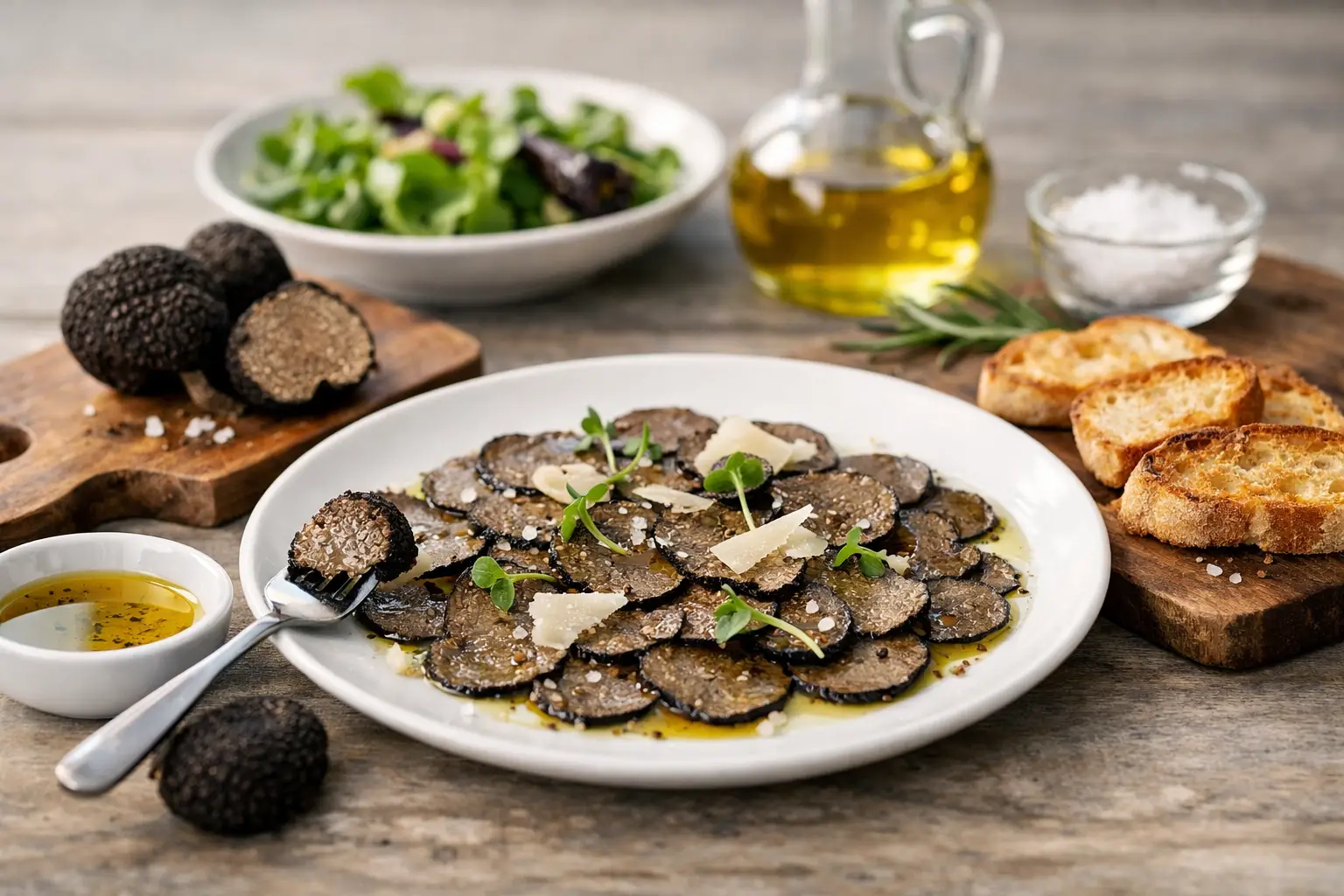
How to Serve Truffle Carpaccio at Its Best Leave a comment
A few delicate slices of truffle can turn a warm bowl of pasta or a softly cooked egg into something unmistakably special. Knowing how to serve truffle carpaccio comes down to one essential principle: treat it as a finishing ingredient. Its aroma is nuanced, earthy, and luxurious, and it deserves a dish that lets it remain the center of attention.
Truffle carpaccio is typically made from thin slices of truffle preserved in oil, often with a touch of salt or other seasonings. It offers the visual elegance and savory character of truffles in a convenient, shelf-stable format. Serve the slices with their fragrant oil, add them at the right moment, and pair them with ingredients that support rather than compete with their distinctive flavor.
How to Serve Truffle Carpaccio Without Losing Its Aroma
Heat is useful for the food beneath your truffle carpaccio, but it is rarely kind to the carpaccio itself. Prolonged cooking can flatten the aroma that makes truffle so memorable. Prepare the dish completely, remove it from direct heat, then spoon the truffle slices and a little of the oil over the top just before serving.
This timing matters most with hot dishes. Let pasta rest for a minute after tossing it in sauce, finish a risotto off the burner, or plate eggs while they are still warm and glossy. The residual heat will gently release the truffle’s perfume without cooking away its character.
For cold preparations, such as a burrata plate or a composed salad, serve truffle carpaccio at room temperature rather than straight from the refrigerator. If the jar has been chilled after opening, allow it to sit on the counter briefly with the lid closed. Cold oil can mute both aroma and flavor, while room-temperature carpaccio feels more luscious on the palate.
Use a clean spoon or fork to lift the slices from the jar. A small amount goes further than most people expect. For an individual plate, begin with a teaspoon of slices and a light drizzle of oil, then add more only if the base is especially simple or substantial. A generous portion can be beautiful, but truffle should feel intentional, not heavy.
Start With a Warm, Neutral Canvas
The finest truffle pairings tend to have three things in common: warmth, richness, and restraint. Butter, eggs, cream, potatoes, mild cheese, rice, and fresh pasta all provide a supple backdrop for truffle carpaccio. Their fat carries the aroma, while their mild flavor leaves room for the truffle to speak.
A simple pasta is one of the most rewarding places to start. Toss tagliatelle, pappardelle, or gnocchi with butter, a little pasta water, and finely grated Parmigiano Reggiano. Plate it first, then finish with truffle carpaccio and a spoonful of its oil. The result is refined enough for a dinner party, yet simple enough for a weeknight when the ingredients deserve to do the work.
Eggs are equally accommodating. Fold a few slices into soft scrambled eggs just before they finish setting, or arrange them over a poached egg on thick, buttered toast. For an indulgent brunch, top a classic omelet with truffle carpaccio after it leaves the pan. The creamy yolk and truffle oil create the kind of luxurious sauce no extra effort can improve upon.
Potatoes offer another natural match. Try the carpaccio over crisp roasted fingerlings, a silky potato purée, or warm pommes Anna. A final sprinkle of flaky sea salt is usually enough. Avoid strong spice blends, smoky sauces, or aggressively sharp vinaigrettes, which can push the truffle into the background.
Pair Truffle Carpaccio With the Right Proteins
Truffle carpaccio can add polish to a protein-focused entrée, particularly when the preparation is clean and the sauce is restrained. Seared steak, roast chicken, veal, and mild white fish all work beautifully. The goal is not to bury the protein under truffle, but to create a finishing detail that makes each bite feel more considered.
For steak, choose a tender cut such as filet mignon or ribeye and season simply with salt and pepper. Let it rest, slice it, and place the truffle carpaccio across the warm meat with a few drops of oil. A small spoonful of buttery pan juices is welcome, but skip a sweet barbecue sauce or heavily charred seasoning rub.
Roast chicken becomes special occasion-worthy with truffle carpaccio layered over the breast just before serving. Pair it with creamy polenta, mashed potatoes, or a light mushroom jus. With fish, favor buttery preparations such as halibut, cod, or scallops. Bright lemon can be delicious, though use it sparingly. Too much acidity can make the truffle taste less rounded.
Truffle carpaccio also belongs on a well-made burger, but choose the supporting ingredients carefully. A juicy beef patty, melted fontina or Gruyère, and a softly toasted brioche bun create an excellent base. Add the truffle at the last moment, rather than griddling it with the burger, for a finish that feels restaurant-worthy instead of overworked.
Give Cheese, Bread, and Pizza a Luxurious Finish
Not every serving needs a full recipe. Truffle carpaccio shines in uncomplicated entertaining dishes, especially those served warm from the oven. Spoon it over a wheel of baked brie or Camembert, then offer toasted sourdough or neutral crackers. The molten cheese holds the truffle aroma beautifully and makes a striking appetizer with almost no preparation.
For pizza, wait until the crust is baked. A white pizza with mozzarella, ricotta, or taleggio is particularly well suited, as are pizzas finished with potato, mushroom, or prosciutto. Add truffle carpaccio after the pizza comes out of the oven, followed by a small drizzle of the oil. If using fresh herbs, choose a modest amount of parsley or chives instead of assertive basil or oregano.
A warm crostini can be equally impressive. Spread it with ricotta, mascarpone, or whipped goat cheese, then finish with a slice or two of truffle carpaccio. This is also a fine place for a measured touch of truffle honey. The sweet-savory contrast works best when the truffle remains the dominant note.
Balance the Rest of the Plate
Truffle’s appeal lies in its depth, so balance matters. Rich foods benefit from a fresh counterpoint, but that counterpoint should be gentle. A lightly dressed bitter greens salad, tender asparagus, or simply sautéed spinach can keep a creamy truffle pasta from feeling too heavy.
Be careful with ingredients that have their own powerful identity. Raw garlic, truffle oil added in large amounts, hot chile, smoked meats, blue cheese, and heavily sweet sauces can all overpower preserved truffle slices. That does not make them wrong, but it does make the pairing more difficult. If you want a bold dish, use truffle carpaccio as a subtle accent rather than the main flavor.
Salt deserves the same consideration. Many varieties of truffle carpaccio are packed with salt or seasoned oil, so taste the dish before adding more. The oil is part of the experience, but it should lightly gloss the food rather than pool around it. A teaspoon stirred into a warm sauce can be exquisite; half the jar poured over a plate usually is not.
Storage and Serving Details That Make a Difference
Before opening, follow the storage directions on the label, since preservation methods vary. Once opened, refrigerate truffle carpaccio and keep the slices covered by their oil whenever possible. Always use a clean utensil, then return the jar to the refrigerator promptly. This protects both flavor and quality over the life of the product.
When planning a meal, let the carpaccio guide the menu rather than adding it as an afterthought. A buttery risotto, a bottle of elegant wine, and a final spoonful of truffle carpaccio create a far more memorable experience than an overcrowded plate of competing flavors. Truffle Guys brings this kind of European pantry luxury within reach, but the most impressive part happens at the table: that final fragrant finish, added with a light hand.
