
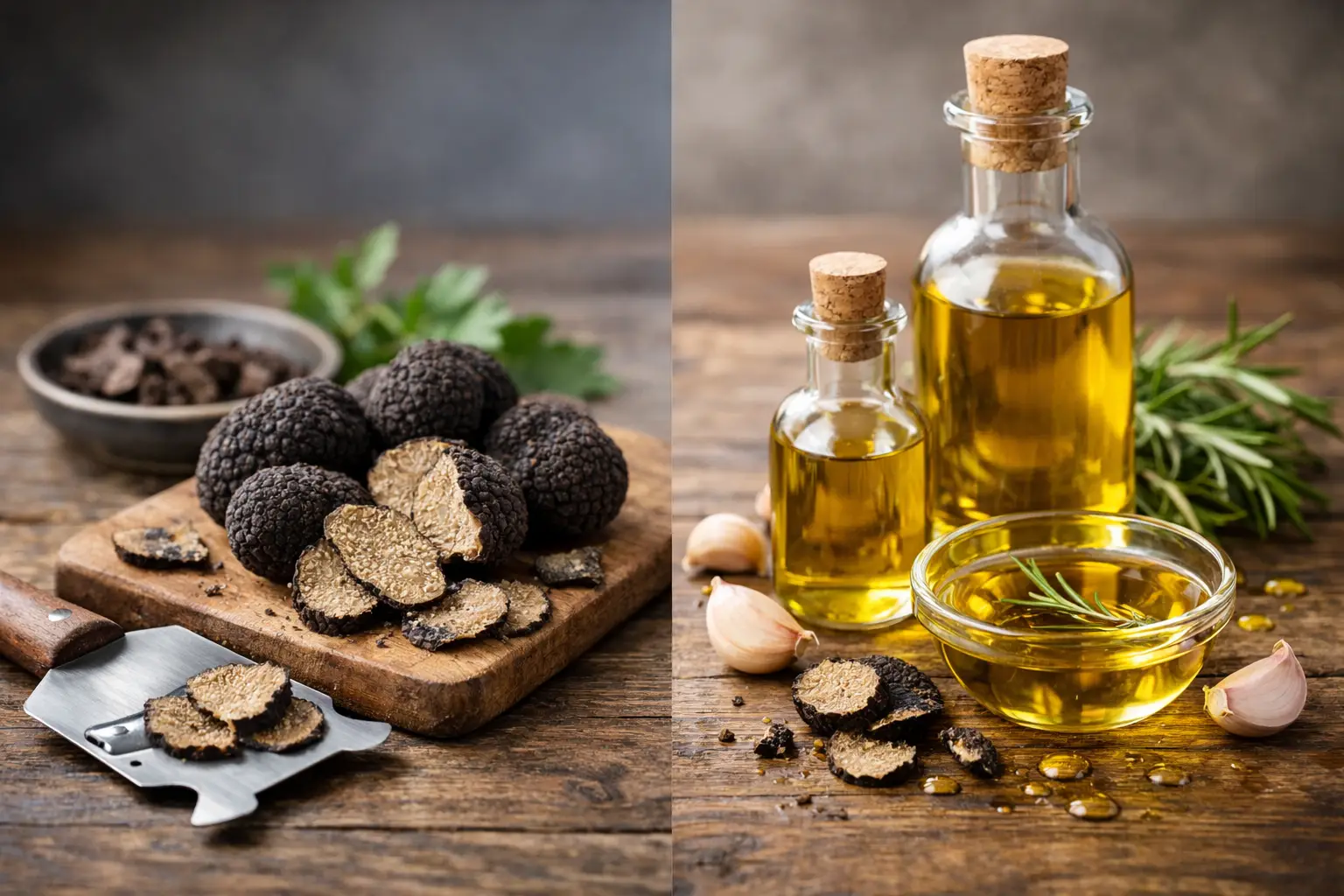
Fresh Truffles vs Truffle Oil: Which to Use? Leave a comment
A whisper-thin shaving of fresh truffle over warm tagliatelle creates a moment that cannot be replicated: heat lifts its perfume, butter catches its earthy depth, and the entire plate feels instantly celebratory. But fresh truffles vs truffle oil is not a question of one being superior in every situation. They are two distinct ways to bring truffle character to the table, each with its own strengths, limits, and best uses.
For a special occasion risotto, a chef’s tasting menu, or the first course of an unforgettable dinner party, fresh truffles offer an exquisite experience. For a Tuesday-night pizza, crispy fries, scrambled eggs, or a quick pasta that needs a luxurious finishing touch, a quality truffle oil can be the more practical choice.
Fresh Truffles vs Truffle Oil: The Essential Difference
Fresh truffles are fungi harvested from beneath the soil, typically in renowned European truffle regions. They are highly perishable, seasonally available, and prized for an aroma that is complex, fleeting, and deeply connected to their varietal, growing conditions, and freshness. A fresh black truffle may bring notes of forest floor, cocoa, dried fruit, and roasted nuts. A fresh white truffle is more assertive and ethereal, with garlic, shallot, honey, and musky earthiness in its perfume.
Truffle oil is an infused or flavored finishing oil designed to deliver truffle character with convenience and consistency. It has a much longer shelf life, requires no shaving or special storage, and makes it easy to add an indulgent accent to everyday food. The best bottles are used thoughtfully: a few drops or a light drizzle after cooking, not a heavy pour that overwhelms the dish.
The distinction matters because fresh truffles are the centerpiece of a dish, while truffle oil is often the finishing note. Fresh truffle asks you to slow down and let its aroma lead. Truffle oil lets you create a satisfying truffle moment whenever the mood strikes.
When Fresh Truffles Are Worth It
Fresh truffles shine when the ingredient has room to speak. Their aroma is delicate, so they belong with warm, simple foods that provide richness without competition. Think buttered pasta, creamy polenta, soft scrambled eggs, risotto, potato puree, mild cheese, or a classic omelet.
The key is heat without harsh cooking. Fresh truffles should generally be shaved or finely grated over food just before serving. Prolonged heat diminishes their fragrance, and strongly spiced sauces can bury the very quality you paid for. A warm bowl of pasta dressed in butter, Parmigiano-Reggiano, and a little pasta water is often more compelling than an elaborate sauce when fresh truffle is involved.
Seasonality is part of the appeal. Fresh black and white truffles arrive during particular harvest windows, making them a natural choice for holidays, anniversaries, milestone dinners, and gifts for serious food lovers. Their limited availability is not merely a luxury detail. It is part of the ingredient’s culinary identity.
Fresh truffles also reward curiosity. Two truffles of the same variety can smell slightly different, and one truffle may become more expressive after a day or two of careful storage. Keep them refrigerated, wrapped in absorbent paper in an airtight container, and change the paper daily. Plan to enjoy them promptly. Their peak is brief, which is exactly why the experience feels so memorable.
Best dishes for fresh truffles
Choose fresh truffles for dishes with clean, rich foundations. Fresh white truffle is exceptional over eggs, pasta, risotto, and buttery potatoes. Fresh black truffle has enough depth for poultry, steak, mushroom dishes, creamy sauces, and baked potatoes, though it still benefits from a restrained hand.
If you are serving guests, build the menu around the truffle rather than treating it as an afterthought. Start with a simple course that welcomes shavings generously, then offer another truffle-friendly element, such as a soft cheese or pommes puree. The result feels polished without becoming fussy.
Where Truffle Oil Earns Its Place
Truffle oil is not a substitute for fresh truffle in the literal sense, and it should not be judged by that standard. It is its own pantry essential: a convenient, concentrated way to add aromatic richness to foods that might otherwise be ordinary.
A well-chosen black truffle oil can deepen roasted potatoes, finish a mushroom pizza, transform macaroni and cheese, or give a steakhouse-style edge to fries. White truffle oil often feels brighter and more aromatic, making it especially appealing with eggs, popcorn, fresh pasta, cauliflower, and delicate creamy dishes.
Its greatest advantage is access. A bottle is ready when you are, whether you are preparing a quick lunch for one or finishing a platter of crostini for a crowd. It also allows for precise control. Start with a few drops, taste, and add more only if the dish can carry it. Truffle flavor is alluring because it is aromatic, not because it is loud.
Quality and ingredient transparency matter here. Some truffle oils are made primarily with added aroma, while others incorporate truffle ingredients alongside carefully selected oil. Neither approach automatically determines whether the bottle will work for your cooking, but the flavor should be balanced, clean, and appetizing rather than aggressively perfumed. Look for an oil that complements food instead of announcing itself before the first bite.
Best dishes for truffle oil
Truffle oil excels as a final flourish. Drizzle it over fries just after they leave the oven, fold a small amount into warm mashed potatoes, or finish a pizza after baking. A few drops can bring restaurant-style character to a bowl of tomato soup or a simple grilled cheese.
It is also useful when cooking for a group. Fresh truffle is precious and best appreciated close to the plate, while truffle oil can be used to season a larger batch of popcorn, roasted vegetables, or pasta. For entertaining, that practicality has real value.
Avoid using truffle oil as your primary sautéing oil. High heat can flatten its aroma, and the flavor is better preserved when added at the end. Use olive oil, butter, or another cooking fat for the pan, then reach for truffle oil just before serving.
Flavor, Budget, and Occasion
The right choice often comes down to the role truffle will play in the meal. If the truffle is the event, choose fresh. Its natural nuance, texture, and perfume create an experience that calls for attentive cooking and uncomplicated ingredients. A fresh truffle is ideal when you want guests to pause after the first bite.
If you want truffle to be part of your regular cooking repertoire, choose truffle oil. It offers a cost-effective way to bring a gourmet finish to dishes you already love. One bottle can elevate many meals, from weekend brunch through casual cocktails and late-night snacks.
There is also room for both on the same menu. Fresh truffle can headline a pasta course, while black truffle oil can finish roasted fingerling potatoes served alongside a steak. The important thing is not to pile on competing truffle products simply because they share a name. Give each one a clear role.
How to Use Both Without Overdoing It
Fresh truffles and truffle oil are aromatic ingredients, so restraint is part of good technique. With fresh truffle, shave generously enough to register, but keep the rest of the dish clean. With truffle oil, begin more sparingly than you think necessary. You can always add another drop, but you cannot pull excess aroma back out of a finished plate.
Salt, fat, and gentle warmth are especially friendly partners. Truffle salt can add seasoning and depth, butter provides a luscious base, and warm foods help release aroma. Acid and heat should be balanced carefully. A sharp vinaigrette, fiery chile, or heavily charred preparation may pull attention away from the truffle rather than support it.
For home cooks building a premium pantry, truffle oil is a reliable starting point. When truffle season arrives or a special dinner deserves something extraordinary, fresh truffles offer the kind of sensory detail that turns a meal into a story worth retelling.
The best plate is not the one with the most truffle on it. It is the one where every warm, fragrant bite makes the truffle feel exactly at home.
