
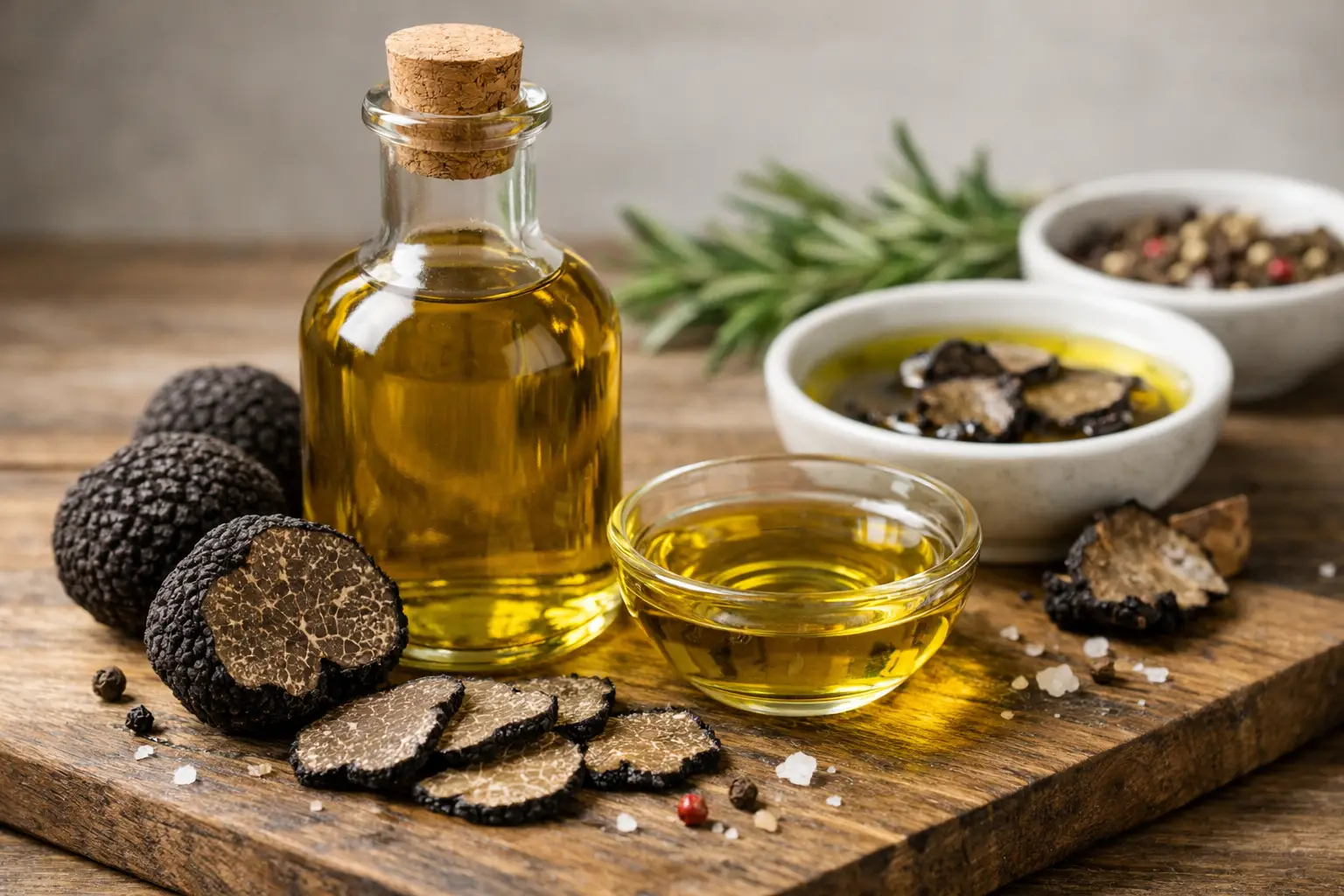
A Guide to Black Truffle Oil 1
Some ingredients ask for technique. Black truffle oil asks for restraint. A few drops can turn soft scrambled eggs into something unmistakably luxurious, or give a simple bowl of pasta the finishing touch that makes dinner feel considered rather than routine. This guide to black truffle oil is built for anyone who wants that effect without wasting a good bottle or overwhelming a dish.
What black truffle oil actually is
Black truffle oil is a finishing oil designed to bring the earthy, aromatic character of black truffle to everyday cooking. In most cases, it starts with a neutral or lightly flavored oil, often olive oil or another plant-based oil, that is infused or flavored to capture the distinctive truffle profile.
That profile matters more than people realize. Black truffle oil is not meant to taste heavy, muddy, or greasy. The best versions have an alluring aroma with savory depth, a hint of woodland richness, and a clean finish that lingers just enough. You should notice it immediately, but it should still leave room for the rest of the plate.
This is also where expectations need a little calibration. Fresh black truffles and black truffle oil are not interchangeable products. Fresh truffles offer texture, nuance, and a shorter, more delicate aromatic arc. Truffle oil is more direct. It is convenient, shelf-stable, and remarkably effective when you want a fast finishing note that reads as indulgent.
A guide to black truffle oil flavor
The appeal of black truffle oil comes down to contrast. It brings deep savory aroma to foods that are otherwise mild, creamy, crisp, or rich. Think buttered pasta, mashed potatoes, risotto, popcorn, roasted mushrooms, or fries just out of the oven. Those foods act like a canvas.
Compared with white truffle oil, black truffle oil usually feels darker and more grounded. It pairs especially well with warm, hearty dishes and ingredients with umami of their own. If white truffle oil can feel bright and piercing, black truffle oil tends to feel rounder and slightly more understated, though that depends on the formula.
It is worth saying that not every dish benefits from it. Delicate seafood, highly acidic salads, and heavily sweet preparations can work against the aroma rather than support it. Black truffle oil shines when there is enough richness or starch to carry it.
How to choose a good bottle
If you are buying black truffle oil for the first time, read beyond the front label. The most appealing bottle is not always the most satisfying one in the kitchen. Quality shows up in ingredient transparency, aroma balance, and how naturally the flavor integrates into food.
Look for a producer that specializes in truffle products rather than treating truffle oil like a novelty item. Category expertise often translates into better flavor calibration and a stronger sense of how the oil is actually used by cooks. If the brand speaks clearly about truffle varieties, provenance, and culinary applications, that is usually a good sign.
Ingredient lists also deserve attention. Some black truffle oils contain pieces of truffle, while others rely on flavor compounds to create a consistent aromatic profile. That does not automatically make one better in every situation. It depends on what you want. Some bottles are designed for dramatic aroma and everyday ease. Others aim for a more natural, subtle expression. The trade-off is often intensity versus nuance.
Packaging matters too. Dark glass helps protect the oil from light, which preserves flavor longer. A smaller bottle can also be the smarter buy if you use truffle oil occasionally. Once opened, this is an ingredient you want to enjoy while its aroma is at its best.
How to use black truffle oil without overdoing it
The most common mistake is using black truffle oil like standard cooking oil. It is not the base of a vinaigrette you pour freely, and it is not what you reach for to saute onions over high heat. Black truffle oil is a finishing ingredient. Heat can flatten its aroma, and excess can make a dish taste one-dimensional.
Start small. A light drizzle over a finished plate is usually enough, especially the first time you try a bottle. Toss, taste, and add more only if the dish can carry it. Warm foods release the aroma beautifully, so you often need less than expected.
This is one of those ingredients that rewards simple combinations. Butter, cream, potatoes, pasta, eggs, and cheese are classic partners because they let the truffle note bloom. A restrained hand delivers elegance. A heavy pour can turn luxury into fatigue very quickly.
Best foods for black truffle oil
Eggs are one of the easiest and most rewarding places to start. Fold a little into scrambled eggs right before serving, or finish a fried egg on toast with a few drops and a pinch of flaky salt. The creamy richness of the yolk loves truffle.
Pasta is another natural fit, especially when the sauce is simple. Think butter, Parmesan, and black pepper, or a light cream sauce with mushrooms. You do not need a crowded recipe. The point is to let the aroma rise from the bowl.
Potatoes in nearly every form respond beautifully. Fries, roasted fingerlings, crispy smashed potatoes, and silky mashed potatoes all gain depth from a touch of black truffle oil. Add grated cheese or truffle salt if you want a fuller truffle moment, but keep the seasoning balanced.
Pizza works well too, particularly white pizza, mushroom pizza, or a pie topped with fontina, mozzarella, or prosciutto. Drizzle after baking, not before. The same goes for flatbreads.
For entertaining, black truffle oil can make familiar appetizers feel instantly elevated. Finish warm popcorn for cocktail hour, spoon it over crostini with ricotta, or add a touch to deviled egg filling. These are simple moves, but they land as special occasion details.
What not to do with black truffle oil
Do not use it for deep frying or high-heat searing. You lose much of the aromatic payoff, and it becomes an expensive way to cook very ordinary oil. Save it for the end.
Do not combine it with too many competing bold flavors. Strong smoke, aggressive spice, and very sweet sauces can crowd out the truffle character. Black truffle oil is luxurious, but it is not indestructible.
And do not assume more equals better. If guests can smell truffle from across the room before the plate reaches the table, you may have gone too far. The best truffle dishes feel polished, not pushy.
How to store it
Store black truffle oil in a cool, dark place away from direct sunlight and the stove. After opening, keep the cap tightly sealed to preserve the aroma. Some bottles are best used within a relatively short window after opening, especially if you care about peak flavor.
If your kitchen runs warm, pay extra attention to storage conditions. Truffle oil is not difficult to keep, but like any premium pantry item, it performs better when treated with a little care. Buying from a trusted specialist such as Truffle Guys can also help remove some of the guesswork around quality and freshness.
Is black truffle oil worth it?
If you enjoy cooking and want a fast way to make familiar dishes feel richer, more elegant, and restaurant-worthy, black truffle oil earns its place. It is especially useful for home cooks who want a premium finishing touch without the cost or perishability of fresh truffles.
That said, it is not a universal ingredient. If you prefer highly subtle flavors or mostly cook bright, lean dishes, you may not reach for it often. But for creamy pastas, eggs, potatoes, pizza, steak sides, and entertaining boards, it offers a kind of instant transformation that few pantry staples can match.
The real value of black truffle oil is not that it makes everything taste like truffle. It is that it gives you one precise, memorable note you can deploy at exactly the right moment. Used well, it makes simple food feel luxurious without making the cooking complicated.
A good bottle does not ask you to cook like a chef every night. It just gives you the option to finish dinner with a little more confidence, a little more aroma, and a lot more pleasure.

One Comment
Trackbacks and Pingbacks
[…] and white truffle oils are not interchangeable. Black truffle oil is typically associated with deep, earthy, woodsy notes. It is a natural companion for beef, […]