
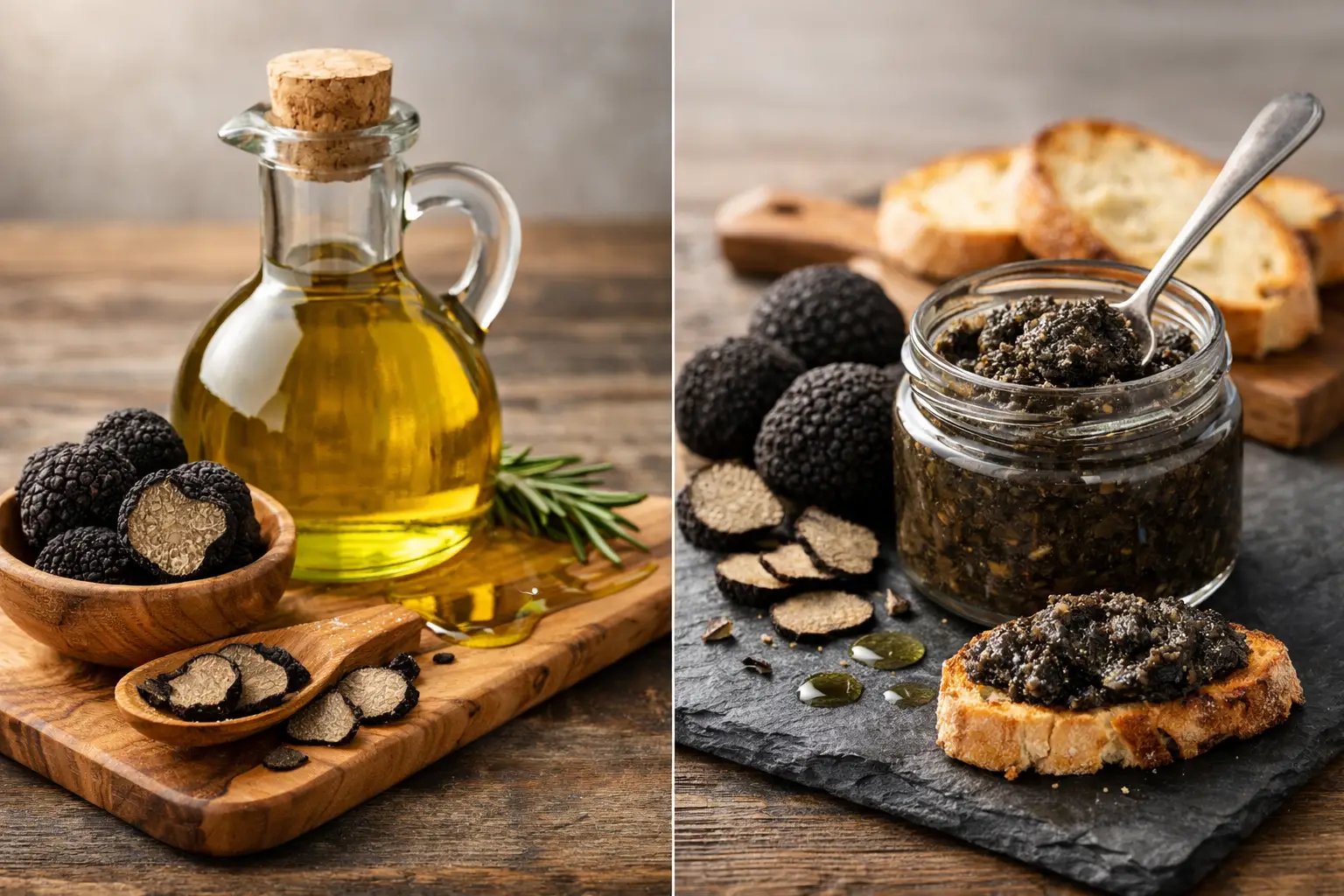
Truffle Oil vs Truffle Paste: Which to Use? Leave a comment
A plate of hot tagliatelle can go from good to unmistakably luxurious with one finishing touch – but the right touch matters. When it comes to truffle oil vs truffle paste, the difference is not just texture. It changes how truffle flavor lands on the palate, how it moves through a dish, and how much control you have in the kitchen.
For home cooks, entertainers, and chefs alike, these are two very different tools. Both bring depth, aroma, and that unmistakable earthy allure associated with black or white truffle, but they do it in distinct ways. If you know when to reach for each one, everyday dishes like eggs, fries, risotto, and steak start to feel far more polished.
Truffle oil vs truffle paste: the real difference
The simplest distinction is this: truffle oil is a finishing ingredient, while truffle paste is more of a flavor-building ingredient.
Truffle oil is fluid, aromatic, and designed to be drizzled. It coats the surface of food lightly and releases its fragrance quickly, which is why it works so beautifully over warm dishes just before serving. A few drops can perfume pasta, pizza, mashed potatoes, or popcorn without changing the structure of the dish.
Truffle paste is thicker, more concentrated in texture, and often made to deliver body as well as flavor. Because it has substance, it can be stirred into sauces, spread under the skin of poultry, folded into butter, or mixed through warm grains and purees. It does more than sit on the surface. It integrates.
That difference affects everything from presentation to intensity. Truffle oil gives a dish a lifted, glossy finish. Truffle paste brings a deeper, more grounded truffle presence with visible richness and a fuller mouthfeel.
What truffle oil does best
Truffle oil shines when aroma is the priority. Truffle is as much about fragrance as taste, and oil is an excellent carrier for that kind of immediate sensory impact. When drizzled over heat, the aroma rises quickly, which is exactly what makes it such a compelling finishing touch.
This is why truffle oil works so well on foods with broad, warm surfaces. Think creamy risotto, scrambled eggs, mushroom pizza, roasted potatoes, or a simple bowl of fries. The oil settles into the dish, catches the warmth, and opens up right away. The effect is elegant and efficient.
It is also the more forgiving option for casual use. If you are dressing a finished dish and want an instant upgrade, oil asks very little of you. You do not need to whisk, spread, or blend. You drizzle lightly, taste, and stop when the aroma feels balanced.
That said, truffle oil is not usually the best choice for long cooking. Extended heat can flatten its aromatic top notes. If the goal is a dramatic final flourish, add it at the end, not at the beginning.
Where truffle paste has the advantage
Truffle paste earns its place when you want truffle flavor to feel woven into the dish rather than laid over it.
Because it has texture and concentration, it can be stirred into warm cream sauces, spooned into pasta fillings, mixed into aioli, or blended with softened butter for an exquisite compound butter. It is especially useful when you want consistency in every bite. Instead of getting a fragrant finish on the top layer, you get truffle character throughout.
This makes paste particularly attractive for richer preparations. A spoonful folded into mashed potatoes gives more depth than a drizzle alone. Mixed into a pan sauce for filet, it creates a lush, savory finish that feels restaurant-level without becoming fussy. Spread on crostini with cheese, it offers body, texture, and a more concentrated bite.
Truffle paste can also be the stronger option for hosts and professionals who want precision. You can measure it, mix it, and repeat a result more consistently across portions. In applications where even distribution matters, paste often wins.
Flavor, texture, and intensity
If you are choosing based on flavor alone, the answer is still not straightforward. It depends on the kind of truffle experience you want.
Truffle oil tends to feel more aromatic and high-note driven. It announces itself quickly. You smell it first, then taste it. On the right dish, that immediacy is exactly the point.
Truffle paste usually reads as more savory, rounded, and integrated. Its intensity can feel less flashy but more substantial. It often pairs especially well with dishes that already have some weight, such as cream-based pasta, roasted meats, mushroom dishes, and warm spreads.
Texture matters too. Oil adds sheen and a delicate finish. Paste adds body. If you are making a silky final plate, oil keeps things elegant and light. If you want richness and culinary depth, paste can offer more substance.
Best dishes for each one
For eggs, both work beautifully, but in different ways. Truffle oil over soft scrambled eggs is classic because the aroma blooms instantly. Truffle paste, stirred into an omelet filling or folded into deviled egg mixture, creates a more pronounced and creamy effect.
For pasta, the choice depends on the sauce. A simple butter or cream pasta loves a restrained drizzle of truffle oil at the table. A stuffed pasta sauce or mushroom cream sauce often benefits more from truffle paste blended in while warm.
For pizza, truffle oil is usually the better finishing choice. It sits on top of the hot crust, cheese, and mushrooms and gives that immediate, unmistakable fragrance. Paste can work in a white pizza base or spread beneath toppings, but it needs a more deliberate approach.
For steak, truffle paste can be exceptional when incorporated into butter or sauce. Truffle oil is better as a final touch after slicing, especially if the steak is served with fries or potatoes that can catch the drizzle.
For fries, popcorn, and flatbreads, oil is the clear favorite. These are foods that benefit from a quick aromatic lift rather than added density.
For canapes, sandwiches, crostini, and composed appetizers, paste often has the edge because it behaves like a spreadable luxury ingredient rather than a finishing accent.
Which is better for home cooks?
For most home kitchens, truffle oil is the easier starting point. It gives immediate gratification, works across a wide range of dishes, and makes weeknight food feel special occasion worthy with almost no effort.
Truffle paste appeals to the cook who wants a little more control and a little more range. It asks you to think about where flavor should sit in the dish rather than simply how to finish it. That extra intention is often rewarded with a more layered result.
If you entertain often, there is a strong case for keeping both on hand. Oil is ideal for the final flourish just before guests sit down. Paste is useful earlier in prep, when you want truffle flavor built into spreads, sauces, or composed bites. At Truffle Guys, that kind of pantry versatility is part of what makes truffle products so practical as well as indulgent.
Buying considerations that actually matter
Quality matters more here than people sometimes assume. With truffle products, provenance, ingredient integrity, and overall balance shape the final experience. A well-made truffle condiment should taste luxurious, not harsh, muddy, or one-dimensional.
Look closely at how you plan to use the product. If your style leans toward finishing simple dishes like fries, pizza, eggs, and pasta, oil will likely earn more use. If you cook sauces, butters, fillings, and hors d’oeuvres, paste may prove more versatile.
Portioning matters too. Truffle oil is easier to use sparingly, which is helpful because a little goes a long way. Truffle paste rewards measured use as well, but its richer format can tempt heavier spoonfuls. More is not always better with truffle. The most elegant dishes let the aroma enhance, not overwhelm.
So, should you choose truffle oil or truffle paste?
If you want speed, fragrance, and a polished finish, choose truffle oil. If you want depth, integration, and a richer truffle presence throughout the dish, choose truffle paste.
Neither is universally better. They simply serve different culinary purposes. The best choice depends on whether you want truffle to sit on top of a dish like a luminous final note or settle into it like a deeper layer of flavor.
A good rule is this: drizzle oil when the plate is nearly complete, and reach for paste when the dish still has room to absorb something special. That one decision can make the difference between truffle that tastes added and truffle that tastes intentional.
