
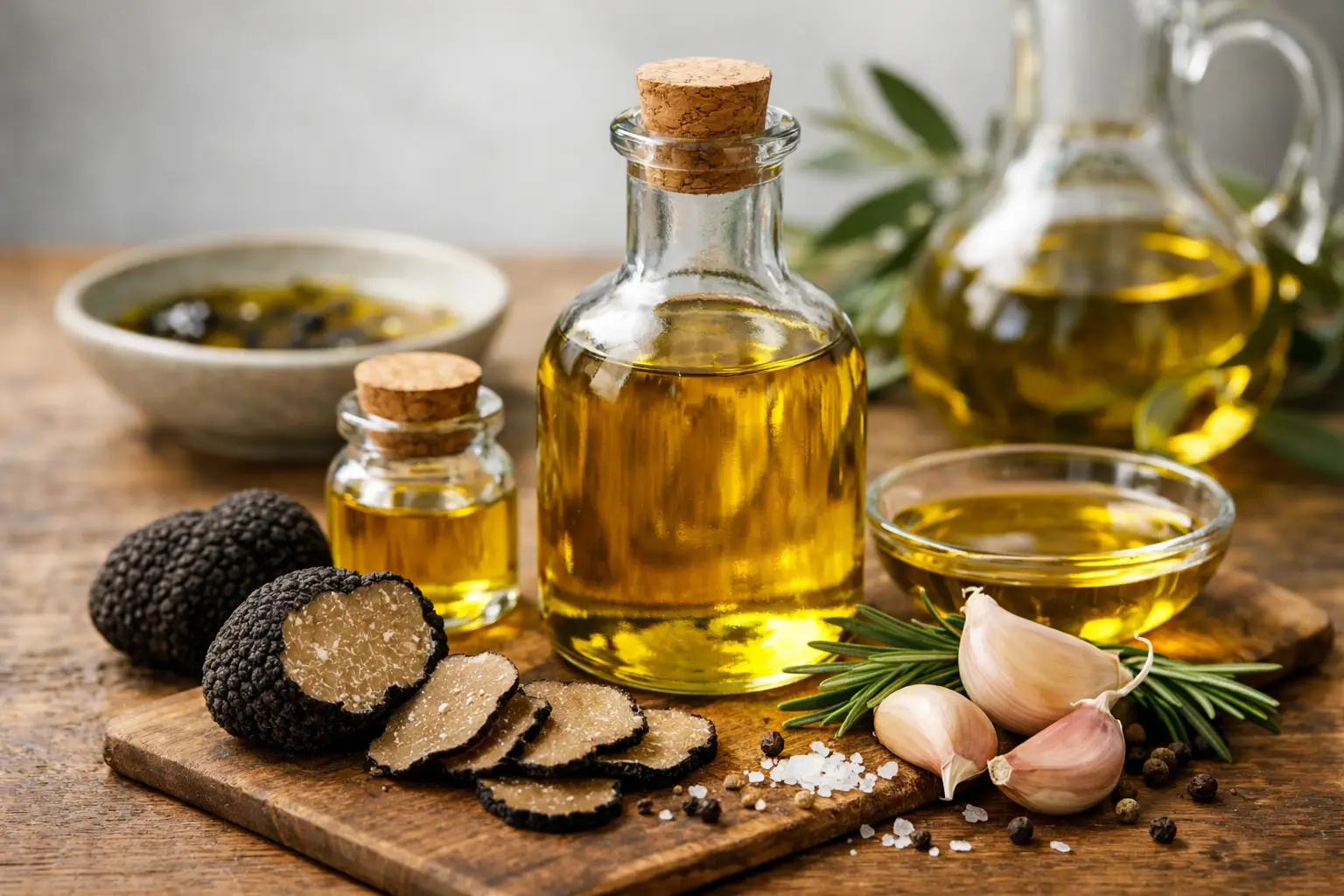
Guide to Truffle Oil Ingredients That Matter Leave a comment
A remarkable truffle oil can turn a bowl of buttered pasta, a plate of warm scrambled eggs, or a crisp pizza into something worthy of a special occasion. Yet the label can be surprisingly difficult to read. This guide to truffle oil ingredients explains what is actually in the bottle, why each component matters, and how to select an oil that suits the way you cook.
Truffle oil is a finishing ingredient, not an ordinary pantry oil. Its purpose is to deliver the distinctive earthy, savory perfume of truffles in a convenient, shelf-stable form. The best choice depends on whether you want a bold aromatic flourish, visible pieces of truffle, an olive oil-forward character, or a neutral base that lets the truffle flavor take center stage.
Guide to Truffle Oil Ingredients: Start With the Base Oil
Every truffle oil begins with an oil base. Extra virgin olive oil is a classic choice for its fruitiness, gentle peppery finish, and natural affinity for Italian cooking. It adds character to simple dishes such as risotto, grilled vegetables, crostini, and steak. When the oil is well chosen, it should taste clean and balanced rather than heavy or greasy.
Some truffle oils use sunflower oil, grapeseed oil, or another neutral oil instead. This is not automatically a lesser choice. A neutral base has a practical culinary advantage: it carries the truffle aroma without competing with it. For delicate preparations such as mashed potatoes, fresh pasta with cream sauce, popcorn, or mild fish, a lighter oil can make the truffle profile feel especially clear.
The right base is a matter of preference and application. Choose olive oil when you want richness and depth from both the oil and the truffle. Choose a neutral oil when the truffle aroma is the central event. In either case, look for an ingredient list that names the oil specifically rather than relying on vague language.
What Creates Truffle Flavor?
This is the ingredient question that deserves the most attention. The intoxicating aroma associated with truffles comes from a complex collection of naturally occurring volatile compounds. Fresh truffles express these compounds with extraordinary nuance, but they are fleeting, seasonal, and highly variable from one truffle to another.
Truffle oil is designed to offer a dependable version of that experience. Its flavor may come from natural truffle flavor, truffle extract, aroma compounds, real truffle, or a combination of these ingredients. Labels vary, so it is worth reading beyond the front of the bottle.
Natural truffle flavor generally means the flavoring is sourced from natural materials, though that does not necessarily mean it was extracted exclusively from the truffle variety pictured on the label. It can produce an appealing, expressive aroma and is common in premium pantry products intended for consistent results.
Truffle extract may indicate an ingredient derived from truffles, but the quality and sensory impact still depend on the product’s formulation. A small amount of extract can be potent, while a product featuring real truffle pieces may offer visual appeal and a subtle earthy note without providing all of the aroma on its own.
Some oils use flavor compounds that replicate a signature part of the truffle’s scent. These can be remarkably recognizable and give an immediate, dramatic truffle impression. They are particularly useful when you want a pronounced finish over French fries, pizza, or mac and cheese. The trade-off is that the aroma may be more direct and less layered than the experience of shaving fresh truffle over a hot dish.
There is room in a well-stocked gourmet pantry for both styles. A refined oil with real truffle and a rounded aromatic profile suits elegant entertaining. A bolder oil can be the perfect secret weapon for weeknight comfort food. What matters is choosing with clear expectations, not assuming that every bottle delivers the same truffle experience.
Black Truffle Versus White Truffle Oil
Black and white truffle oils are not interchangeable. Black truffle oil is typically associated with deep, earthy, woodsy notes. It is a natural companion for beef, mushrooms, roasted potatoes, pasta, gravy, and rich cheese. Think of it as the more savory, grounded expression of truffle flavor.
White truffle oil tends to be more fragrant and garlicky, with a lifted aroma that arrives quickly on the palate. It is exquisite with eggs, risotto, creamy polenta, potato chips, and mild cheeses. A few drops can bring drama to a dish that otherwise needs little embellishment.
Neither is inherently better. Black truffle oil often feels luxurious in hearty, cold-weather cooking, while white truffle oil brings bright aromatic excitement to lighter preparations. For an impressive meal, use one or the other with restraint rather than layering both into the same dish.
Do Real Truffle Pieces Change the Oil?
Visible slices or small pieces of truffle make a bottle especially giftable and beautiful on the table. They can also contribute their own subtle flavor over time. Still, their presence should not be treated as the only measure of quality.
Truffles are delicate. In an oil infusion, their aromatic character changes and softens, and the oil’s flavor system may still be responsible for much of the finished perfume. Real truffle pieces are a welcome sign of a more ingredient-conscious product, but the complete experience comes from the quality of the oil, the balance of flavor, and the producer’s formulation.
If a label identifies a specific truffle, such as black summer truffle or white truffle, that detail provides useful context. Different species have distinct personalities and different levels of intensity. Specific varietal information signals care in sourcing, particularly when paired with a clear origin story and a concise ingredient list.
Small Ingredients With a Big Role
A truffle oil may include salt, herbs, spices, or acidity regulators, although many are intentionally simple. These additions can be useful when they support a defined culinary purpose. A truffle oil with garlic, for example, may be ready-made for pizza or toasted bread, while a pure truffle oil gives the cook more freedom to season the dish independently.
Preservatives and antioxidants may also appear on some labels to protect freshness. Oil is vulnerable to oxidation, especially when exposed to heat, light, and air. A properly formulated product should retain its aromatic appeal through its stated shelf life, provided it is stored in a cool, dark place with the cap tightly closed.
Avoid judging an ingredient list by length alone. A shorter list can be elegant, but a slightly longer list may create a more stable or more nuanced product. The useful question is whether every ingredient has a clear purpose and whether the finished oil tastes polished rather than artificial, flat, or overly perfumed.
How to Use Truffle Oil Without Losing Its Character
Truffle oil is most luscious when used at the end of cooking. High heat can mute its most expressive aromas, so drizzle it over food just before serving rather than using it as the primary oil for sautéing or frying. Start with a small amount – usually a few drops to a teaspoon per serving – then taste. You can always add more, but an excessive pour can overwhelm every other ingredient on the plate.
It shines with foods that provide warmth, fat, and a neutral canvas. Fold black truffle oil into finished mashed potatoes, add it to a mushroom pasta, or brush it over steak after resting. Use white truffle oil to finish soft-scrambled eggs, a creamy risotto, or a simple three-cheese pizza. For entertaining, offer a small bottle beside Parmesan and flaky sea salt so guests can personalize their portion.
Truffle oil also rewards contrast. A final drizzle over roasted cauliflower gains freshness from lemon; truffled popcorn becomes more compelling with a dusting of fine cheese; a truffle-honey crostini benefits from a whisper of black truffle oil and sea salt. The goal is not to make every bite louder. It is to let the truffle aroma rise above flavors that welcome it.
A thoughtfully chosen bottle belongs within reach of the stove, but its finest moment is always at the table. Let the aroma meet warm food, use a restrained hand, and allow a simple dish to become unmistakably memorable.
