
How to Finish Risotto With Truffle Carpaccio 1
The last two minutes are what separate a good risotto from one that feels unmistakably special. If you are wondering how to finish risotto with truffle carpaccio, the answer is less about adding more and more truffle flavor and more about preserving the aroma, texture, and elegance of the ingredient you paid for.
Truffle carpaccio is a finishing ingredient first. It brings delicate slices of truffle, usually preserved in oil or brine, that add visual appeal and a savory, earthy perfume when handled with restraint. In risotto, that matters. A heavy hand or too much heat can flatten the very qualities that make truffle carpaccio luxurious.
How to finish risotto with truffle carpaccio the right way
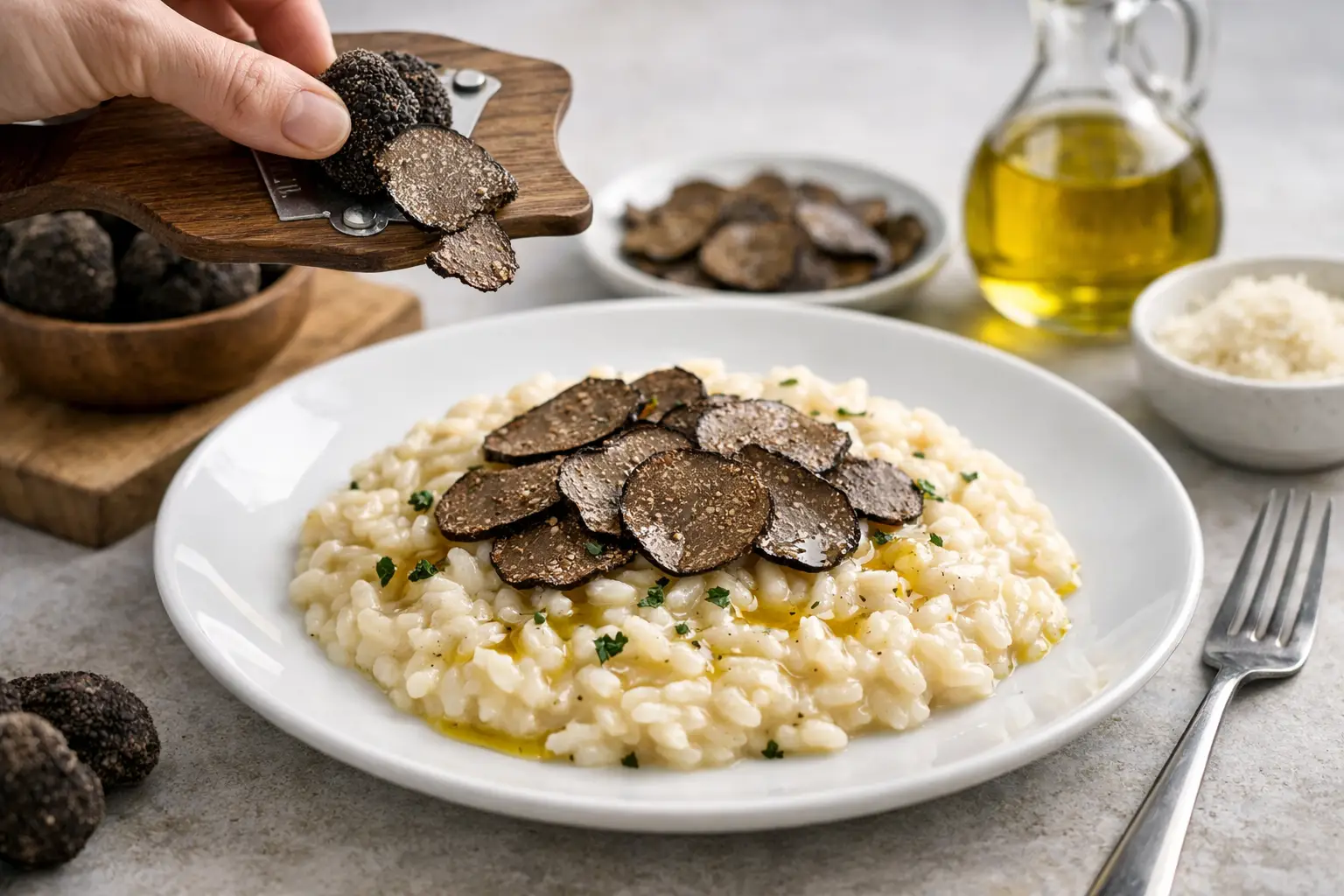
The best moment to add truffle carpaccio is after the risotto is fully cooked and off direct heat, just before serving. Risotto should be creamy and fluid, not stiff. Once you have reached that ideal consistency, fold in your butter and cheese if you are using them, let the rice settle for a few seconds, and then finish with truffle carpaccio either gently stirred through or layered over the top.
That timing protects aroma. Truffle is volatile by nature, and prolonged cooking softens its impact. If truffle carpaccio goes into the pot too early, the slices lose definition and the fragrance becomes muted. If it is added at the end, the risotto carries the warmth while the truffle remains expressive.
For most home cooks, the most polished approach is to spoon the risotto into warm shallow bowls first, then arrange the truffle carpaccio over each portion. This gives you better control over distribution and presentation. You can also add a small spoonful of the preserving oil from the carpaccio if it is high quality and truffle-forward, but use it sparingly. The risotto should taste enriched, not oily.
Start with a risotto base that lets truffle shine
Truffle carpaccio does not need a busy backdrop. In fact, the cleaner the risotto base, the better the finish. Parmesan risotto, butter-based risotto, or a simple shallot and white wine risotto are the strongest choices because they support truffle rather than compete with it.
Stock should be flavorful but not aggressive. A light chicken stock or vegetable stock works well. If the stock is too dark, too garlicky, or too herbaceous, it can crowd the truffle. The same goes for add-ins. Mushrooms can work beautifully with truffle, but they should be sautéed until rich and concentrated, not watery. Delicate wild mushrooms or finely chopped cremini tend to integrate better than oversized slices that dominate the spoonful.
Cheese needs some care too. Parmigiano Reggiano is a natural fit, but keep it measured. Too much can make the risotto dense and overly salty, which narrows the truffle aroma instead of framing it. The goal is luscious texture and savory depth, not heaviness.
What to avoid before the finish
A few common choices make truffle risotto less elegant. Raw garlic is often too sharp. Lemon zest can be refreshing, but it changes the profile and can pull the dish away from the earthy warmth truffle carpaccio delivers. Strong blue cheeses, smoked ingredients, or spicy elements will usually overpower the finish.
This is one of those dishes where restraint reads as confidence. Let the rice, butter, cheese, and truffle do the work.
The exact finishing method
When the rice is al dente and the risotto flows gently across the pan, take it off the heat. Stir in cold butter for sheen and body, then add grated cheese. This final enrichment should happen before the truffle carpaccio, because the residual heat will melt and bind those ingredients into the rice.
Wait about 30 seconds, just enough for the bubbling to calm. Then add the truffle carpaccio. If you want the truffle woven through the dish, fold in a small amount very gently. Think of one or two turns with a spoon, not vigorous stirring. You are distributing slices, not cooking them.
For a more refined finish, reserve most of the carpaccio for the top of each plated serving. Layering it over the risotto keeps the slices visible and allows the diner to catch the aroma immediately. That first impression is part of the pleasure.
If you want a little extra gloss, add a few drops of the carpaccio oil or a tiny drizzle of high-quality extra virgin olive oil at the table. Not every risotto needs it. If your butter and cheese have already created a smooth, luxurious finish, more fat can blur the flavor rather than improve it.
How much truffle carpaccio to use
It depends on the style of the product and how truffle-forward your base already is. For four servings of risotto, a modest amount is usually enough to create a distinctly truffled finish. More is not always better. Piling on too much can make the dish feel preserved rather than fresh and composed.
A useful benchmark is to season the risotto so it tastes complete before the truffle goes on. Then let the carpaccio act as the final layer of flavor. That keeps the dish balanced and makes the truffle feel intentional rather than compensatory.
Texture matters as much as flavor
One of the pleasures of truffle carpaccio in risotto is contrast. The rice should be creamy and softly flowing, while the truffle slices offer a slight bite and visual definition. That is why overheating is the biggest mistake. Once the carpaccio sits in a simmering pan, it starts to disappear into the background.
Temperature at service matters too. Risotto should be served immediately, in warm bowls, while it is still relaxed enough to spread naturally. If it sits too long, it tightens. Then the truffle garnish looks decorative instead of integrated, and the eating experience becomes heavier.
If you are serving guests, have the bowls ready before you add the truffle carpaccio. Finish, plate, and serve without delay. This is a dish that rewards precision.
Pairings that make sense with truffle carpaccio
A truffle-finished risotto works best as a centerpiece, not a side fighting for attention. If you are building a menu around it, keep the rest of the meal clean and elegant. Roast chicken, a simply seared filet, or a crisp salad with restrained acidity all make sense.
For wine, think structure without too much oak. A white Burgundy style, an elegant Chardonnay, or a soft Nebbiolo can be beautiful depending on whether your risotto leans more buttery or more earthy. The key is avoiding anything too sweet or too aggressively aromatic.
If you are entertaining, this is also a dish that benefits from finishing at the table. A final placement of truffle carpaccio over each bowl creates an immediate sense of occasion. It feels generous and polished without requiring complicated technique.
Small adjustments for different risotto styles
If your risotto includes mushrooms, use slightly less truffle carpaccio than you would on a plain Parmesan base. The flavors are naturally aligned, so you need less to make the point. If your risotto is made with seafood, be more selective. Delicate shellfish can work, but many seafood risottos sit awkwardly with truffle’s earthy profile.
For white truffle-style products versus black truffle products, the same rule applies with a slight shift in attitude. White truffle notes tend to feel sharper and more aromatic, so they often need even gentler handling. Black truffle carpaccio is usually the more forgiving choice for home risotto because it complements butter, cheese, and stock so naturally.
A premium product from a specialist such as Truffle Guys is especially worth treating as a true finish. The quality is already there. Your job is to frame it properly.
The mistake most cooks make
They chase truffle intensity instead of truffle presence. That usually leads to too many truffle products in one pot – oil, salt, cheese, and carpaccio all at once – until the dish tastes muddy rather than luxurious.
A better approach is to choose one main truffle element and let it lead. If truffle carpaccio is the star, keep the rest of the seasoning classic and measured. You will get a cleaner aroma, a more graceful finish, and a risotto that tastes restaurant-caliber rather than overworked.
The beauty of truffle carpaccio is that it does not ask for much. A well-made risotto, a steady hand at the finish, and enough confidence to stop once the dish smells exquisite are usually all it takes.

One Comment
Trackbacks and Pingbacks
[…] truffle carpaccio, truffle powder, and pesto nero gives this recipient several ways to build depth. Carpaccio adds visible slices and savory richness to a finished dish. Truffle powder is ideal for seasoning sauces, butter, […]