
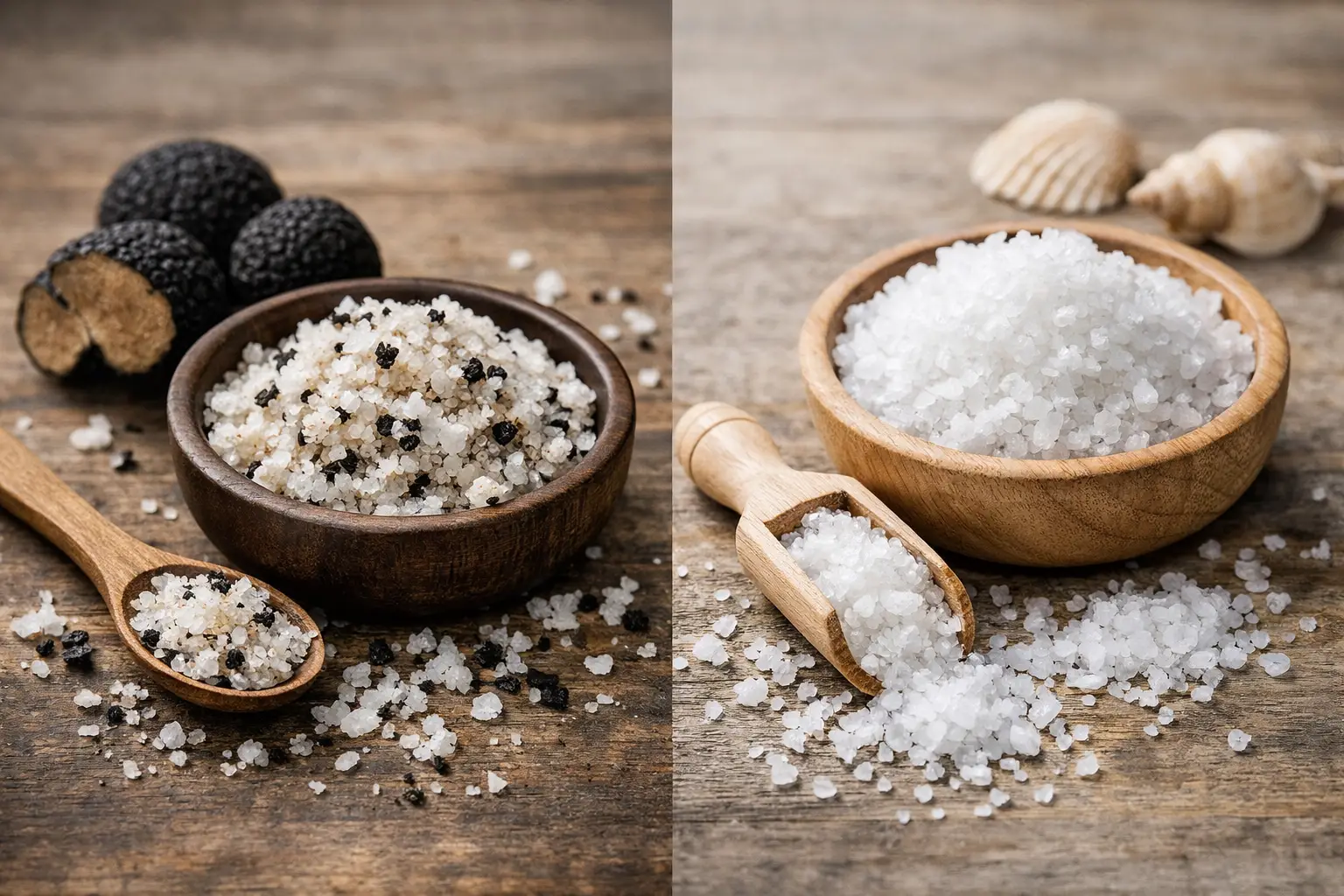
Truffle Salt vs Regular Sea Salt Leave a comment
A bowl of hot fries, soft scrambled eggs, or buttered pasta can go in two very different directions depending on the salt you reach for. In the debate over truffle salt vs regular sea salt, the real difference is not simply luxury versus everyday pantry staple. It is about aroma, intensity, timing, and what kind of finish you want on the plate.
Regular sea salt is foundational. It seasons, sharpens, and brings balance to almost everything you cook. Truffle salt does that too, but with a far more expressive personality. It adds salinity and an unmistakably earthy, savory perfume that can make a simple dish feel restaurant-worthy in seconds.
Truffle salt vs regular sea salt: the core difference
At its most basic, regular sea salt is harvested from evaporated seawater and valued for clean salinity, mineral character, and texture. Depending on the crystal size, it can be used during cooking or as a final flourish. Its purpose is broad and functional – it makes food taste more like itself.
Truffle salt starts with that same seasoning role, then layers in truffle flavor. Usually, it is sea salt blended with black or white truffle, truffle aroma, or both, depending on the product style. The result is a finishing ingredient with a richer, deeper profile. Instead of simply amplifying the ingredients already in the dish, it contributes a distinct gourmet note of its own.
That distinction matters. If sea salt is the quiet professional in the kitchen, truffle salt is the finishing touch that gets noticed.
Flavor and aroma are where the gap opens up
Regular sea salt tastes clean, bright, and saline. Some varieties have a subtle mineral complexity, but they are not meant to dominate. They support sweetness in corn, bitterness in greens, richness in steak, and freshness in tomatoes. Good sea salt creates structure.
Truffle salt is more aromatic than structural. The first impression is usually the aroma – earthy, woodsy, slightly musky, and deeply savory. On the palate, it can read as luxurious and umami-rich, especially on warm foods that release its fragrance. This is why truffle salt is so effective on neutral bases like potatoes, eggs, risotto, popcorn, and pasta. Those dishes give the truffle character room to bloom.
Not every cook wants that intensity all the time, and that is the trade-off. Sea salt is versatile in almost every context. Truffle salt is intentionally selective. It is designed for moments when you want flavor to feel elevated rather than invisible.
Texture matters more than most people expect
Texture is one of the most overlooked parts of seasoning. Sea salt comes in many forms, from fine crystals that dissolve quickly to flaky salts that create delicate crunch. That gives it enormous flexibility. You can bake with it, brine with it, season proteins before searing, or finish vegetables at the table.
Truffle salt is usually best appreciated as a finishing salt. Its texture can vary, but its greatest strength is what happens when a few crystals hit warm food just before serving. The heat helps release the aroma, and the salt remains noticeable enough to create little bursts of flavor.
This is why a truffle salt that seems subtle straight from the jar can taste wonderfully fragrant over hot fries or creamy mashed potatoes. It is less about sheer saltiness and more about how the crystals carry aroma to the surface of the dish.
When regular sea salt is the better choice
For everyday cooking, regular sea salt is still the workhorse. It is usually the right option when you are building flavor from the start, especially in soups, sauces, roasted vegetables, marinades, and proteins that need even seasoning throughout.
It also wins when you do not want to impose a specific flavor profile. If you are making a bright ceviche, a clean grilled fish, or a citrus-forward salad, truffle salt may pull attention away from the ingredients you are trying to highlight. Sea salt is more restrained, which is often exactly what refined cooking requires.
Cost and control are part of the equation too. A premium truffle salt should be used with intention, not scattered carelessly into pasta water or folded into every recipe by default. Sea salt gives you range without asking you to think twice.
When truffle salt earns its place
Truffle salt shines when the dish is simple enough to showcase it and rich enough to carry it. Eggs are a classic example. A soft scramble, omelet, or fried egg becomes instantly more indulgent with a restrained pinch added just before serving. The same is true for hot French fries, roasted potatoes, buttered noodles, creamy polenta, risotto, and popcorn.
It also performs beautifully on foods with natural fat and warmth. Think steak sliced and rested, pizza fresh from the oven, grilled mushrooms, or macaroni and cheese. The aroma rises quickly, and what might have been a familiar comfort dish suddenly feels more composed and memorable.
For entertaining, truffle salt has a particular advantage. It is one of the easiest ways to give appetizers and side dishes a special-occasion feel without adding another sauce or complicated prep step. A little on deviled eggs, warm crostini with ricotta, or crisp potato chips can create that unmistakable gourmet effect.
Truffle salt vs regular sea salt in real cooking
The most useful way to think about truffle salt vs regular sea salt is not as an either-or decision. They do different jobs.
Use sea salt when seasoning needs to disappear into the dish. Use truffle salt when seasoning should also provide a finishing note. One builds the foundation. The other adds flourish.
A roasted chicken is a good example. You would season the bird with regular sea salt before cooking to ensure balanced flavor and proper moisture retention. But if you serve it with roasted fingerling potatoes, a final dusting of truffle salt on the potatoes can add a beautiful earthy accent. That is a smarter use of both ingredients than trying to make truffle salt do all the work.
The same logic applies to pasta. Salt the water with regular sea salt. Build the sauce with regular sea salt as needed. Then, if the final dish is something creamy, buttery, or mushroom-based, finish with a touch of truffle salt at the end. That gives you control over salinity and preserves the more delicate aromatic impact.
How to choose a good truffle salt
Quality matters enormously here. A good truffle salt should smell appetizing and savory, not harsh or artificial. The aroma should feel integrated with the salt, not detached from it. Crystal quality matters too, since texture affects how it lands on food.
Look for a product that feels premium and culinary rather than novelty-driven. Better truffle salts are balanced enough to enhance food rather than overwhelm it. They should invite a second bite, not exhaust the palate after the first one.
For home cooks who want an approachable luxury ingredient, this is where a specialist brand can make the difference. Truffle Guys has long understood that truffle products need to be both indulgent and usable, and that balance is exactly what makes truffle salt worth keeping in the pantry.
A few common mistakes to avoid
The biggest mistake is using truffle salt too early in the cooking process. Extended heat can mute some of the aromatic character that makes it special. In most cases, it is better as a final touch than a base seasoning.
The second mistake is pairing it with dishes that are too aggressive. Very spicy foods, heavily acidic preparations, or recipes loaded with competing seasonings can flatten the truffle note. Truffle salt tends to perform best when the rest of the dish is rich, warm, and relatively simple.
The third mistake is overusing it. Because truffle salt carries both salinity and aroma, a little goes a long way. More is not always better. The goal is elegance, not excess.
Which one should you keep on hand?
If you cook regularly, the answer is both. Regular sea salt is indispensable. It belongs beside the stove because it handles the daily work of seasoning with precision and consistency.
Truffle salt belongs near the pass, so to speak – ready for the final move that turns a good dish into something more luscious and memorable. It is not a replacement for sea salt, and it is not meant to be. It is a strategic luxury, one that rewards simple food, warm plates, and a confident hand.
The best kitchens know the difference between essentials and signatures. Sea salt is the essential. Truffle salt is the signature you reach for when dinner deserves a little more drama.
