
Truffle Salt vs Truffle Oil: Which to Use 1
A plate of fries comes out hot, crisp, and ready for something extra. Do you reach for truffle salt or truffle oil? That small decision changes more than flavor. In the debate over truffle salt vs truffle oil, the real difference is how each one behaves on food – how it carries aroma, how it lands on the palate, and what kind of finish it leaves behind.
Both belong in a well-stocked gourmet pantry, but they are not interchangeable in every situation. One brings seasoning and structure. The other adds gloss, aroma, and a more immediate truffle impression. If you love using premium ingredients to turn simple dishes into something memorable, knowing when to use each is what makes the experience feel polished rather than heavy-handed.
Truffle salt vs truffle oil: the core difference
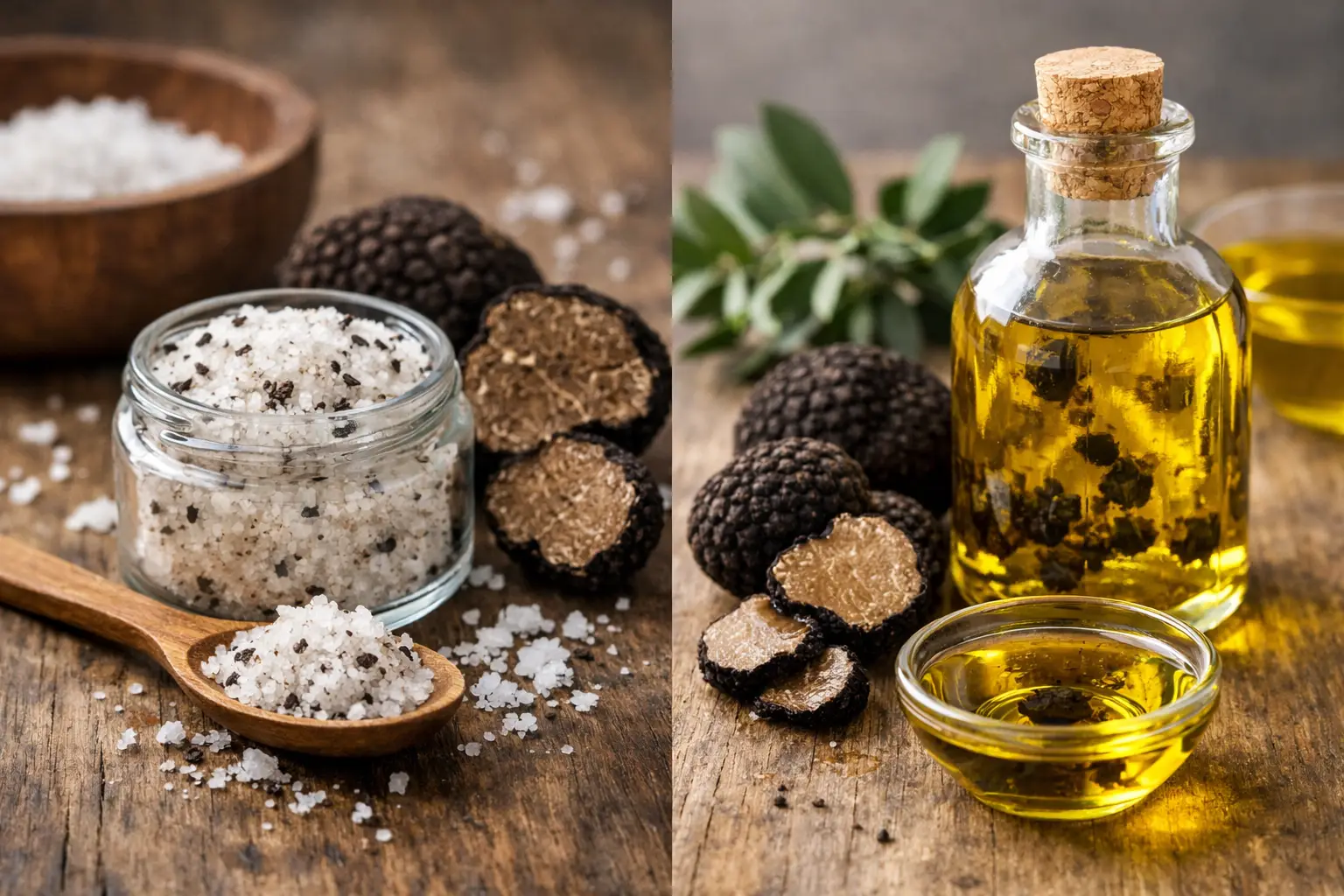
Truffle salt is a seasoning. It combines salt, often sea salt, with truffle flavor so that every pinch adds both salinity and a savory truffle note. Because it seasons and perfumes at the same time, it is especially useful on foods that need a final lift right before serving.
Truffle oil is a finishing oil. It delivers truffle aroma in a fat-based form, which means it coats the surface of a dish and carries fragrance quickly to the nose. That matters because truffle is as much about aroma as taste. A few drops can make a bowl of pasta, a pizza, or a plate of roasted potatoes feel richer and more luxurious almost instantly.
The practical difference is simple. Truffle salt changes seasoning first and aroma second. Truffle oil changes aroma first and mouthfeel second. Once you understand that, choosing between them gets easier.
How truffle salt tastes on the plate
A good truffle salt brings depth without asking much of the cook. It has the clean mineral brightness of salt, followed by a subtle earthy finish that lingers after each bite. On scrambled eggs, it tastes savory and rounded. On steak, it sharpens the crust while adding an elegant truffle accent. On popcorn or fries, it creates that addictive contrast between salt, fat, and umami.
Texture is part of the appeal. A flaky or coarse truffle salt gives little bursts of seasoning that make simple foods more dynamic. That is why it performs so well as a final touch on dishes that already have enough fat, such as buttered pasta, risotto, or roasted fingerling potatoes. You are not adding richness. You are refining the finish.
Truffle salt also gives you more control if you tend to be cautious with truffle flavor. A pinch here and there lets you build intensity gradually. For many home cooks, that makes it the more approachable product.
How truffle oil tastes on the plate
Truffle oil is more immediate and more aromatic. The moment it hits warm food, it releases fragrance. That first impression is what people often associate with restaurant-style truffle dishes. It can make mashed potatoes smell irresistible, give mushroom pizza a luxurious top note, or bring a silky truffle character to macaroni and cheese.
Because oil coats the tongue, it creates a fuller, more indulgent eating experience than salt alone. On neutral foods, that can be exactly what you want. Drizzled over creamy soups, fresh pasta, carpaccio, or even warm focaccia, truffle oil adds sheen and a luscious finish that feels special occasion ready.
That said, truffle oil can dominate if it is used too generously. A restrained hand is essential. Unlike salt, which can be sprinkled in stages, oil spreads across a dish quickly. A few drops often do more than a heavy pour.
When truffle salt is the better choice
If a dish needs seasoning, choose truffle salt first. Eggs are a perfect example. They welcome salt, and truffle flavor loves their richness, so the pairing feels natural and balanced. The same is true for roasted vegetables, grilled meats, avocado toast, and crispy potatoes.
Truffle salt also excels on foods where texture matters. A crisp french fry or a just-seared steak benefits from that final granular touch. Oil can soften or weigh down a crisp surface, while salt keeps the finish bright and clean.
It is also the better option when you want truffle flavor without adding more fat. If you are finishing a buttery risotto, a creamy dip, or a rich cheese dish, another layer of oil may be unnecessary. A pinch of truffle salt delivers elegance without excess.
When truffle oil is the better choice
Choose truffle oil when aroma is the main event. It shines on warm dishes that release fragrance upward – pasta, pizza, polenta, soups, mashed potatoes, and flatbreads all come to life with even a light drizzle.
It is especially effective when a dish looks complete but tastes like it needs one final flourish. A bowl of mushroom soup may already be seasoned perfectly, yet a touch of truffle oil gives it that polished, restaurant-caliber finish. The same goes for burrata, roasted cauliflower, or a simple wild mushroom tart.
Truffle oil is also useful when presentation matters. It adds gloss and visual richness, which is ideal for dinner parties, date-night cooking, and plated appetizers where the finish should feel intentional and refined.
Can you use both together?
Yes, and in the right dish, the combination is exquisite. The key is balance. Use truffle salt to season and truffle oil to finish, rather than doubling up carelessly.
A classic example is fries. Toss them lightly with truffle salt while they are hot, then add the smallest drizzle of truffle oil just before serving. You get crispness, aroma, and layered truffle character without making them greasy. The same approach works beautifully on fresh pasta, creamy scrambled eggs, or a simple white pizza.
Where people go wrong is treating both products as if more is always better. Truffle is a luxury ingredient, and luxury tends to read best in precise amounts. You want the dish to taste elevated, not overwhelmed.
Truffle salt vs truffle oil for specific foods
For eggs, truffle salt usually wins because it seasons evenly and keeps the dish light. If the eggs are especially creamy or folded into a soft scramble, a few drops of truffle oil can be lovely, but it should stay subtle.
For fries and popcorn, truffle salt is the more practical choice, though a combination can be striking for entertaining. For pasta, it depends on the sauce. Cream-based and butter-based pastas often benefit from truffle oil, while simpler pastas can be beautifully finished with truffle salt alone.
For steak, truffle salt is often the stronger choice because it enhances the meat’s crust and savoriness. For pizza, truffle oil tends to be more dramatic, especially over mushrooms, fontina, or mozzarella. For mashed potatoes, both can work, but truffle oil creates the more plush, indulgent finish.
What to look for in quality
Not every truffle pantry product delivers the same experience. With truffle salt, pay attention to the type of salt, the quality of the truffle ingredient, and whether the flavor tastes clean and savory rather than harsh or one-note. A premium blend should feel elegant, not aggressively artificial.
With truffle oil, quality is even more important because aroma does so much of the work. You want an oil that smells appetizing and sophisticated, with a true truffle character that complements food rather than sitting on top of it. Better products taste intentional and culinary. Lesser ones can smell loud but eat flat.
This is where buying from a specialist matters. Brands that live in the truffle category understand how truffle products should perform in real cooking, whether you are dressing up weeknight eggs or finishing a menu for guests.
Which one belongs in your pantry?
If you are choosing just one, truffle salt is the more versatile starting point for most home cooks. It is easy to use, difficult to overdo, and excellent on everyday foods. It turns eggs, potatoes, vegetables, and meat into something distinctly more refined with very little effort.
If you entertain often or love rich, aroma-driven finishes, truffle oil earns its place just as quickly. It has the more dramatic effect and can make a dish feel instantly luxurious. For many kitchens, the best answer is not either-or. It is keeping both on hand and using each where it performs best.
At Truffle Guys, that is exactly how we think about the category. Truffle products are not there to complicate cooking. They are there to transform the final bite.
The best choice comes down to what your dish needs most at the very end – seasoning, aroma, or a little of both.

One Comment
Trackbacks and Pingbacks
[…] and make even an exquisite meal feel one-dimensional. Think of it as you would a fine perfume or finishing salt: intentional, not […]