
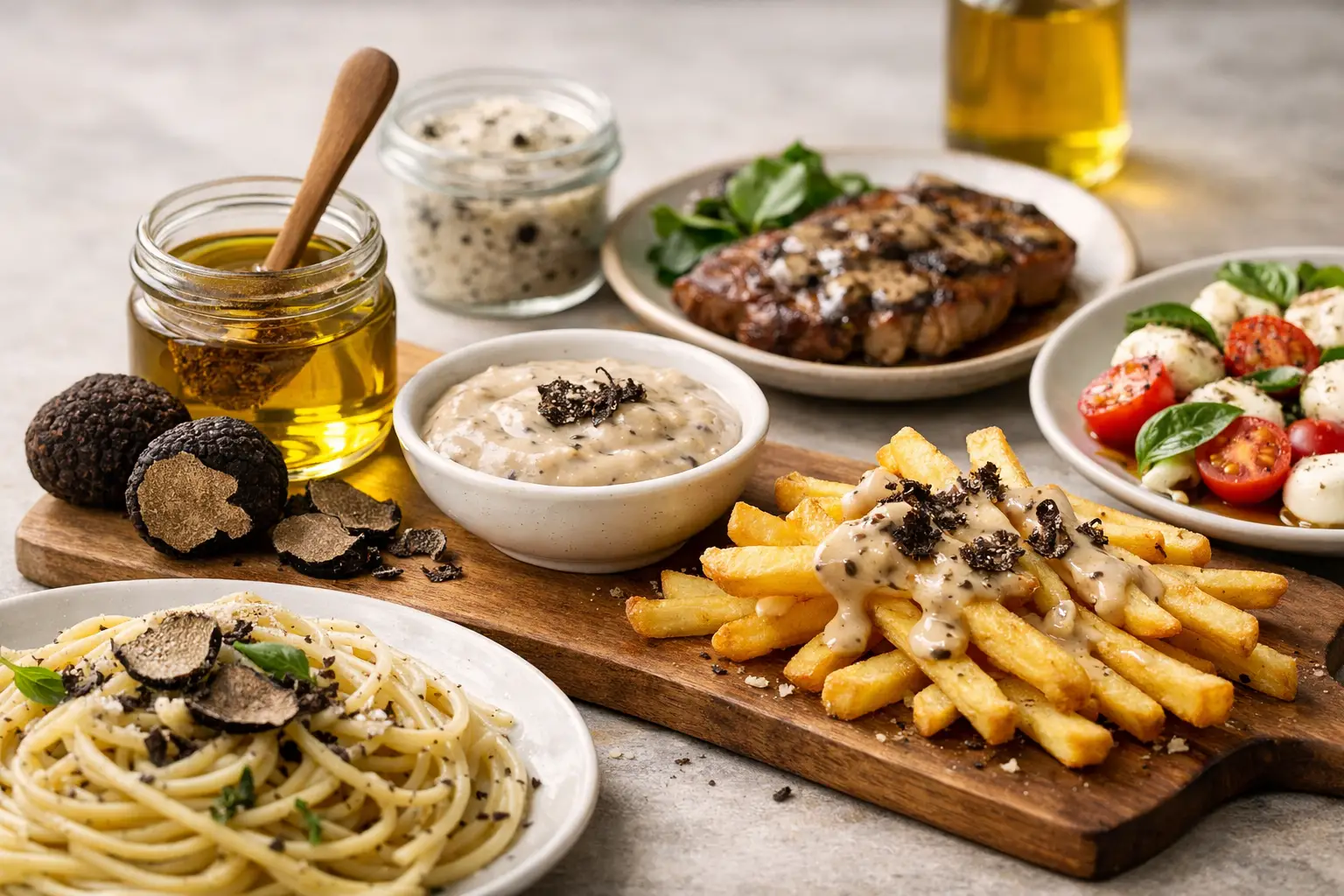
How to Pair Truffle Condiments with Everyday Dishes Leave a comment
A warm bowl of pasta, a tray of crisp potatoes, or a softly scrambled egg can become a special occasion with one considered finishing touch. Knowing how to pair truffle condiments is less about using them in elaborate recipes and more about giving their earthy, savory aroma the right place to shine. The best pairings begin with foods that have richness, warmth, or a gentle flavor of their own.
Truffles are not meant to compete with every ingredient on the plate. They reward restraint. A small spoonful of black truffle pesto, a final drizzle of truffle oil, or a pinch of truffle salt can bring a restaurant-style depth to familiar dishes when the base flavors are clean and well balanced.
Start With the Truffle’s Flavor Role
Each truffle condiment brings something slightly different to the table. Some lead with aroma, others provide salt, texture, sweetness, or a deeper savory note. Before choosing a dish, consider whether the condiment should finish the plate, season it throughout, or become part of the sauce.
Black truffle is generally more earthy, cocoa-like, and woodsy. It is especially at home with roasted meats, mushrooms, potatoes, aged cheese, and rich pasta sauces. White truffle is often more aromatic and pungent, with notes that can feel garlicky, nutty, and deeply intoxicating. It excels on simply prepared eggs, risotto, buttered noodles, and creamy dishes where its fragrance is not crowded out.
Fat is truffle’s most dependable partner. Butter, olive oil, cream, egg yolk, cheese, and the marbling in a good steak carry aroma across the palate. Starch is equally useful, which is why truffle and potatoes, pasta, rice, and bread are such enduring combinations. Brightness also matters: a squeeze of lemon, a peppery green salad, or a splash of dry wine can keep a truffle-rich dish from feeling heavy.
How to Pair Truffle Condiments by Type
Truffle oil: use it as a finish, not a frying oil
Truffle oil is made for the moment just before serving. Its aroma is delicate and rises quickly from warm food, so prolonged high heat can flatten its character. Drizzle it over risotto, creamy polenta, fresh pizza, mashed potatoes, popcorn, or a fried egg instead of adding it at the beginning of cooking.
For white truffle oil, keep the pairing particularly spare. A bowl of tagliatelle with butter and Parmesan, a cauliflower soup, or a mushroom omelet needs only a few drops. Black truffle oil has the depth to stand beside roasted chicken, mushroom flatbread, or a steak-and-potato dinner.
The trade-off is intensity. Too much oil can perfume every bite and obscure the main ingredient, particularly in delicate seafood or lightly dressed vegetables. Begin with a teaspoon for a shared dish, toss gently, then taste before adding more.
Truffle salt: season foods that welcome a final sparkle
Truffle salt offers an easy way to bring savory truffle character to foods that already benefit from a crisp finishing salt. It is excellent over French fries, roasted potatoes, grilled corn, avocado toast, soft-boiled eggs, and warm focaccia. It can also sharpen a simple salad of bitter greens, shaved Parmesan, and lemon vinaigrette.
Because it is salt first, account for it throughout the recipe. Season less aggressively while cooking, then add truffle salt at the end. This is especially useful with steak: salt the meat properly before or during cooking, but reserve a light final pinch of truffle salt for the sliced steak, where its aroma remains distinct.
Specialty blends can guide the rest of the plate. A black truffle and red wine sea salt feels natural with lamb, short ribs, mushrooms, and roasted root vegetables. A saffron-infused truffle sea salt is more luminous and elegant with scallops, risotto, roasted chicken, or a simple dish of spring peas.
Truffle powder: build depth into dry-seasoned dishes
Truffle powder is the practical choice when you want truffle flavor distributed evenly instead of concentrated on the surface. Fold it into compound butter for grilled corn or steak, stir it into breadcrumbs for chicken cutlets, or whisk it into a creamy dip for potato chips and crudités. It gives roasted nuts, popcorn, and snack mixes a polished savory edge without making them oily.
It also works beautifully in sauces, provided it is not the only seasoning. Pair it with Parmesan, black pepper, garlic, and butter for a luxurious pasta finish, or blend it into a mushroom gravy for roast poultry. Powder can become muted in very acidic or spicy dishes, so avoid asking it to carry a tomato-heavy arrabbiata or a chile-forward marinade.
Truffle carpaccio: let the slices be seen and tasted
Truffle carpaccio brings visual drama as well as flavor. These tender truffle slices deserve dishes with open surfaces: warm pasta, creamy risotto, a crostini topped with ricotta, a steak rested and sliced, or a silky potato purée. Spoon them over the finished dish, including a little of the preserving oil when appropriate.
A mild canvas is essential. The goal is for each slice to register, not disappear beneath a dense sauce. Fresh pasta with butter, Parmigiano-Reggiano, and black truffle carpaccio is luxurious precisely because it does so little else. For entertaining, place carpaccio over whipped goat cheese on grilled bread and finish with cracked pepper. The contrast of tangy cheese, char, and truffle is instantly memorable.
Truffle pesto nero: pair it with sturdy, savory foods
Pesto nero has more body than a finishing oil and can take a more central role in a dish. Its dark, savory character is compelling with pasta, grilled meats, roasted vegetables, and sandwiches built with mozzarella or fontina. Stir it through hot pasta with a little pasta water and butter, spread it onto a burger bun, or use it as a base beneath roasted mushrooms on pizza.
This is the condiment to reach for when the meal needs depth as well as aroma. It is particularly effective with leaner proteins such as chicken breast, turkey, or pork tenderloin, which benefit from an extra layer of richness. With heavily smoked barbecue or aggressively spiced sausage, however, its nuances may be lost. In those cases, a finishing salt or powder may be the better truffle expression.
Truffle honey: make sweet and savory meet gracefully
Truffle honey is at its best when there is salt, creaminess, or gentle bitterness to answer its sweetness. Drizzle it over a baked wheel of Brie, fresh ricotta, blue cheese, or aged pecorino. It also brings an exquisite finishing note to fried chicken, roasted carrots, prosciutto flatbreads, and a cheese board with toasted hazelnuts and sliced pear.
For dessert, keep the supporting flavors restrained. Truffle honey can be beautiful over vanilla gelato, panna cotta, or a simple pound cake with mascarpone. Dark chocolate can work too, but choose a bittersweet style and use the honey sparingly. The point is a mysterious earthy finish, not a dessert that tastes overly perfumed.
Build the Plate Around Contrast
A successful truffle pairing usually needs one rich element and one lively counterpoint. Consider crispy potatoes with truffle salt and a sharp herb salad, or creamy mushroom risotto with truffle oil and a bright squeeze of lemon. The acidity does not need to be obvious. A dry white wine in the sauce, pickled shallots beside a rich sandwich, or a salad dressed with Champagne vinegar can provide enough lift.
Texture matters, too. Truffle condiments often bring softness and aroma, so contrast them with crunch, char, or a crisp crust. A truffle-honey crostini gains character from toasted bread. Truffle carpaccio on risotto benefits from fried sage. A truffle oil-finished pizza becomes more compelling with a crisp edge and a handful of peppery arugula.
Be cautious with ingredients that announce themselves loudly. Blue cheese, garlic, truffle, anchovy, smoked bacon, and hot chile can make a delicious dish, but combining all of them rarely creates clarity. Choose one or two bold supporting flavors, then let the truffle do what it does best: linger.
Pair for the Occasion, Not Just the Recipe
For a fast weeknight luxury, eggs, pasta, popcorn, and roasted potatoes are ideal because they need little more than a finish. For dinner guests, use truffle carpaccio or truffle honey where guests can see the ingredient and appreciate the gesture. For a polished main course, black truffle pesto or truffle salt can give steak, chicken, and roasted vegetables a composed, chef-driven finish.
The most persuasive truffle dishes are rarely the most complicated. Warm the plate, use a quality base ingredient, add the condiment with a light hand, and serve immediately while the aroma is at its fullest. That first fragrant bite is often all the invitation a memorable meal needs.
