
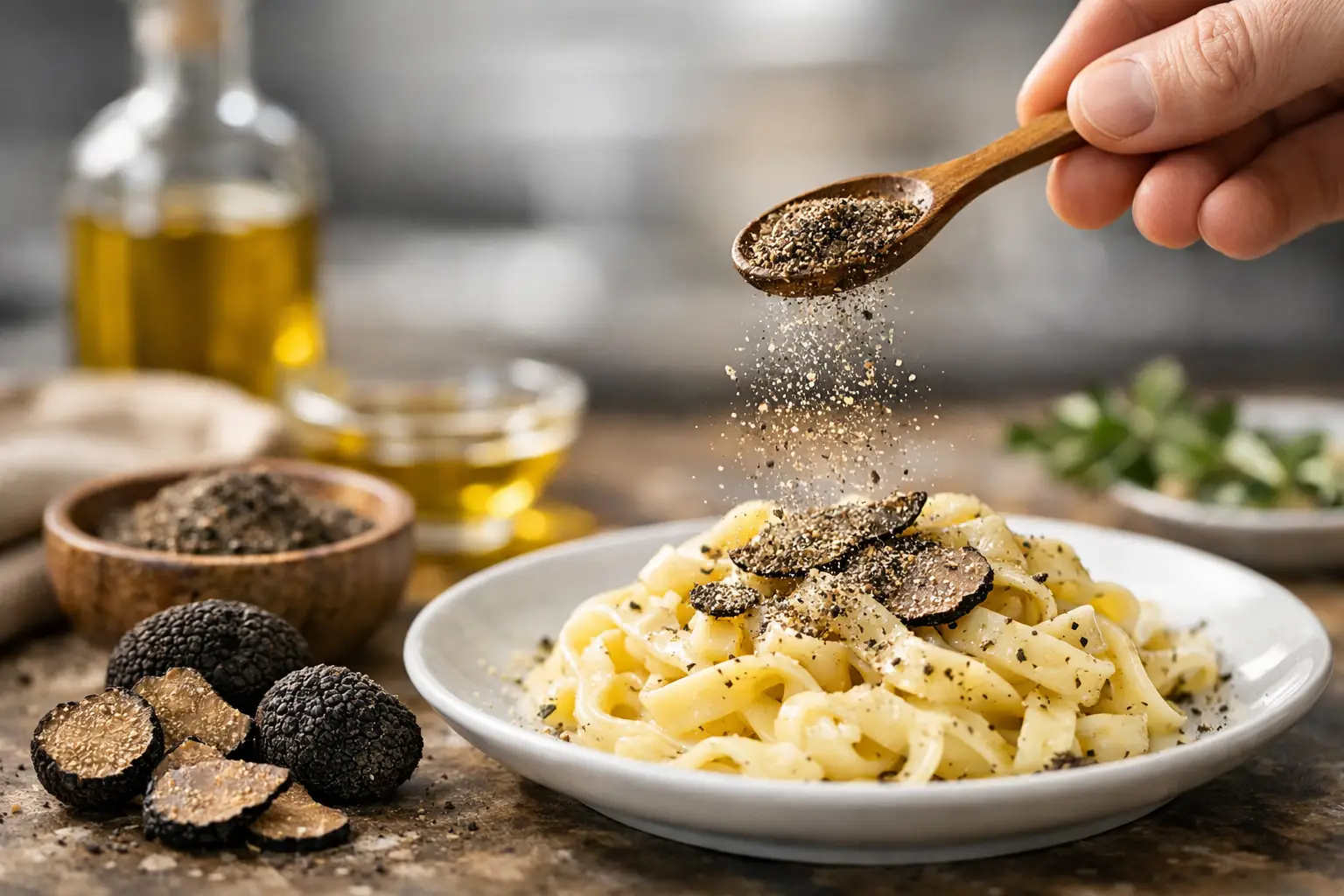
What Is Truffle Dust Used For in Cooking? Leave a comment
A small pinch can change the character of an entire plate. If you have ever wondered, “what is truffle dust used for?” the simple answer is as a luxurious finishing ingredient that brings the earthy, savory perfume of truffles to everyday cooking. It is the detail that makes soft scrambled eggs feel special occasion-worthy, gives a bowl of pasta restaurant-level depth, or turns warm fries into an indulgent first course.
Truffle dust is especially appealing because it offers concentrated flavor without the pressure of using a fresh truffle immediately. Kept in the pantry and used with a light hand, it delivers a polished finishing touch whenever the mood calls for something exquisite.
What Is Truffle Dust Used For?
Truffle dust is used to season and finish foods that benefit from the unmistakable aroma of truffles: earthy, musky, nutty, and deeply savory. Depending on the product, it may be made with dried truffles ground into a fine powder, or with a blend of truffle, salt, and complementary seasonings. The texture is delicate and powdery, allowing it to cling to warm food more evenly than sliced truffle or truffle carpaccio.
Its best role is not as an all-purpose spice added at the beginning of cooking. Think of truffle dust as the final flourish. Sprinkle it over a finished dish while there is still enough warmth and moisture for the aroma to bloom. A little butter, olive oil, cream, melted cheese, or egg yolk gives the truffle character something luscious to carry it across the palate.
Because formulas vary, read the label before using it. A pure truffle powder may need salt and seasoning alongside it, while a truffle seasoning blend can be used more generously but may already contain salt. The quality and proportion of real truffle will also affect intensity. Start conservatively, taste, and add another delicate pinch only if the dish calls for it.
Finish Rich, Simple Foods With Truffle Dust
The most satisfying uses for truffle dust tend to be foods with uncomplicated flavors and a rich texture. These dishes give the truffle room to be noticed rather than competing with it.
Pasta, risotto, and creamy grains
Truffle dust is at home with buttered pasta, Parmesan, risotto, polenta, and creamy farro. Toss hot pasta with butter or extra virgin olive oil, grated aged cheese, and a splash of pasta water. Add the truffle dust just before serving, then toss once more. The steam releases the aroma, while the fat carries it through every bite.
For risotto, avoid stirring truffle dust into the pot early in the cooking process. Long exposure to high heat can flatten its most fragrant notes. Instead, spoon the risotto into warm bowls and finish each portion individually. This creates a more vivid aroma at the table and lets you control the intensity for every guest.
Eggs and brunch dishes
Eggs and truffles are classic partners for a reason. Their silky richness softens the truffle’s woodland intensity without muting it. Finish scrambled eggs, an omelet, poached eggs, or a simple fried egg with a whisper of truffle dust and flaky sea salt.
It also gives brunch staples a more composed, chef-driven feel. Try it over avocado toast with a soft egg, breakfast potatoes, a cheese soufflé, or a warm mushroom tart. For entertaining, use it as the final seasoning on deviled eggs or a baked egg dish just before it reaches the table.
Potatoes, fries, and warm snacks
Crisp potatoes provide one of the easiest entry points for truffle dust. Toss freshly cooked fries, roasted fingerlings, tater tots, or potato chips with the dust while they are still hot. If the product is unsalted, a small amount of fine sea salt helps the flavor read more clearly.
Popcorn is another excellent canvas, particularly for a cocktail-hour spread or movie night that deserves an upgrade. Toss warm popcorn with melted butter or a neutral oil first, then add truffle dust gradually. The goal is an even, aromatic coating, not a heavy layer that overwhelms the popcorn’s delicate crunch.
Vegetables, mushrooms, and pizza
Truffle dust can turn vegetables into a centerpiece rather than an afterthought. Use it on roasted cauliflower, crispy Brussels sprouts, grilled asparagus, or sweet corn with butter. It is particularly harmonious with mushrooms, which share truffle’s earthy profile. A sautéed mushroom dish finished with truffle dust, parsley, and a squeeze of lemon is elegant beside steak, poultry, or a crusty piece of bread.
On pizza, add truffle dust after baking, especially on a pie with mozzarella, fontina, mushrooms, potatoes, or a white sauce. Heat from the just-baked crust will lift the aroma without cooking it away. The same approach works beautifully for flatbreads and warm focaccia.
Use Truffle Dust as a Finishing Seasoning, Not a Shortcut
Truffle dust offers convenience, but it is not meant to imitate the experience of shaving fresh truffle over a dish. Fresh truffles bring texture, visual drama, and a more fleeting, complex perfume. Truffle dust provides consistency and ease, making it a practical choice for weeknight meals, pantry gifting, and larger gatherings where fresh truffles may not be the most sensible option.
That distinction is useful in professional kitchens, too. A chef may use fresh truffle for a seasonal tasting menu and truffle dust to add a final aromatic accent to fries, bar snacks, or a high-volume brunch service. At home, the same logic applies: save fresh truffles for moments when their delicate presence is the centerpiece, and rely on truffle dust when you want an elevated finish without planning an entire meal around one ingredient.
Truffle dust also cannot rescue a dish that lacks balance. It works best when the foundation is already delicious. Season the potatoes properly, use good butter, choose a cheese with character, and cook pasta until it has real bite. The truffle should feel like the final note in a well-composed dish, not a mask for bland cooking.
Pairing Truffle Dust With Other Flavors
The finest truffle pairings are often restrained. Butter, cream, eggs, Parmesan, mild cheeses, potatoes, rice, mushrooms, and poultry are reliable choices because they let the truffle aroma lead. A touch of garlic, shallot, chives, thyme, or parsley can complement it, but use them carefully. Strong spices, aggressive smoke, and very sweet sauces can make truffle dust disappear.
Acidity has its place, particularly with richer dishes. A few drops of lemon over truffled mushrooms or a lightly dressed salad beside a creamy pasta can keep the meal from feeling too heavy. For cheese boards, truffle dust can be used sparingly over warm baked brie, fresh ricotta, or a soft goat cheese crostini, ideally with a crisp white wine or dry sparkling wine nearby.
If you are pairing it with truffle oil, truffle salt, or truffle honey, avoid using all of them heavily in one bite. One truffle ingredient should take the lead, while the others add dimension. For example, truffle oil may be perfect in mashed potatoes, followed by a restrained dusting of truffle powder at service. With truffle honey, keep the dust to a minimum and let the sweet-savory contrast remain clear.
How Much Truffle Dust Should You Use?
Less is usually more. Start with a small pinch for a single serving or roughly a light dusting across a shared platter. The desired effect is an aroma that arrives as the fork reaches the mouth, not a seasoning so forceful that every other ingredient vanishes.
Use a bit more for foods with a larger surface area, such as fries, popcorn, roasted vegetables, or pizza. Use less for delicate dishes like eggs, fresh pasta, and mild seafood. If you are serving guests, apply it at the table when possible. That moment of fragrance is part of the pleasure, and guests can always request another touch.
Store truffle dust tightly sealed in a cool, dry cupboard away from direct light and heat. Moisture is its enemy, both for texture and aroma. As with any premium pantry ingredient, it is at its most expressive when used regularly rather than forgotten at the back of the shelf.
A jar of truffle dust is an invitation to cook with a little more ceremony. Keep it within reach, and let a warm bowl of pasta, a plate of eggs, or a basket of fries become the kind of dish people remember long after the last bite.
