
Authentic European Truffle Sourcing, Explained 1
A truffle’s value is not simply its rarity. It is the result of a specific place, a short season, careful handling, and the unmistakable aroma that develops beneath the soil beside the right host trees. Authentic European truffle sourcing is what protects that experience, whether you are shaving fresh truffle over tagliatelle or finishing a warm bowl of popcorn with black truffle salt.
For cooks and chefs, provenance is more than a romantic detail on a label. It helps explain the flavor in the jar, the intensity on the plate, and why one truffle ingredient belongs in a delicate risotto while another is ideal for steak, fries, or a celebratory cheese board.
What Authentic European Truffle Sourcing Means
European truffles are harvested in storied growing areas where climate, soil, rainfall, and tree roots create the conditions these fungi need to thrive. Italy and France are especially renowned, with regions such as Piedmont, Tuscany, Umbria, Périgord, and Provence shaping the culinary identity of the truffle varieties associated with them.
Authentic sourcing begins with the species. A true truffle product should identify the variety when that information is relevant, rather than relying only on a broad, luxurious-sounding description. Tuber melanosporum, often called the winter black or Périgord black truffle, delivers a deep, earthy perfume with notes that can feel cocoa-like, woodsy, and savory. Tuber magnatum, the prized Italian white truffle, is more fleeting and intensely aromatic, known for its garlic, honey, hay, and musky character.
There are other valuable European truffles as well. Burgundy truffles offer an inviting hazelnut-like aroma, while summer truffles tend to be more delicate and are often best used generously or paired with products designed to carry their flavor. None is automatically better in every dish. The right choice depends on the season, the preparation, and the level of truffle presence you want at the table.
From European Woods to the American Kitchen
The journey from a truffle ground to a US kitchen involves more precision than most luxury pantry ingredients. Fresh truffles are highly perishable. Their aroma is at its most vivid soon after harvest, which means timing, packing, and temperature control matter as much as the harvest itself.
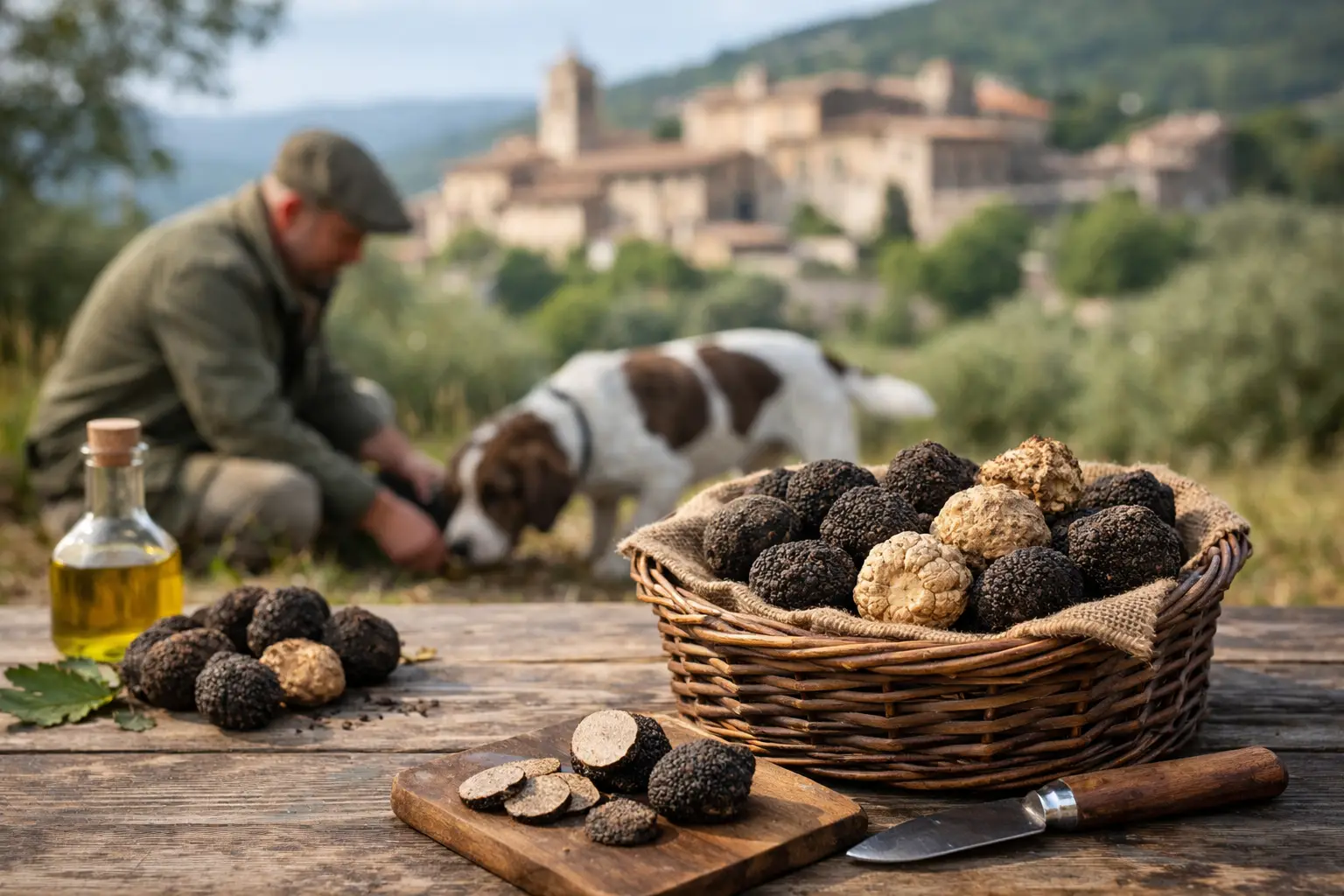
At the source, trained hunters work with dogs to locate ripe truffles underground. Harvesting at the right moment is essential. An immature truffle may look impressive but lack the mature fragrance that makes a small shaving so transformative. A properly ripened specimen should be firm, aromatic, and free from excess moisture or soft spots.
Once harvested, truffles are gently cleaned, sorted, and prepared for their next destination. For fresh truffles, speed is part of quality. A shorter, well-managed supply chain gives the ingredient its best chance of arriving with its fragrance intact. That is why fresh truffles are a seasonal luxury rather than an ingredient that can be treated like a year-round produce item.
Preserved truffle products follow a different but equally thoughtful path. Truffle carpaccio, truffle honey, pesto nero, powders, salts, and oils allow cooks to enjoy a truffle-forward finish outside the narrow window of fresh-truffle season. The preservation method changes the experience. It may emphasize savory depth, texture, or an aromatic finishing note rather than attempting to duplicate the exact perfume of a freshly shaved white truffle.
Seasonality is a mark of honesty
Truffles do not follow a single universal calendar. White truffles are generally associated with autumn into early winter, while premium winter black truffles are typically enjoyed through the colder months. Summer and Burgundy varieties appear in their own windows, depending on the region and annual conditions.
A season can shift with weather. Heat, rainfall, and soil moisture all affect availability and quality. This variability is not a flaw in authentic sourcing. It is evidence that truffles remain connected to the land rather than manufactured to a fixed schedule.
For entertaining, that creates a useful distinction. When fresh truffles are in season, build a simple menu that gives them room to speak: soft scrambled eggs, buttered pasta, potato purée, or a creamy risotto. Outside that season, reach for a well-crafted pantry product that brings its own dependable richness to pizza, roasted vegetables, filet mignon, or a midnight grilled cheese.
How to Read Truffle Products with Confidence
The word “truffle” on the front of a package is not the entire story. A gourmet buyer should look beyond it to understand what is actually inside and how the product is meant to perform.
Start with the ingredient statement and variety information. Products that name black truffle, white truffle, or a specific species give you a clearer sense of their culinary direction. Also consider the base ingredient. Extra virgin olive oil, sea salt, honey, mushrooms, cheeses, and preserved truffle slices each carry truffle flavor differently and suit different dishes.
A truffle oil, for example, is primarily a finishing ingredient. Heat can flatten delicate aroma, so the most luscious effect comes from drizzling it over food after cooking. Truffle salt is similarly simple to use, but it does more than season. A final pinch over eggs, warm fries, avocado toast, or buttered popcorn adds salt and a savory truffle lift in one motion.
For a more substantial application, truffle carpaccio brings visual elegance and tender texture to pasta, crostini, omelets, and creamy sauces. Pesto nero can add immediate depth to a sandwich, pizza, or roasted chicken. Truffle honey creates a sweet-savory contrast with aged cheese, fried chicken, prosciutto, or roasted carrots. The most useful product is not always the most expensive one. It is the one that fits how you cook.
The Difference Between Fresh and Shelf-Stable Truffles
Fresh truffles and truffle pantry products should be appreciated on their own terms. Comparing them as if one must replace the other misses the pleasure of both.
Fresh truffle is a special-occasion ingredient with a vivid, ephemeral aroma. It rewards restraint in the rest of the dish. Use a truffle slicer for fine shavings and pair it with warm, gently flavored foods that release its fragrance without overpowering it. Avoid aggressive spice blends, heavy smoke, and sharply acidic sauces when the fresh truffle is the centerpiece.
Shelf-stable products offer consistency, convenience, and range. They make it possible to bring a truffle moment to a weeknight meal without planning around harvest dates or using an entire fresh truffle at once. A chef may reserve fresh white truffle for a seasonal tasting menu while relying on black truffle oil, salt, and powder for daily service. The same logic works beautifully at home.
Storage protects the investment
Fresh truffles should be kept cold, dry, and attended to daily. Wrap them in an absorbent paper towel, place them in a sealed container, and change the towel as it becomes damp. Use them promptly. Storing a truffle with eggs or rice can lend aroma to those foods, but it also draws moisture from the truffle, so this is best done briefly and intentionally.
Shelf-stable products are easier to manage, but they still deserve care. Keep oils and condiments away from heat and direct light, close containers tightly, and follow the storage guidance on the label after opening. Aroma is precious, and careless storage can dull even an exquisite product.
Why Provenance Changes the Plate
The finest sourcing is ultimately tasted, not merely claimed. When origin, varietal, season, and handling are respected, the result is a more distinct and elegant ingredient. It can turn a bowl of pasta dressed with butter and Parmesan into something memorable, or give a simple steak dinner the finish of a favorite restaurant.
That does not require complicated cooking. In fact, truffles often reward the opposite approach. Choose one excellent base, add one truffle ingredient with purpose, and let the aroma arrive at the table before the first bite. That is where European truffle sourcing becomes more than a supply-chain detail – it becomes the beginning of a truly indulgent meal.

One Comment
Trackbacks and Pingbacks
[…] Provenance matters because it gives a chef useful context. European truffle regions have long-established harvest traditions, and varietal identification helps determine how a truffle will perform in the kitchen. Ask suppliers to state what is being sold rather than relying on vague language such as “premium truffle.” The distinction between a fresh winter black truffle and a less aromatic truffle variety changes the appropriate price, application, and guest expectation. […]